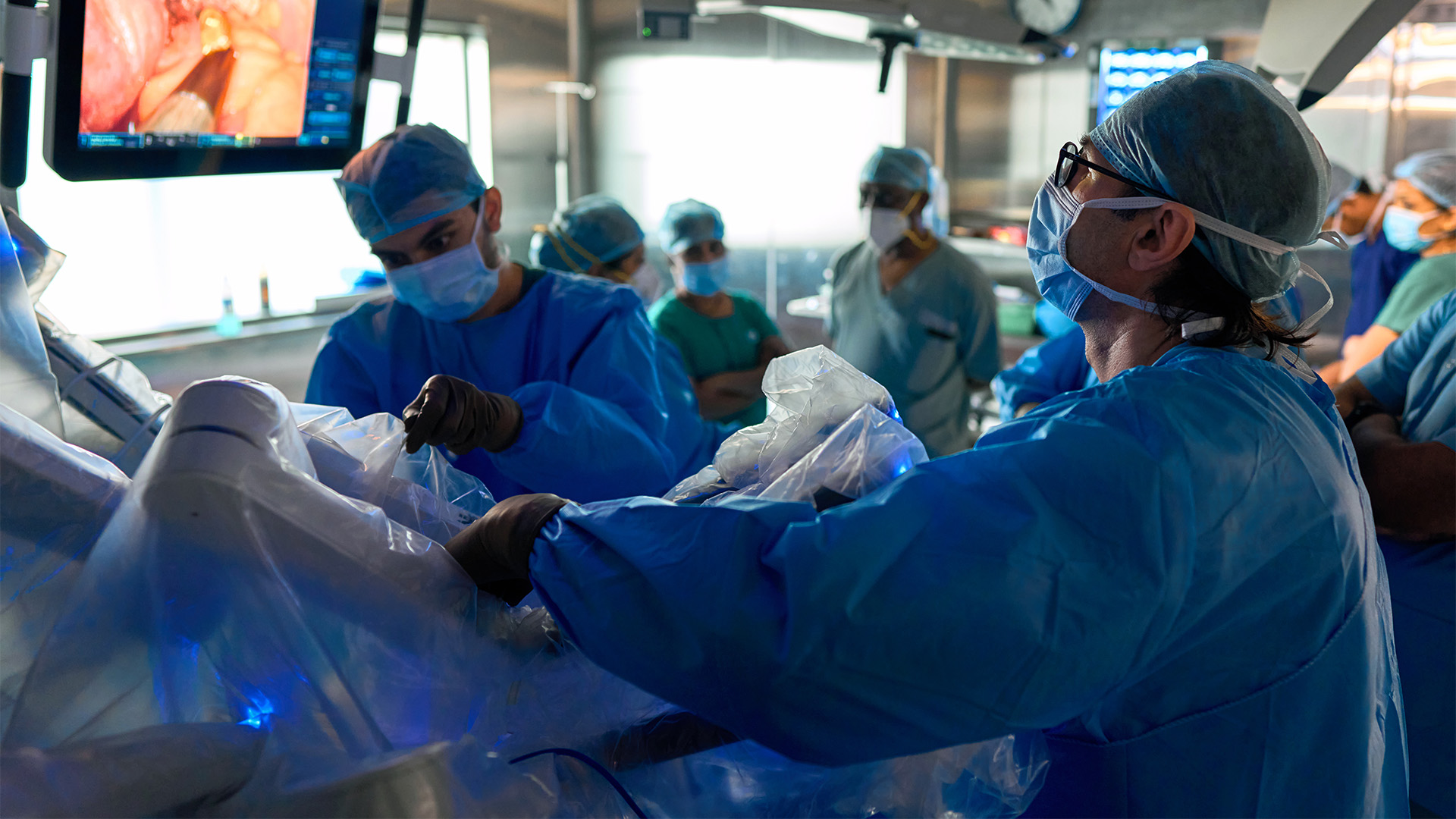
Surgery of the aortic arch has advanced significantly in recent years. The gold standard technique for treating arch aneurysms remains moderate to deep hypothermia with circulatory arrest of the lower body, coupled with cerebral protection. Recently, some authors have developed various techniques for normothermic arch surgery without cardiopulmonary arrest (1, 2).
Here, the authors present their technique for normothermic arch surgery in a scheduled 78-year-old female patient. She had aortic valve insufficiency due to restricted aortic cusps, associated with an aneurysm of the ascending aorta and the initial part of the arch. The surgery began as usual, with perfusion of the lower body via the left axillary artery. An aortic clamp was positioned just below the innominate artery. Upon inspecting the aortic valve, it was determined that it could not be preserved and the sinuses were enlarged. Therefore, the valve and the sinuses were replaced using a Bentall procedure.
Subsequently, the innominate artery was cannulated with a 16 French cannula connected to a separate pump and perfused at a flow rate of 10 ml/kg/min. The innominate artery, the common left carotid artery, and the aortic arch at zone 2 were clamped. This facilitated the resection of the arch aneurysm and suturing of the distal Bentall tube, achieving good exposure and a bloodless field.
A computed tomography (CT) scan post-surgery confirmed the complete resection of the aneurysm. The patient did well in the postoperative period and was discharged on day eight.
References
- Guimbretière G, Vallée A, David CH, Foucher Y, Kermen S, Fouquet O, et al. A Frozen Elephant Trunk Technique to Reduce Circulatory Arrest Time in Hybrid Aortic Arch for Acute Aortic Dissection: Early and Midterm Outcomes in a Multicentric Cohort of 153 Patients. Ann Surg. 2025. doi:10.1097/SLA.0000000000006933 PubMed PMID: 41026522.
- Berretta P, D’Alessio S, Malvindi PG, D’Alfonso A, Cefarelli M, Galeazzi M, et al. Frozen elephant trunk in normothermia without circulatory arrest: initial experience. Ann Cardiothorac Surg. 2025;14(4):291‑302. doi:10.21037/acs-2025-evet-0042 PubMed PMID: 40808779; PubMed Central PMCID: PMC12343149.
Disclaimer
The information and views presented on CTSNet.org represent the views of the authors and contributors of the material and not of CTSNet. Please review our full disclaimer page here.
 547 views on Vimeo