


Extracorporeal Circulation


 …
…This week on The Beat, CTSNet Editor-in-Chief Joel Dunning spoke with James Cox, Professor of Cardiac Surgery at the Feinberg School of Medicine at Northwestern Medicine in Chicago, Illinois, USA, and Patrick McCarthy, Executive Director...

This week on The Beat, CTSNet Editor-in-Chief Joel Dunning spoke with Taj Mohammed Fiyaz Chowdhry, a consultant thoracic surgeon at Burjeel Specialty Hospital, Sharjah, UAE, about uniportal robotics in the...

Based on the international multicenter ECLS in Lung Transplantation Registry, this study compared the three surgical approaches to bilateral lung transplantation (BLTx) (clamshell, n=451; isolated bilateral thoracotomies, n=624; and median...

In this nationwide United Network for Organ Sharing (UNOS) analysis (2005–2025), Potel et al. compared extracorporeal membrane oxygenation (ECMO), pretransplant mechanical ventilation (pMV), and combined ECMO plus pMV as bridges...

Minimally invasive cardiac surgery (MICS) frequently requires peripheral cannulation strategies. Femoral cannulation remains the standard approach; however, it is associated with potential complications such as lymphorrhea, hematoma, infection, and an...
The question of whether minimal invasive extracorporeal circulation (MiECC) represents the optimal perfusion strategy in cardiac surgery remains unanswered. The authors aimed to systematically review the entire literature and thoroughly...
The COMICS trial is the largest randomized trial of minimally invasive extracorporeal circulation (MiECC) compared to conventional ECC (CECC). MiECC reduced the frequency of SAEs prespecified to qualify for the...
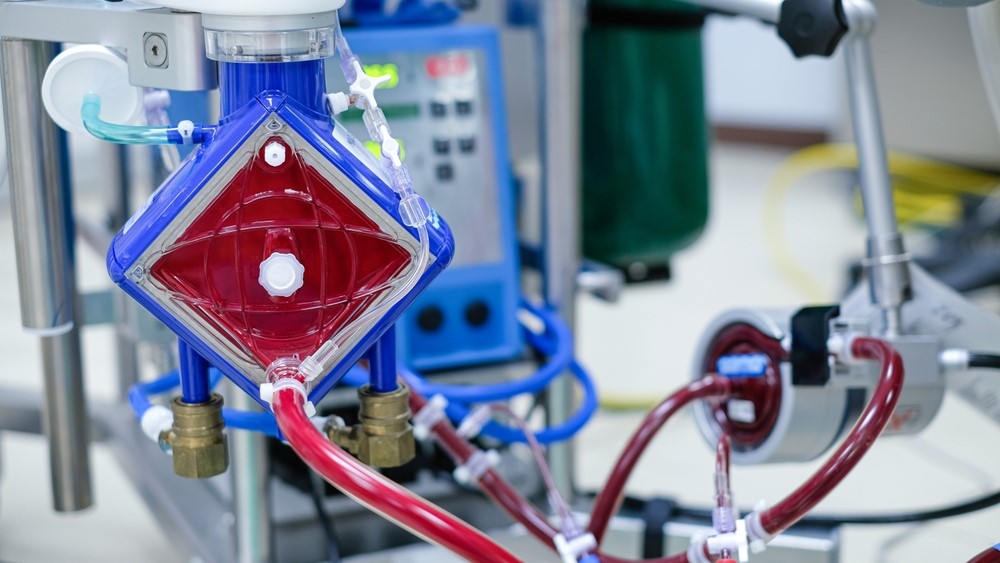
At the time of publication, bedside percutaneous VA ECMO decannulations are performed exclusively with the MANTA closure device in the authors’ cardiovascular ICU. They are able to consistently deploy this...
Aortic valve regurgitation (AR) often occurs after left ventricular assist device (LVAD) implantation. Transcatheter aortic valve implantation (TAVI) is a viable alternative to surgical aortic valve replacement (SAVR) in this...

This study aimed to describe the use of perioperative mechanical circulatory support (MCS) and its impact on outcomes in patients with ischemic cardiomyopathy undergoing surgical revascularization. Between 2015 and 2021,...
In this article, the author describes three patients who had undergone previous mitral and aortic valve replacement, experiencing cardiogenic shock due to valve dysfunction. The initial evaluation demonstrated that the...
Patients younger than nineteen years old were included in a study developed to gain a better understanding of pediatric patients supported with ventricular assist devices (VADs). The authors found that...
ECMOSARS registry data was used to describe the characteristics and outcomes of COVID-19 patients undergoing either veno-arterial (VA) or veno-arterial venous (VAV) extracorporeal membrane oxygenation (ECMO). The authors concentrated on...