Skip to content
Skip to content

AI-Powered Oral Board Training Is Available to CTSNet Users Now!

LEARN MORE
Not a member yet? Register now.
  • ABOUT
    • Leadership
    • Participation
    • Featured Sponsors
    • Submission Guidelines
    • Competitions
      • Innovation Video Competition
      • Resident Video Competition
    • Community
      • Volunteer
      • Badges
    • Contact Us
  • EXPLORE CTSNET
    • CARDIAC
    • THORACIC
    • CONGENITAL
    • Clinical Care Professionals
    • JANS
    • Events
    • Journals
  • Videos
    • Atlas of Cardiac Surgery
    • Webinars
    • Master Class
    • Guest Interviews
    • Conference Sessions
  • Podcasts
    • The Beat With Joel Dunning
    • The Atrium
    • The Cardiac Recovery Room
    • The Lifeline
  • Profiles
    • Users Directory
    • Organizations
  • CAREERS
    • US Career Center
    • European Career Center
  • ABOUT
    • Leadership
    • Participation
    • Featured Sponsors
    • Submission Guidelines
    • Competitions
      • Innovation Video Competition
      • Resident Video Competition
    • Community
      • Volunteer
      • Badges
    • Contact Us
  • EXPLORE CTSNET
    • CARDIAC
    • THORACIC
    • CONGENITAL
    • Clinical Care Professionals
    • JANS
    • Events
    • Journals
  • Videos
    • Atlas of Cardiac Surgery
    • Webinars
    • Master Class
    • Guest Interviews
    • Conference Sessions
  • Podcasts
    • The Beat With Joel Dunning
    • The Atrium
    • The Cardiac Recovery Room
    • The Lifeline
  • Profiles
    • Users Directory
    • Organizations
  • CAREERS
    • US Career Center
    • European Career Center
SUBMIT CONTENT
DONATE
JOIN

AI-Powered Oral Board Training Is Available to CTSNet Users Now!

READ MORE
  • ABOUT
    • Leadership
    • Participation
    • Featured Sponsors
    • Submission Guidelines
    • Competitions
      • Innovation Video Competition
      • Resident Video Competition
    • Community
      • Volunteer
      • Badges
    • Contact Us
  • EXPLORE CTSNET
    • CARDIAC
    • THORACIC
    • CONGENITAL
    • Clinical Care Professionals
    • JANS
    • Events
    • Journals
  • Videos
    • Atlas of Cardiac Surgery
    • Webinars
    • Master Class
    • Guest Interviews
    • Conference Sessions
  • Podcasts
    • The Beat With Joel Dunning
    • The Atrium
    • The Cardiac Recovery Room
    • The Lifeline
  • Profiles
    • Users Directory
    • Organizations
  • CAREERS
    • US Career Center
    • European Career Center
Not a member yet? Register now.
  • ABOUT
    • Leadership
    • Participation
    • Featured Sponsors
    • Submission Guidelines
    • Competitions
      • Innovation Video Competition
      • Resident Video Competition
    • Community
      • Volunteer
      • Badges
    • Contact Us
  • EXPLORE CTSNET
    • CARDIAC
    • THORACIC
    • CONGENITAL
    • Clinical Care Professionals
    • JANS
    • Events
    • Journals
  • Videos
    • Atlas of Cardiac Surgery
    • Webinars
    • Master Class
    • Guest Interviews
    • Conference Sessions
  • Podcasts
    • The Beat With Joel Dunning
    • The Atrium
    • The Cardiac Recovery Room
    • The Lifeline
  • Profiles
    • Users Directory
    • Organizations
  • CAREERS
    • US Career Center
    • European Career Center
  • ABOUT
    • Leadership
    • Participation
    • Featured Sponsors
    • Submission Guidelines
    • Competitions
      • Innovation Video Competition
      • Resident Video Competition
    • Community
      • Volunteer
      • Badges
    • Contact Us
  • EXPLORE CTSNET
    • CARDIAC
    • THORACIC
    • CONGENITAL
    • Clinical Care Professionals
    • JANS
    • Events
    • Journals
  • Videos
    • Atlas of Cardiac Surgery
    • Webinars
    • Master Class
    • Guest Interviews
    • Conference Sessions
  • Podcasts
    • The Beat With Joel Dunning
    • The Atrium
    • The Cardiac Recovery Room
    • The Lifeline
  • Profiles
    • Users Directory
    • Organizations
  • CAREERS
    • US Career Center
    • European Career Center
SUBMIT CONTENT
DONATE
JOIN
You are here:
  1. Thoracic

VATS Resection of Pulmonary Sequestration

  • March 8, 2017

By: Ahmad S. Ashrafi

Keywords:

  • Lung & Mediastinal

This video shows a VATS resection of pulmonary sequestration in a previously healthy 55-year-old woman, who presented with chest pain. Pulmonary sequestration is a rare congenital abnormality of the lung consisting of nonfunctioning lung tissue that does not have normal communication with the tracheobronchial tree or pulmonary arteries. The lung receives its blood supply from the systemic circulation. The prevalence of sequestration is 0.15-1.8% of the general population (1).

Pulmonary sequestration is classified into two types – extralobar and intralobar. Extralobar sequestration is completely separate from the surrounding lung and has its own pleural encasing. It is typically located in the inferior portion of the thoracic cavity. It receives its arterial blood supply from the descending thoracic or abdominal aorta. Its venous drainage usually goes through the azygos or hemiazygos veins. Intralobar sequestration is surrounded by normal lung and does not have its own pleural investment. It usually receives its arterial supply from the descending thoracic aorta, which reaches the sequestered segment via the inferior pulmonary ligament. Its venous drainages usually occur through the pulmonary veins (2).

The clinical presentation of pulmonary sequestration can be variable. Many cases are found on routine prenatal ultrasound and affected newborns are asymptomatic. If symptomatic, neonates present with respiratory distress (1). Intralobar sequestration usually presents later in life with recurrent pulmonary infections. Often, sequestration is found incidentally on chest radiographs (2). Once identified, further imaging such as a CT or MRI can be done to characterize the lesion and localize the vasculature (1).

Management of the symptomatic patient requires surgical resection of the sequestration either with a wedge resection or lobectomy, depending on the size. Patients with asymptomatic extralobar sequestrations may be observed, as the malignant potential and recurrent infections are minimal. Asymptomatic patients with intralobar sequestration usually undergo surgical resection due to the risk of infectious complications (1). The approach for surgical resection is trending towards thoracoscopy, which has been shown to be equivalent to open thoracotomy (3).

References:                                                                                                                              

  1. Chiu P, Langer JC. (2008). Mediastinal cysts and duplications in infants and children. Pearson’s Thoracic and Esophageal Surgery (1562-1580). Philadelphia, PA: Churchill Livingstone Elsevier.
  2. Huddleston CB (2008). Congenital abnormalities of the lung. Pearson’s Thoracic and Esophageal Surgery (462-472). Philadelphia, PA: Churchill Livingstone Elsevier.
  3. Wang LM, Cao JL, Hu J. Video-assisted thoracic surgery for pulmonary sequestration: a safe alternative procedure. J Thorac Dis. 2016; 8(1): 31-36.

Add Comments Cancel reply

You must be logged in to post a comment.

Not a member yet? Register now.
YouTube 5.1K views on YouTube
TAGS
  • Lung - Cancer

Related Content

Podcast

The Atrium: Neoadjuvant Chemoimmunotherapy

By: Alice CopperwheatBronze Contributor

Video

Bicuspid Valve-Sparing Aortic Root Replacement

By: Sebastian Cirio

Video

Sequential Bilateral Lung Transplant in Situs Inversus Totalis and Kartagener Syndrome

By: Mireia Espinós Arnau

Video

Downstaging-Driven Surgical Strategy in Locally Advanced NSCLC

By: Ilaria Potenza

Video

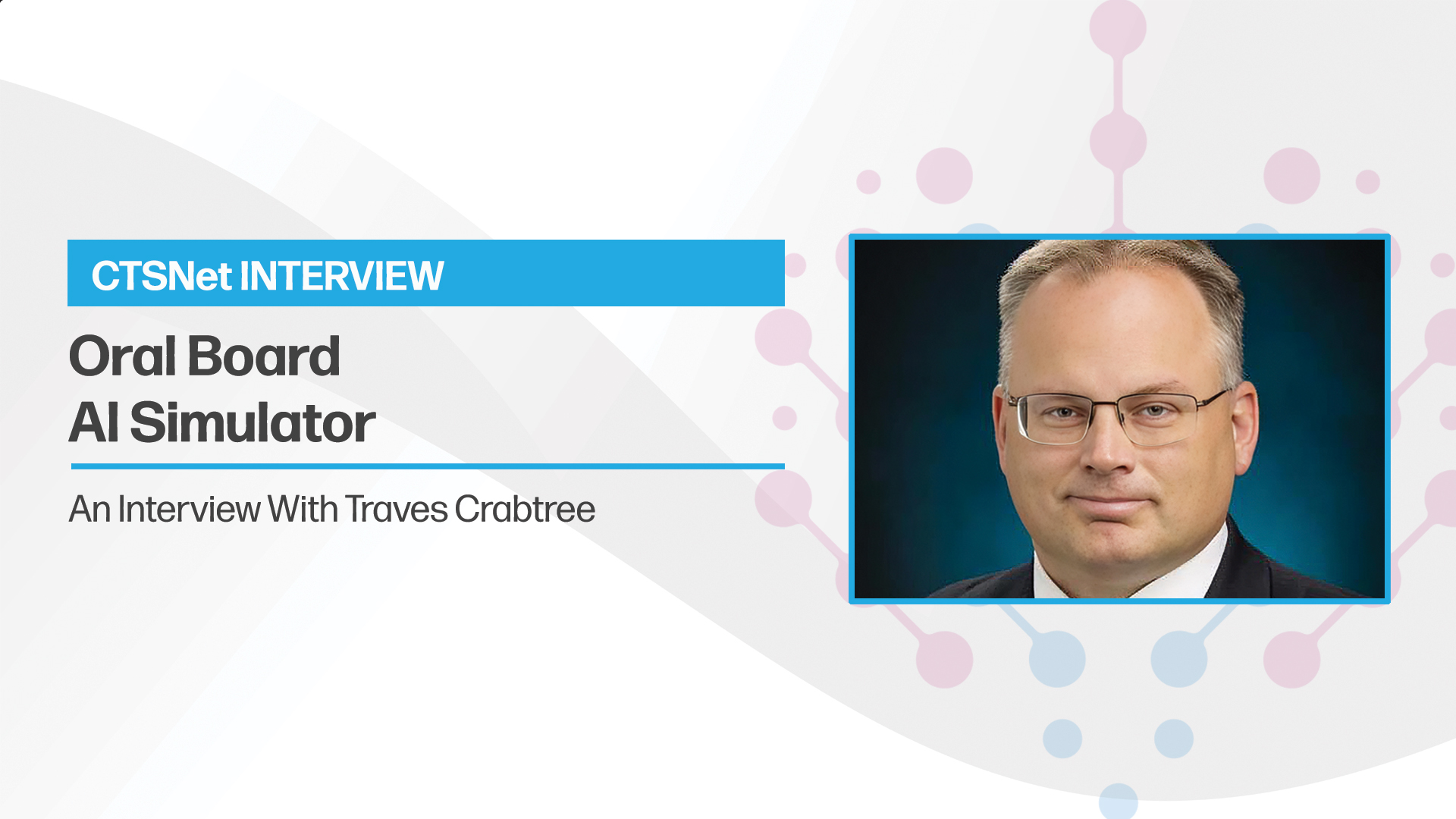
Oral Board AI Simulator: An Interview With Traves Crabtree

By: Traves Crabtree

Podcast

The Beat With Joel Dunning Ep. 175: Oral Board AI Simulator

By: Joel DunningGold ContributorSilver Commentor

JANS Article

Right Basilar Segmental Autologous Lung Transplantation With Carinal Reconstruction for Central Lung SCC

Author(s): Akshay PatelSilver Contributor

JANS Article

An STS General Thoracic Surgery Database Analysis of the Association Between LN Dissection and Chylothorax

Author(s): Akshay PatelSilver Contributor

Podcast

The Cardiac Recovery Room: ECMO and ERAS—Awake, Extubate, Ambulate

By: Subhasis Chatterjee

Video

Robotic Extended Sympathectomy for Severe Compensatory Hyperhidrosis

By: Francesco Petrella

233 S. Wacker Drive | Suite 4400
Chicago, Illinois 60606, USA

Linkedin X-twitter Facebook-f Youtube
  • Join CTSNet
  • Donate
  • Submit Content
  • Volunteer
  • Join CTSNet
  • Donate
  • Submit Content
  • Volunteer
  • Featured Partners
  • Careers
  • Press
  • Advertise on CTSNet
  • Featured Partners
  • Careers
  • Press
  • Advertise on CTSNet
  • CTSNet Policies
  • Privacy Policy
  • Disclaimer
  • Contact CTSNet
  • CTSNet Policies
  • Privacy Policy
  • Disclaimer
  • Contact CTSNet

233 S. Wacker Drive | Suite 4400
Chicago, Illinois 60606, USA

Instagram Linkedin X-twitter Facebook-f Youtube
  • Join CTSNet
  • Donate
  • Submit Content
  • Volunteer
  • Join CTSNet
  • Donate
  • Submit Content
  • Volunteer
  • Featured Partners
  • Careers
  • Press
  • Advertise on CTSNet
  • Featured Partners
  • Careers
  • Press
  • Advertise on CTSNet
  • CTSNet Policies
  • Privacy Policy
  • Disclaimer
  • Contact CTSNet
  • CTSNet Policies
  • Privacy Policy
  • Disclaimer
  • Contact CTSNet

233 S. Wacker Drive | Suite 4400
Chicago, Illinois 60606, USA

Instagram Linkedin X-twitter Facebook-f Youtube
  • Join CTSNet
  • Donate
  • Submit Content
  • Volunteer
  • CTSNet Policies
  • Privacy Policy
  • Join CTSNet
  • Donate
  • Submit Content
  • Volunteer
  • CTSNet Policies
  • Privacy Policy
  • Featured Partners
  • Careers
  • Press
  • Advertise on CTSNet
  • Disclaimer
  • Contact CTSNet
  • Featured Partners
  • Careers
  • Press
  • Advertise on CTSNet
  • Disclaimer
  • Contact CTSNet
  • Join CTSNet
  • Donate
  • Submit Content
  • Volunteer
  • Join CTSNet
  • Donate
  • Submit Content
  • Volunteer
  • Featured Partners
  • Careers
  • Press
  • Advertise on CTSNet
  • Featured Partners
  • Careers
  • Press
  • Advertise on CTSNet
  • CTSNet Policies
  • Privacy Policy
  • Disclaimer
  • Contact CTSNet
  • CTSNet Policies
  • Privacy Policy
  • Disclaimer
  • Contact CTSNet
© 2026 CTSNet Inc. All right reserved.
Go to Top