

Oral Board AI Simulator
One minute inside a live OBAS examination — the examiner presents the case and questions the candidate by voice.
AI POWERED SURGICAL TRAINING
Face the examiner before exam day.
Oral Board AI Simulator (OBAS) gives cardiothoracic trainees unlimited, on-demand mock oral board examinations—face-to-face with a realistic AI video examiner that questions you by voice, adapts the case as you answer, and grades every response against a structured rubric.
Developed by ECLIME at Southern Illinois University School of Medicine, OBAS is offered to the CTSNet community through a pilot collaboration.
Help shape the future of oral board preparation.
CTSNet users are invited to participate in the OBAS Pilot Access Period. During this period, CTSNet users receive complimentary access while helping shape future refinement and expansion of OBAS through their feedback. Creating an account takes two minutes:
1. Go to obas.eclime.ai and click Sign Up
2. Enter the institution ID and password shown here
3. Verify your email — then start your first examination
INSTITUTION GROUP ID
CTS2026
INSTITUTION PASSWORD
CTSurg_2026
Demo access is provided for individual exam preparation by the CTSNet community
This is not a question bank.
Oral boards are administered face-to-face — an examiner across the table, watching you work through a case in real time. That’s exactly how OBAS trains.
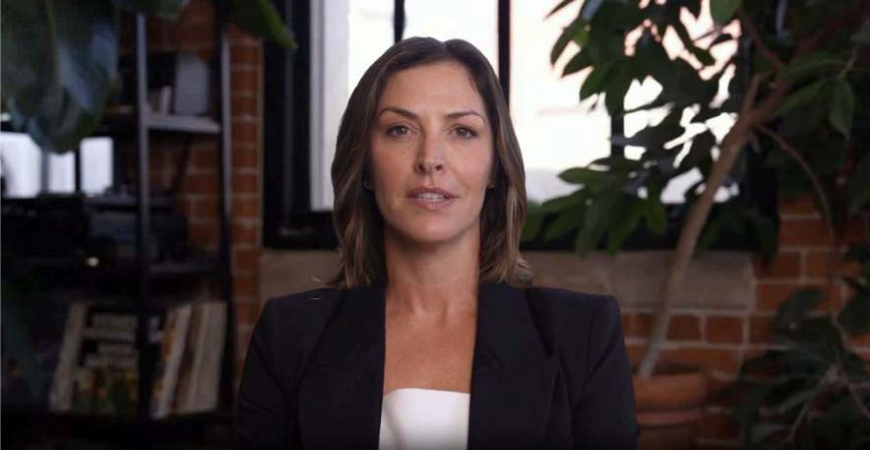
Full arc of care, under time pressure
Presentation → workup → operative decisions → postoperative management → follow-up.
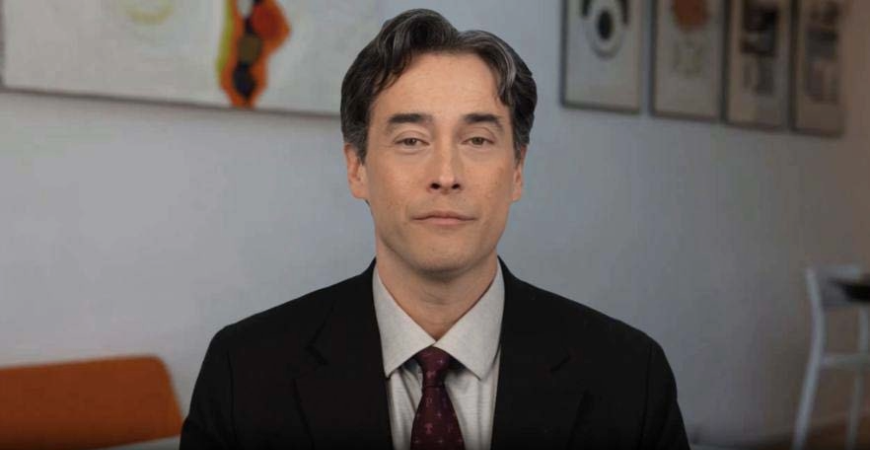
An examiner that adapts to you
The scenario responds to your answers — including the complications your decisions produce.
How a Session Runs
From sign-in to structured feedback in less than 30 minutes.
01
Pick a specialty
Log in, choose a cardiothoracic topic area, and start a timed examination.
02
Face the examiner
A realistic AI video examiner presents a case and questions you by voice—you answer out loud, just like the real exam.
03
Work the full case
Diagnosis through operative management to postoperative care, with the scenario adapting to every decision you make.
04
Get graded feedback
A structured evaluation lands on your
dashboard. You ask the AI debrief chat
why you lost points and what a stronger
answer would look like.
Built for the part of the exam you can’t get from reading.
Most trainees get only a handful of faculty-run mock orals before the real exam. Realistic practice is bottlenecked by scheduling and faculty time. OBAS removes that bottleneck.
Question banks build knowledge. OBAS builds the skill the boards actually test: verbalizing safe, organized clinical decisions to an examiner, under pressure, in real time.
• Unlimited mock orals on your schedule, no faculty booking required.
• A safe place to be challenged. Make your mistakes here, not on exam day.
• Objective, structured feedback after every session precisely identifies where you’re strong and where to focus.
• A broad case library builds confidence speaking through unfamiliar scenarios.
Common Questions
Cardiothoracic surgery trainees — residents and fellows preparing for their oral board examinations. Program directors and faculty benefit too, but the trainee is the primary user.
HOW DOES A TRAINEE ACTUALLY BENEFIT?
Unlimited realistic mock oral exams with a face-to-face AI video examiner; a graded, rubric-based evaluation after every session covering diagnostic reasoning, clinical and operative management, communication, and professionalism; and an AI debrief chat that has reviewed the exam and can explain any score.
WHAT'S IN IT FOR EXPERIENCED SURGEONS AND EDUCATORS?
• Extend your teaching without extending your hours — OBAS delivers the repetitive mock-exam practice, freeing faculty time for higher-level mentoring.
• Contribute your clinical expertise through examination cases that reach trainees far beyond your own institution.
• Recertifying? It’s a low-stakes way to refresh your oral examination skills.
WHAT FEEDBACK IS THE OBAS TEAM GATHERING DURING THE PILOT?
1. User-experience feedback from trainees and faculty (e.g., examiner realism, case accuracy, quality and fairness of evaluations, usability) via an in-app feedback tool)
2. Educational-value data through short pre- and post-use surveys measuring whether the tool improves trainees’ confidence and readiness for the oral boards
AN ACADEMIC PROJECT OF
PRESENTED BY
Provided through a grant from Springfield Memorial Foundation
OBAS is developed by ECLIME—the Ed Curtis Laboratory for Innovation in Medical Education—at SIU Medicine, Springfield, Illinois, USA. Learn more at www.eclime.ai.