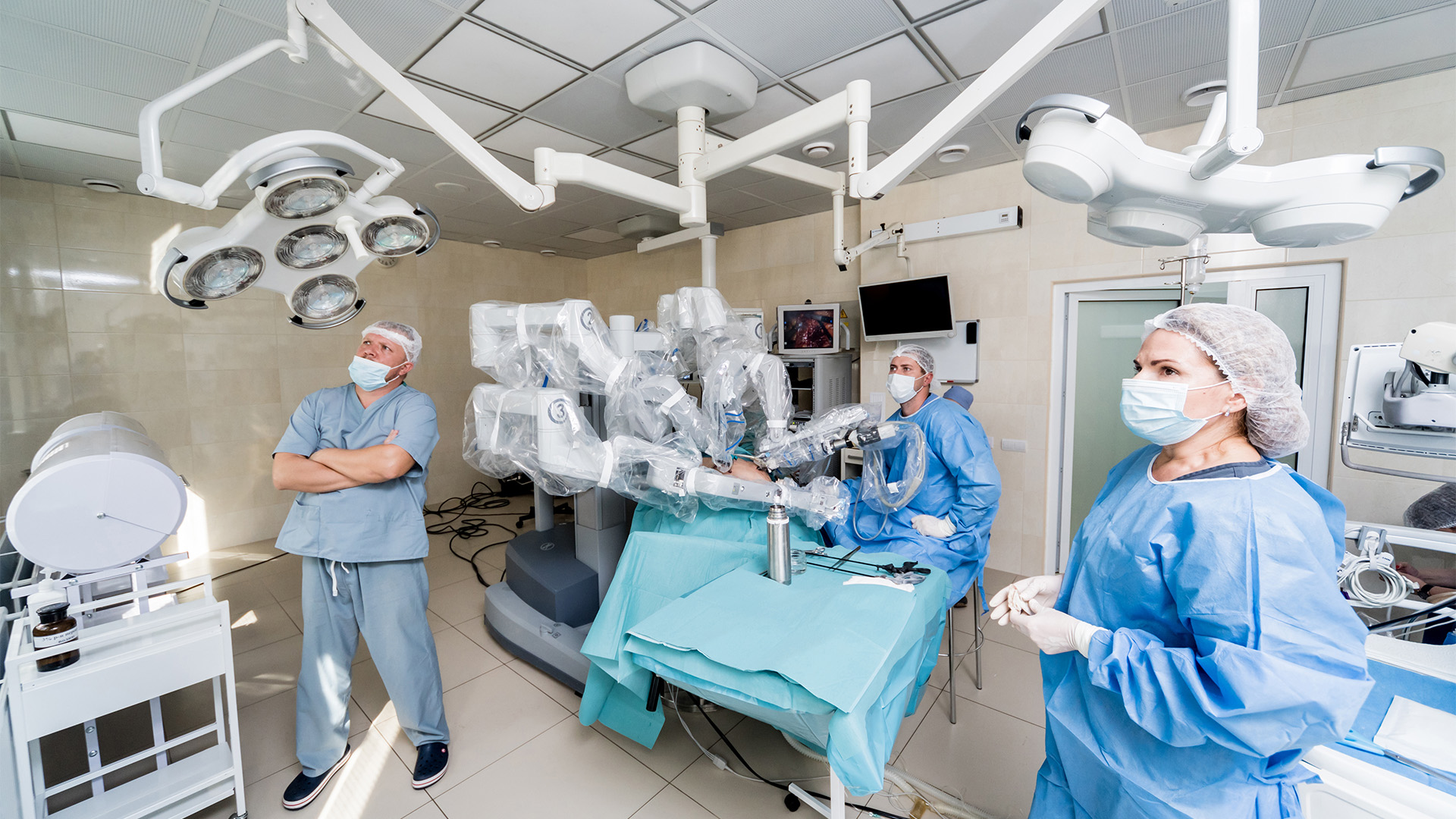
This video demonstrates a robotic-assisted, right-sided minimally invasive coronary artery bypass using the right internal thoracic artery (RITA) to the right coronary artery (RCA) in a patient with an anomalous origin of the RCA.
The patient was a 73-year-old man who presented with exertional chest discomfort. Coronary angiography revealed an anomalous origin of the RCA with flow limitation, while the left coronary system showed no significant disease. Coronary computed tomography (CT) angiography clearly delineated the anomalous origin and course of the RCA, and CT-derived fractional flow reserve confirmed hemodynamically significant ischemia in the RCA territory.
Based on isolated disease and favorable anatomy, robotic-assisted revascularization was selected.
The patient was positioned supine with slight right chest elevation. A right-side approach was used, with the robotic system docked from the patient’s left side. The RITA was harvested in a skeletonized fashion using robotic instruments, providing excellent visualization and conduit quality.
A right anterolateral minithoracotomy was made.
The RCA was identified and stabilized using a coronary stabilizer. An end-to-side anastomosis was performed between the RITA and RCA using a continuous suturing technique.
The patient was extubated in the operating room. He had an uneventful postoperative course and was discharged home in stable condition.
In conclusion, robotic-assisted right-sided minimally invasive RITA to RCA bypass is a safe and effective option for carefully selected patients with anomalous origin of the RCA and isolated ischemia. This approach enables durable arterial revascularization while avoiding median sternotomy and promoting rapid recovery.
Disclaimer
The information and views presented on CTSNet.org represent the views of the authors and contributors of the material and not of CTSNet. Please review our full disclaimer page here.
 840 views on Vimeo
 1,688 views