In this CTSNet series, Dr. Mario Castillo-Sang presents innovative, totally endoscopic cardiac procedures for a variety of conditions. Stay tuned for more series videos in the coming weeks.
The authors present the case of a totally endoscopic atrial septal defect (ASD) closure and tricuspid valve repair in a 28-year-old male who had presented with a syncopal episode that led to a motor vehicle accident. Workup with transesophageal echocardiography (TEE) and structural heart computed tomography angiography (CTA) demonstrated a fenestrated secundum ASD. The patient’s echocardiogram also showed a dilated tricuspid valve annulus of more than 40 mm with mild tricuspid regurgitation in a septal location.
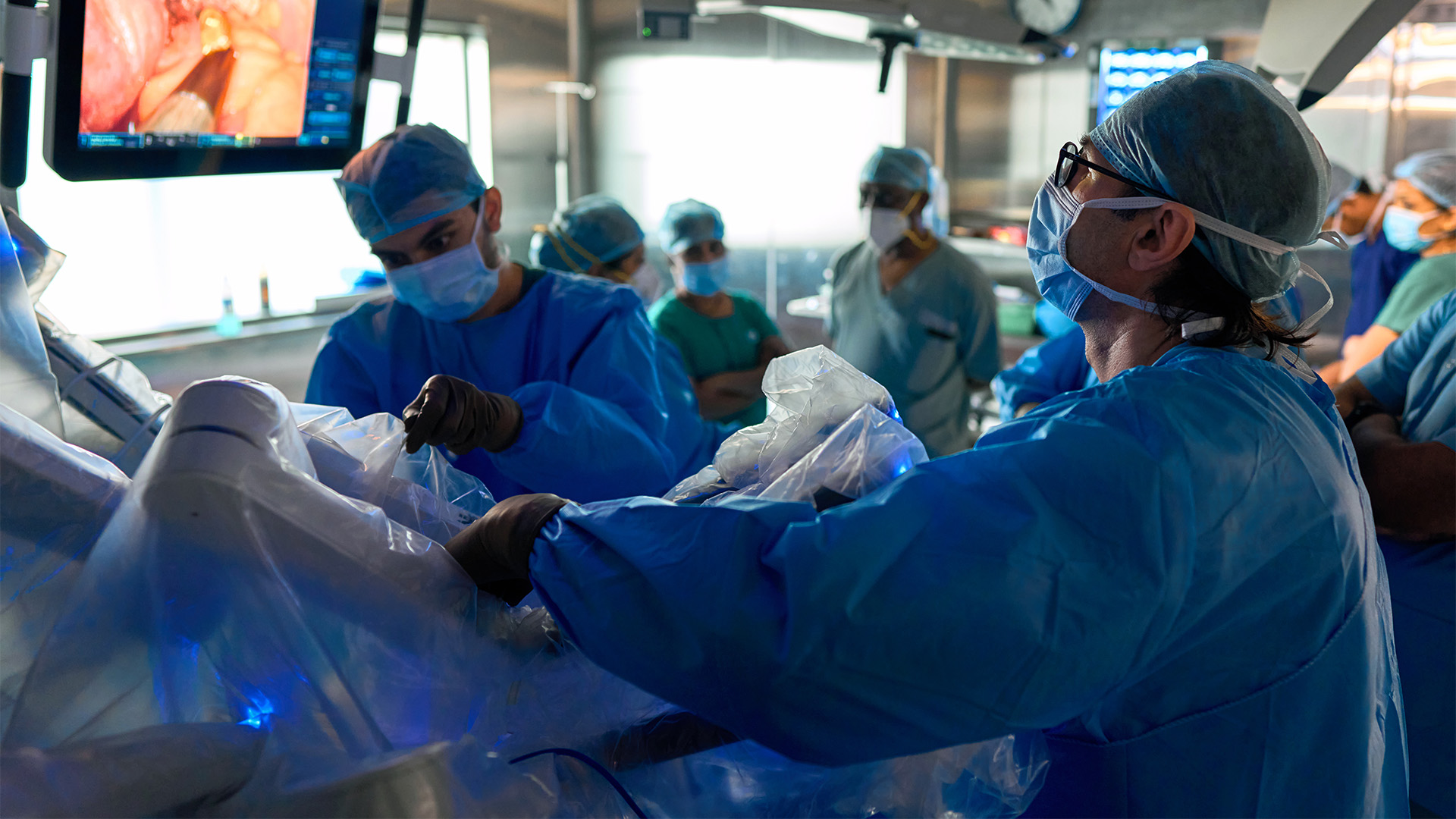
A totally endoscopic heart operation was undertaken with a 2.5 cm incision in the right fourth intercostal space and a 10 mm trochar for the endoscope inserted in the third intercostal space. The femoral artery was cannulated via cutdown, and the femoral vein was accessed, leaving the cannula in the inferior vena cava (IVC), and with the venous line Yd, a right internal jugular 17 Fr cannula was inserted percutaneously. Bicaval control was obtained using sterile IV tubing, which is the authors’ preferred method given that it is more slippery and avoids the potential drag injury on the vena cavae. A diaphragmatic pulling stitch was applied, and the pericardium was entered using a LigaSure device. The pericardium was retracted with four posterior and one anterior silk stitches. A 5 mm trochar was placed in the parasternal anterior fourth intercoastal space. Given the size of the secundum ASD, the authors chose to arrest the heart with antegrade del Nido cardioplegia, cooling the patient to 32 degrees Celsius.
The right atrium was opened with an oblique incision, and the right atrial CSV retractor was inserted. The edges of the ASD were identified, confirming it to be fenestrated. The plan was to use a bovine pericardial patch, for which the authors applied four cardinal 2-0 polyester sutures and parachuted the pericardial patch down. The authors then used a 4-0 polypropylene RB suture to run the patch on the ASD edge, locking every 3-4 stitches. Once the closure was completed, the authors proceeded with the tricuspid valve repair. Static testing with saline and a laparoscopic suction irrigator confirmed a jet between the septal and anterior leaflets. The authors then applied annuloplasty sutures and utilized a 28 mm incomplete tricuspid annuloplasty band, secured with titanium fasteners. The septal and anterior commissures were approximated using two CV5 ePTFE sutures. Static testing showed resolution of the tricuspid regurgitation. The cross-clamp was removed, allowing the heart to reanimate. The total cross-clamp time was 45 minutes.
Echocardiography intraoperatively demonstrated a negative bubble test and no tricuspid regurgitation, with a mean gradient of 1mmHg.
Discussion
Totally endoscopic surgery for atrial septal defects of any kind is not only possible but is also facilitated by excellent visualization of the defect details, as seen in this video. The authors have successfully performed sinus venosum repairs, including baffles for anomalous pulmonary venous return. Others have described the same benefits with endoscopic surgery (1, 2). The authors recommend the bicaval cannulation approach for these cases, utilizing femoral and internal jugular percutaneous cannulae. Caval control is important, and this can be achieved with the right instrumentation without the need for larger chest incisions. Resection of the tumor can be complemented with the cryoablation of the base when removal poses a risk of transmural perforation in a critical area (3).
References
- Yao DK, Chen H, Ma LL, Ma ZS, Wang LX. Totally endoscopic atrial septal repair with or without robotic assistance: a systematic review and meta-analysis of case series. Heart, Lung and Circulation. 2013 Jun 1;22(6):433-40.
- Bonaros N, Schachner T, Oehlinger A, Jonetzko P, Mueller S, Moes N, Kolbitsch C, Mair P, Putz G, Laufer G, Bonatti J. Experience on the way to totally endoscopic atrial septal defect repair. InThe Heart Surgery Forum 2004 (Vol. 7, No. 5, pp. E440-E445).
- Marinakis S, Mircev D, Wauthy P. Cryoablation for a right atrial myxoma arising from the Koch’s triangle: a case report. Journal of Cardiothoracic Surgery. 2013 Dec;8:1-3.
Disclaimer
The information and views presented on CTSNet.org represent the views of the authors and contributors of the material and not of CTSNet. Please review our full disclaimer page here.
 503 views on Vimeo
 779 views