Robotic Diaphragm Plication [1]
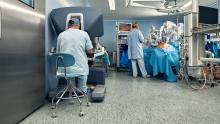
The patient was a 61-year-old male with no significant medical or surgical history who presented with symptomatic diaphragm paralysis. A fluoroscopic study demonstrated left hemidiaphragm elevation with paradoxical motion, consistent with diaphragmatic paralysis. Similarly, computed tomography (CT) of the chest revealed chronic elevation of the left hemidiaphragm with compressive atelectasis. Preoperative clearance included pulmonary function testing, which revealed preserved forced expiratory volume in one second (FEV1) and diffusing capacity of the lung for carbon monoxide (DLCO) values. The surgeons proceeded with a robotic-assisted approach to diaphragm plication, leveraging the platform for its high degree of dexterity, precision, and enhanced visualization.
In the operating room, the patient underwent general anesthesia with placement of a double-lumen endotracheal tube. Flexible bronchoscopy confirmed appropriate tube positioning, and a survey of the airways revealed no abnormalities of the trachea, bilateral main bronchi, and segmental airways. The patient was positioned in the right lateral decubitus position. Four 8 mm robotic working ports were placed in the third, fourth and fifth intercoastal spaces, along with an assistant port in the tenth intercostal space, as illustrated in the diagram.
Upon entry into the thoracic cavity, the diaphragm was noted to be elevated. Insufflation was increased to 12 mmHg to facilitate downward displacement of the diaphragm to allow for easier plication. The diaphragm was retracted downward, and multiple pledgeted 2-0 Ethibond sutures were placed in a mattress fashion to imbricate the diaphragm. The diaphragm was grasped and elevated superiorly to create a fold, ensuring safe suture placement without injury to the abdominal viscera. Each suture was secured using a Cor-Knot device. Multiple rows of sutures were placed from a lateral to medial fashion until the diaphragm was taut and secured in a static inferior position. The diaphragm was in satisfactory position at the conclusion of the case. The patient tolerated the procedure well without complications and was discharged the following day.
References
- Gritsiuta, A.I. et al. (2022) ‘Minimally invasive diaphragm plication for acquired unilateral diaphragm paralysis: A systematic review’, Innovations: Technology and Techniques in Cardiothoracic and Vascular Surgery, 17(3), pp. 180–190. doi:10.1177/15569845221097761.
- Gergen, A.K. et al. (2024) ‘Robotic-assisted transthoracic diaphragm plication,’ Operative Techniques in Thoracic and Cardiovascular Surgery, 29(2), pp. 216–227. doi:10.1053/j.optechstcvs.2023.10.004
- Bin Asaf, B. et al. (2020) ‘Robotic diaphragmatic plication for eventration: A retrospective analysis of efficacy, safety, and feasibility’, Asian Journal of Endoscopic Surgery, 14(1), pp. 70–76. doi:10.1111/ases.12833.
Disclaimer
The information and views presented on CTSNet.org represent the views of the authors and contributors of the material and not of CTSNet. Please review our full disclaimer page here. [3]