Single-Port Sympathectomy for Refractory Ventricular Tachycardia [1]
This video is part of CTSNet’s 2024 Resident Video Competition. Watch all entries into the competition, including the winning videos. [3] [3]
Ventricular tachycardia (VT) is a life-threatening arrhythmia that is typically managed without surgical intervention using a combination of medications, implanted cardioverters, or catheter-based ablations. Some cases of refractory VT, commonly known as VT storm, may require more aggressive interventions, including chemical sympathetic chain ablation, surgical sympathectomy, extracorporeal membranous oxygenation, or even transplantation. Surgical sympathectomy is a viable and effective option, and recent techniques in hyperhidrosis using a single-port technique are translatable to the VT storm population. Using a single incision for unilateral sympathectomy reduces surgical risk in patients with high-risk arrhythmias, shortens postoperative stay from a surgical perspective, and provides an effective and more permanent solution to otherwise refractory VT.
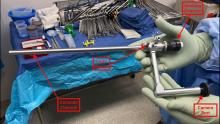
This video begins with a summary of the patient's clinical history, with a specific focus on his cardiac history and interventions. Notably, it highlights the evolution of his VT and the multiple failed nonoperative interventions, culminating in his VT storm. Following this, the surgery is presented, starting with a discussion on the operative thoracoscope used and its critical components. Next, the patient positioning for the procedure and the incision are described before beginning the operation. The operative video starts with the port placed and the thoracoscope within the chest cavity, examining the relevant anatomy at the apex of the left chest. The dissection of the sympathetic chain begins, freeing it from the endothoracic fascia and underlying muscle before transecting and removing a portion of it sharply. Confirmation of neural tissue was obtained via frozen section. Once hemostasis was achieved, the port and thoracoscope were removed, and residual air from the thoracic cavity was evacuated using a silastic tube on water seal, assisted by Valsalva breaths from anesthesia. This removes the need for a postoperative chest tube.
The incision was then closed in multiple layers, with the final photo showing the closed incision that had been cosmetically placed in the axillary folds. Finally, the authors discuss the patient's postoperative course, the success of the operation in treating the patient, and the utility and benefits of the minimally invasive, limited sympathectomy approach to treat VT storm.
References
- Krause EM, Applebaum J, Naselsky W, et. al. Limited left thoracoscopic sympathectomy effectively silences refractory electrical storm. Ann Thorac Surg. 2022 Jan;113(1):217-223.
- Chihara RK, Chan EY, Meisenbach LM, et. al. Surgical cardiac sympathetic denervation for ventricular arrhythmias: a systematic review. Methodist Debakey Cardiovasc J. 2021 Mar 25;17(1):24-35.
- Curtis B, VanAken G, Al-Sadawi M, et. al. Safety and outcomes of surgical cardiac sympathectomy denervation in patients with refractory ventricular arrhythmias. JACC. 2024 Apr, 83;(13_Supplement):145
- Assis FR, Krishnan A, Zhou X, et. al. Cardiac sympathectomy for refractory ventricular tachycardia in arrhythmogenic right ventricular cardiomyopathy. Heart Rhythm. 2019 Jul;16(7):1003-1010.
Disclaimer
The information and views presented on CTSNet.org represent the views of the authors and contributors of the material and not of CTSNet. Please review our full disclaimer page here. [4]