

 welcomes you to the new, improved website!
Lung & Mediastinal

This video is part of CTSNet’s 2025 Resident Video Competition. Watch all entries into the competition, including the winning videos. This video features a left uniportal video-assisted thoracoscopic surgery (VATS) left upper lobe trisegmentectomy, also...

 …
…This video demonstrates the case of a 51-year-old female patient with a history of smoking who presented with progressive dyspnea, hemoptysis, and status alteration. Computed tomography (CT) of the chest...

Mediastinal lipomas are benign, slow-growing masses that can present as large masses due to their insidious onset (1). Symptoms associated with these lipomas are generally due to mass effect, such...

The video begins with an interview featuring thoracic surgeon and CTSNet Editor-in-Chief Joel Dunning and Dr. Leanne Ashrafian, a cardiothoracic surgeon at Guy’s Hospital in London, United Kingdom, interviewing the...

A 69-year-old female smoker (82 pack years) was incidentally diagnosed with a left lung tumor. Imaging revealed an 18×18×10 mm lower-lobe nodule and a 24×30 mm hypermetabolic interbronchial lymph node...
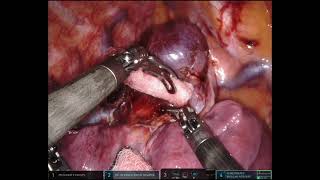
A female patient in her thirties was referred to our clinic when an MRI for neck pain revealed an upper right sided mediastinal mass that proved to be an azygos...
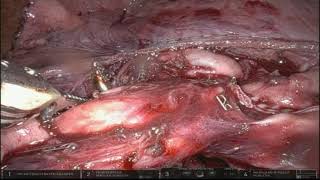
Introduction Operating in a post-surgical field has inherent technical challenges. Often, tissue preservation is important because prior excision can leave the remaining anatomy limited. In select cases, the enhanced abilities...

In this CTSNet To Go podcast, we share the archived version of the webinar that concluded the Guest Editor Series, “Lung Cancer Screening – Health Care Disparities.” The panelists discuss...

This is the archived version of the webinar that concluded the Guest Editor Series, “Lung Cancer Screening – Health Care Disparities.” The panelists discuss the various videos contributed to the...
This CTSNet virtual Roundtable invites experts from the Multidisciplinary Thoracic Oncology Program of the University of North Carolina at Chapel Hill to discuss health care disparities in the treatment of...

Lung cancer is the leading cause of cancer death in the United States, and it is estimated that smoking is the cause in approximately 80-90% of cases. Traditionally, tobacco prevention...
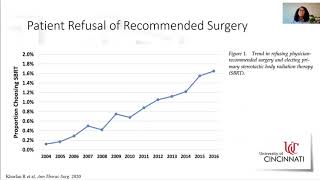
In the United States, lung cancer is the second most common cancer and the leading cause of cancer mortality. Among those diagnosed, African American and black men have both the...

Health care disparities affect cancer screening (1). While lung cancer screening improves rates of cancer-specific mortality and is recommended for high-risk patients (2), barriers to screening still exist. First, the...