A 27-year-old male previously underwent bilateral T2–T3 sympathicotomy for severe palmar hyperhidrosis. Compensatory hyperhidrosis involving the trunk developed one year after the initial procedure and progressively became debilitating. Seven years after the index operation, because of the severe impact on his quality of life, he was referred to the authors’ institution for surgical management. Following a comprehensive evaluation and counseling, an extended bilateral sympathectomy was planned using a staged robotic approach.
Operative Strategy
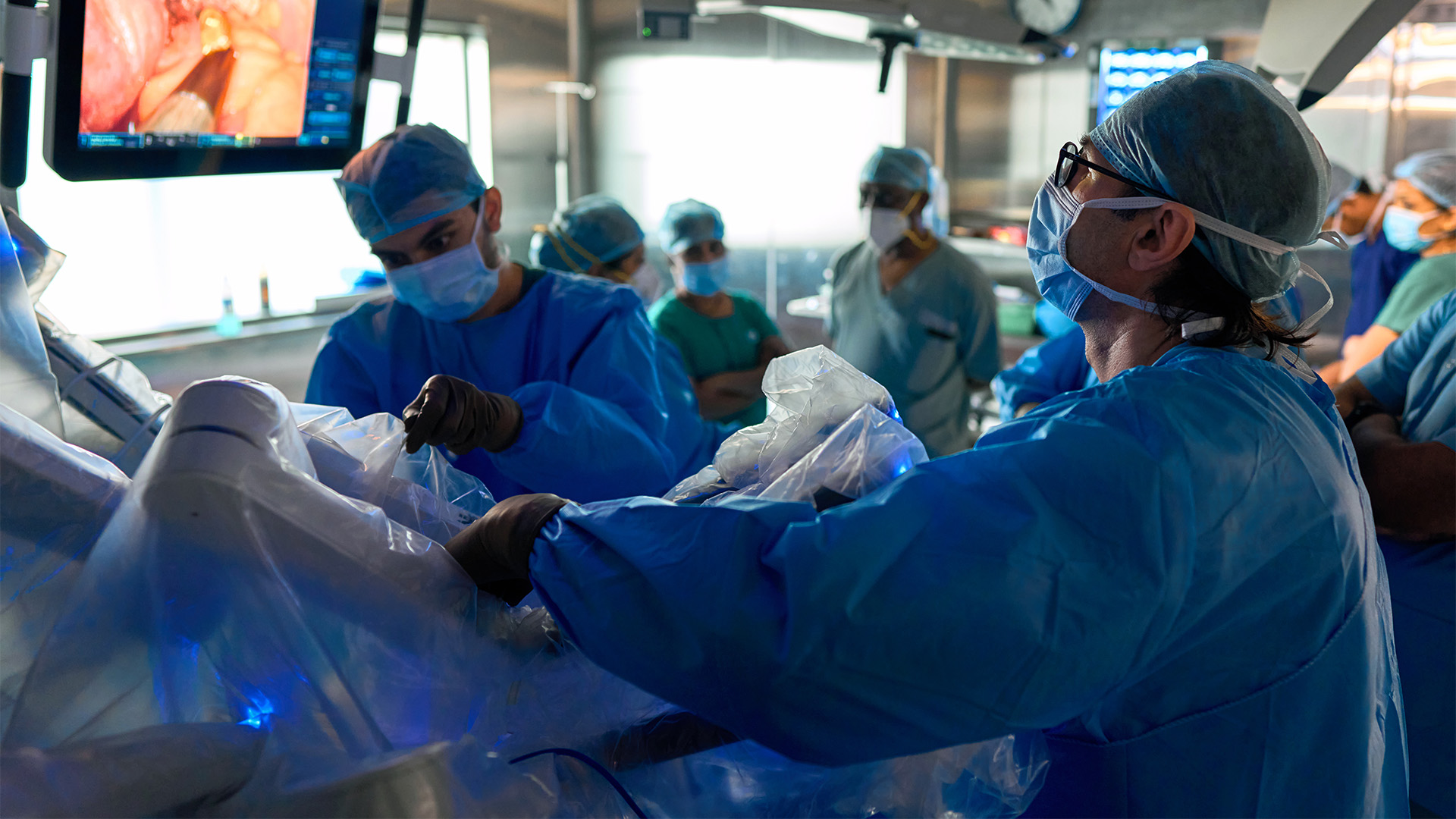
The procedure was performed using a robotic platform through a three-port thoracic approach. This configuration provided excellent visualization of the operative field, along with enhanced instrument dexterity and maneuverability within the confined thoracic cavity, facilitating meticulous identification of the sympathetic chain and precise dissection while minimizing inadvertent injury to adjacent structures.
To reduce the risk of cardiac autonomic dysfunction, the highest ganglion below the level of resection was intentionally preserved. In this patient, the fourth thoracic ganglion (T4) was left intact, avoiding complete interruption of the upper thoracic sympathetic outflow and thereby helping to minimize the risk of postoperative bradycardia.
Rather than performing a simultaneous bilateral procedure, the operation was carried out in two separate stages approximately 45 days apart. This staged strategy allows for physiological adaptation following the first intervention and may further reduce the likelihood of clinically significant postoperative bradycardia or other autonomic disturbances.
Postoperative Outcome
The patient’s postoperative course was uneventful after both procedures. He experienced marked resolution of compensatory hyperhidrosis with substantial improvement in daily activities and quality of life. No clinically significant bradycardia or other autonomic complications were observed. At follow-up, the patient reported excellent satisfaction with the surgical outcome.
Technical Highlights
Robotic three-port thoracic access using a robotic platform provides excellent exposure and ergonomic dissection. Careful identification of the previously interrupted sympathetic chain was essential. Extended resection was performed while preserving the T4 ganglion. A staged bilateral approach enhanced procedural safety by limiting acute autonomic changes.
References
- Vasconcelos CFM, Aguiar WS, Tavares RM, Barbosa A, Cordeiro GG, Oliveira FSC, Ferraz ÁAB. Bilateral R5-R8 sympathectomy for compensatory hyperhidrosis: complications and patient satisfaction. Rev Col Bras Cir. 2020 Jun 3;47:e20202398. Portuguese, English. doi: 10.1590/0100-6991e-20202398. PMID: 32555962.
- Raveglia F, Orlandi R, Guttadauro A, Cioffi U, Cardillo G, Cioffi G, Scarci M. How to Prevent, Reduce, and Treat Severe Post Sympathetic Chain Compensatory Hyperhidrosis: 2021 State of the Art. Front Surg. 2022 Jan 3;8:814916. doi: 10.3389/fsurg.2021.814916. PMID: 35047551; PMCID: PMC8763307.
Disclaimer
The information and views presented on CTSNet.org represent the views of the authors and contributors of the material and not of CTSNet. Please review our full disclaimer page here.
 426 views on Vimeo