Mediastinal and intrathoracic germ cell tumors are rare in the pediatric population, and extragonadal yolk sac tumors presenting as giant thoracic masses are rarer still. These tumors pose a dual challenge: securing an accurate tissue diagnosis in a child with a critically compressed hemithorax and achieving complete oncologic resection of a lesion intimately related to the great vessels, pericardium, and phrenic nerve. The authors present the diagnostic pathway and minimally invasive surgical management of a giant yolk sac tumor in a 9-year-old girl.
The patient presented to the emergency department with spontaneous right-sided chest pain radiating to the back and progressive dyspnea. Her past medical and family histories were essentially unremarkable. On examination, she was hemodynamically stable, with diminished breath sounds over the right hemithorax. A chest radiograph revealed complete opacification of the right side. Cross-sectional imaging demonstrated a large, heterogeneous mass filling the right hemithorax with an associated pleural effusion.
As the dyspnea and effusion progressed, a thoracostomy was performed, draining 500 mL of hematic fluid. Pleural fluid analysis showed an inflammatory, lymphocyte-predominant infiltrate with no evidence of malignancy, and a concurrent bone marrow aspirate was nondiagnostic. Given the absence of a conclusive diagnosis, a transthoracic core biopsy was performed. Molecular analysis of the specimen established a yolk sac tumor with a markedly elevated serum alpha-fetoprotein of 21,000 confirming the diagnosis. Staging positron emission tomography/computed tomography (PET-CT) showed an avid, bulky thoracic lesion without distant disease.
The multidisciplinary team elected for neoadjuvant chemotherapy, reserving surgery for residual disease. The patient completed four cycles according to the GALOP TCG 2017 protocol, which included ifosfamide and cisplatin. An allergic reaction to paclitaxel occurred during treatment and was managed. Post-chemotherapy imaging demonstrated a substantial reduction in tumor volume and metabolic activity, converting an initially formidable mass into a well-defined, resectable target.
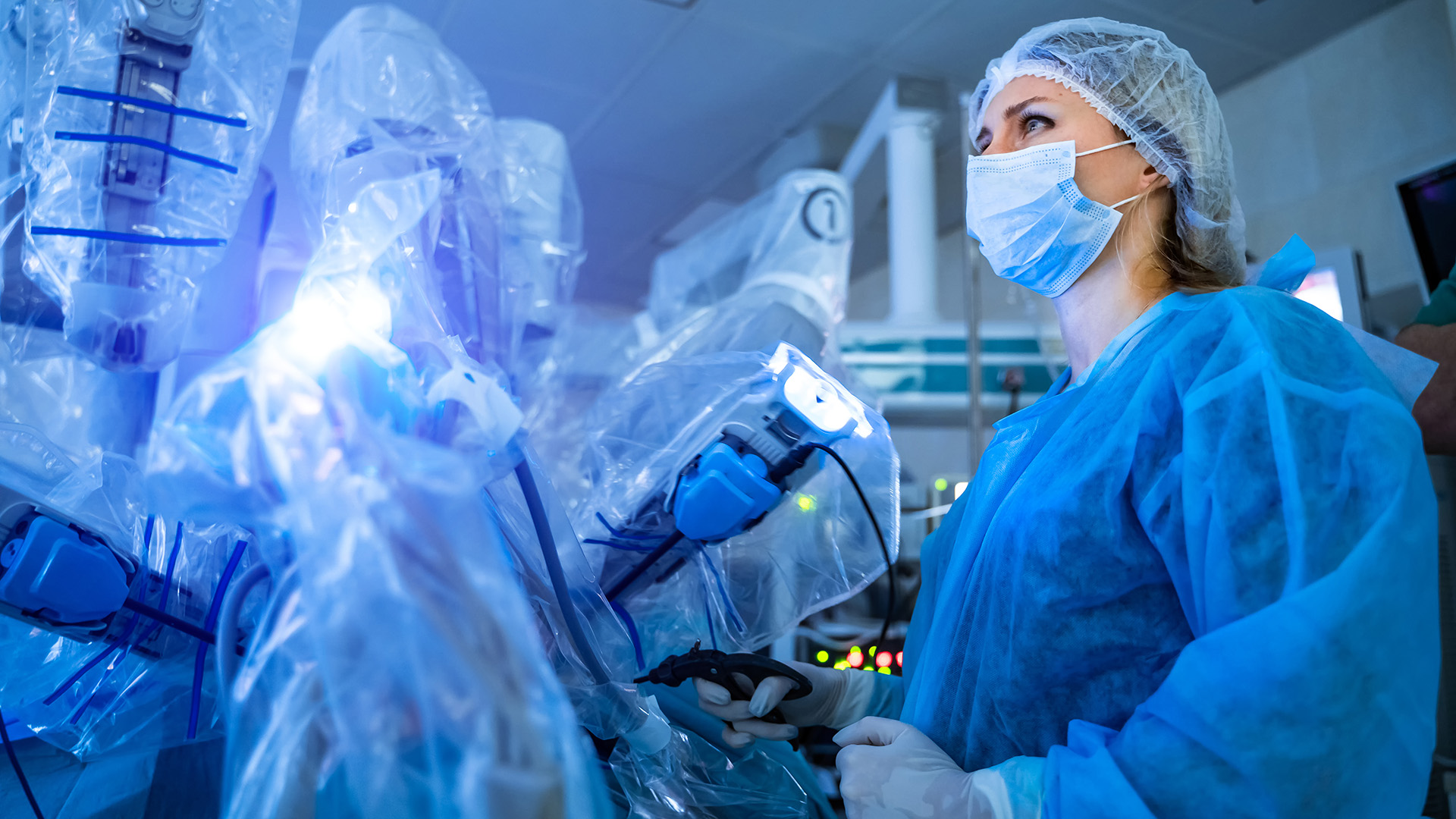
The patient subsequently underwent a robotic-assisted thoracoscopic resection. The articulated platform allowed precise dissection of the post-chemotherapy fibrotic planes surrounding the pericardium and great vessels within the confined pediatric thorax. Because the right phrenic nerve was directly involved, en bloc resection of the nerve was performed to guarantee a clear oncologic margin. The specimen was extracted intact.
Perioperative care included prophylactic cefuroxime and an epidural catheter infusing ropivacaine and fentanyl. The epidural catheter was maintained until postoperative day three, when the chest tube was removed. As anticipated, the patient developed right diaphragmatic elevation without respiratory compromise. The only complication was a peripheral catheter thrombosis, which was managed by reinitiating anticoagulation on postoperative day four. She was discharged on postoperative day five.
Final pathology described a nodular lesion measuring up to 6.5 cm in its largest diameter, composed entirely of fibrosis, with no viable residual tumor and tumor-free margins including the phrenic nerve. The postoperative serum alpha-fetoprotein normalized to 11, providing biochemical confirmation of complete resection. At the 30-day postoperative follow-up, the patient had an outstanding recovery and continues in oncologic follow-up. This case highlights how neoadjuvant chemotherapy and a robotic approach together can enable safe, complete resection of a giant pediatric thoracic germ cell tumor.
References
1.Grupo América Latina de Oncología Pediátrica. Protocolo TCG-GALOP-2017: Grupo Cooperativo Latinoamericano de Tratamiento de Tumores de Células Germinales. GALOP; 2017.
2.Dabsha A, Elkharbotly IAMH, Yaghmour M, Badr A, Badie F, Khairallah S, et al. Survival difference among adult and pediatric mediastinal yolk sac tumors cases: a meta-analysis of case reports. Eur J Surg Oncol. 2024;50(3):108019.
3.Chen Y, Yang C, Huang C, Li S. Feasibility of resection after neoadjuvant chemotherapy for mediastinal yolk sac tumor. Asian J Surg. 2023;46(12):6008-9.
Disclaimer
The information and views presented on CTSNet.org represent the views of the authors and contributors of the material and not of CTSNet. Please review our full disclaimer page here.
 40 views on Vimeo