Skip to content
Skip to content

AI-Powered Oral Board Training Is Available to CTSNet Users Now!

LEARN MORE
Not a member yet? Register now.
  • ABOUT
    • Leadership
    • Participation
    • Featured Sponsors
    • Submission Guidelines
    • Competitions
      • Innovation Video Competition
    • Community
      • Volunteer
      • Badges
    • Contact Us
  • EXPLORE CTSNET
    • CARDIAC
    • THORACIC
    • CONGENITAL
    • Clinical Care Professionals
    • JANS
    • Events
    • Journals
  • Videos
    • Atlas of Cardiac Surgery
    • Webinars
    • Master Class
    • Guest Interviews
    • Conference Sessions
  • Podcasts
    • The Beat With Joel Dunning
    • The Atrium
    • The Cardiac Recovery Room
    • The Lifeline
  • Profiles
    • Users Directory
    • Organizations
  • CAREERS
    • US Career Center
    • European Career Center
  • ABOUT
    • Leadership
    • Participation
    • Featured Sponsors
    • Submission Guidelines
    • Competitions
      • Innovation Video Competition
    • Community
      • Volunteer
      • Badges
    • Contact Us
  • EXPLORE CTSNET
    • CARDIAC
    • THORACIC
    • CONGENITAL
    • Clinical Care Professionals
    • JANS
    • Events
    • Journals
  • Videos
    • Atlas of Cardiac Surgery
    • Webinars
    • Master Class
    • Guest Interviews
    • Conference Sessions
  • Podcasts
    • The Beat With Joel Dunning
    • The Atrium
    • The Cardiac Recovery Room
    • The Lifeline
  • Profiles
    • Users Directory
    • Organizations
  • CAREERS
    • US Career Center
    • European Career Center
SUBMIT CONTENT
DONATE
JOIN

AI-Powered Oral Board Training Is Available to CTSNet Users Now!

READ MORE
  • ABOUT
    • Leadership
    • Participation
    • Featured Sponsors
    • Submission Guidelines
    • Competitions
      • Innovation Video Competition
    • Community
      • Volunteer
      • Badges
    • Contact Us
  • EXPLORE CTSNET
    • CARDIAC
    • THORACIC
    • CONGENITAL
    • Clinical Care Professionals
    • JANS
    • Events
    • Journals
  • Videos
    • Atlas of Cardiac Surgery
    • Webinars
    • Master Class
    • Guest Interviews
    • Conference Sessions
  • Podcasts
    • The Beat With Joel Dunning
    • The Atrium
    • The Cardiac Recovery Room
    • The Lifeline
  • Profiles
    • Users Directory
    • Organizations
  • CAREERS
    • US Career Center
    • European Career Center
Not a member yet? Register now.
  • ABOUT
    • Leadership
    • Participation
    • Featured Sponsors
    • Submission Guidelines
    • Competitions
      • Innovation Video Competition
    • Community
      • Volunteer
      • Badges
    • Contact Us
  • EXPLORE CTSNET
    • CARDIAC
    • THORACIC
    • CONGENITAL
    • Clinical Care Professionals
    • JANS
    • Events
    • Journals
  • Videos
    • Atlas of Cardiac Surgery
    • Webinars
    • Master Class
    • Guest Interviews
    • Conference Sessions
  • Podcasts
    • The Beat With Joel Dunning
    • The Atrium
    • The Cardiac Recovery Room
    • The Lifeline
  • Profiles
    • Users Directory
    • Organizations
  • CAREERS
    • US Career Center
    • European Career Center
  • ABOUT
    • Leadership
    • Participation
    • Featured Sponsors
    • Submission Guidelines
    • Competitions
      • Innovation Video Competition
    • Community
      • Volunteer
      • Badges
    • Contact Us
  • EXPLORE CTSNET
    • CARDIAC
    • THORACIC
    • CONGENITAL
    • Clinical Care Professionals
    • JANS
    • Events
    • Journals
  • Videos
    • Atlas of Cardiac Surgery
    • Webinars
    • Master Class
    • Guest Interviews
    • Conference Sessions
  • Podcasts
    • The Beat With Joel Dunning
    • The Atrium
    • The Cardiac Recovery Room
    • The Lifeline
  • Profiles
    • Users Directory
    • Organizations
  • CAREERS
    • US Career Center
    • European Career Center
SUBMIT CONTENT
DONATE
JOIN
You are here:
  1. Cardiac

Anterior Leaflet Mitral Repair Using the Chordae System Technique Through Minimal Access

  • April 10, 2011

By: Marcio Scorsin, Ernesto Greco, Giuseppe Vaccari, Oleksandr Dyrda, Stefania Trimboli, Chiara Comoglio

Keywords:

  • Mitral Valve Robotic & Endoscopic Cardiac

FigureUPDATE: A follow-up video has been added that demonstrates how to manufacture the chordae system.

The AHA/ACC guidelines for treatment of valvular heart disease state that mitral valve repair is the treatment of choice for patients with symptomatic severe MR. However, it is unfortunate that in USA and Europe the valve is repaired in only 50% of cases. Current techniques (valve resection/PTFE sutures) are effective in the treatment of posterior leaflet prolapse, but applying those techniques to repair anterior or bileaflet prolapse is technically more complex and requires a high level of skill and often leads to mitral valve replacement by surgeons who are unable to perform the full range of repair techniques.

With the aim of simplifying mitral repair, we propose a specially designed set of artificial chordae.

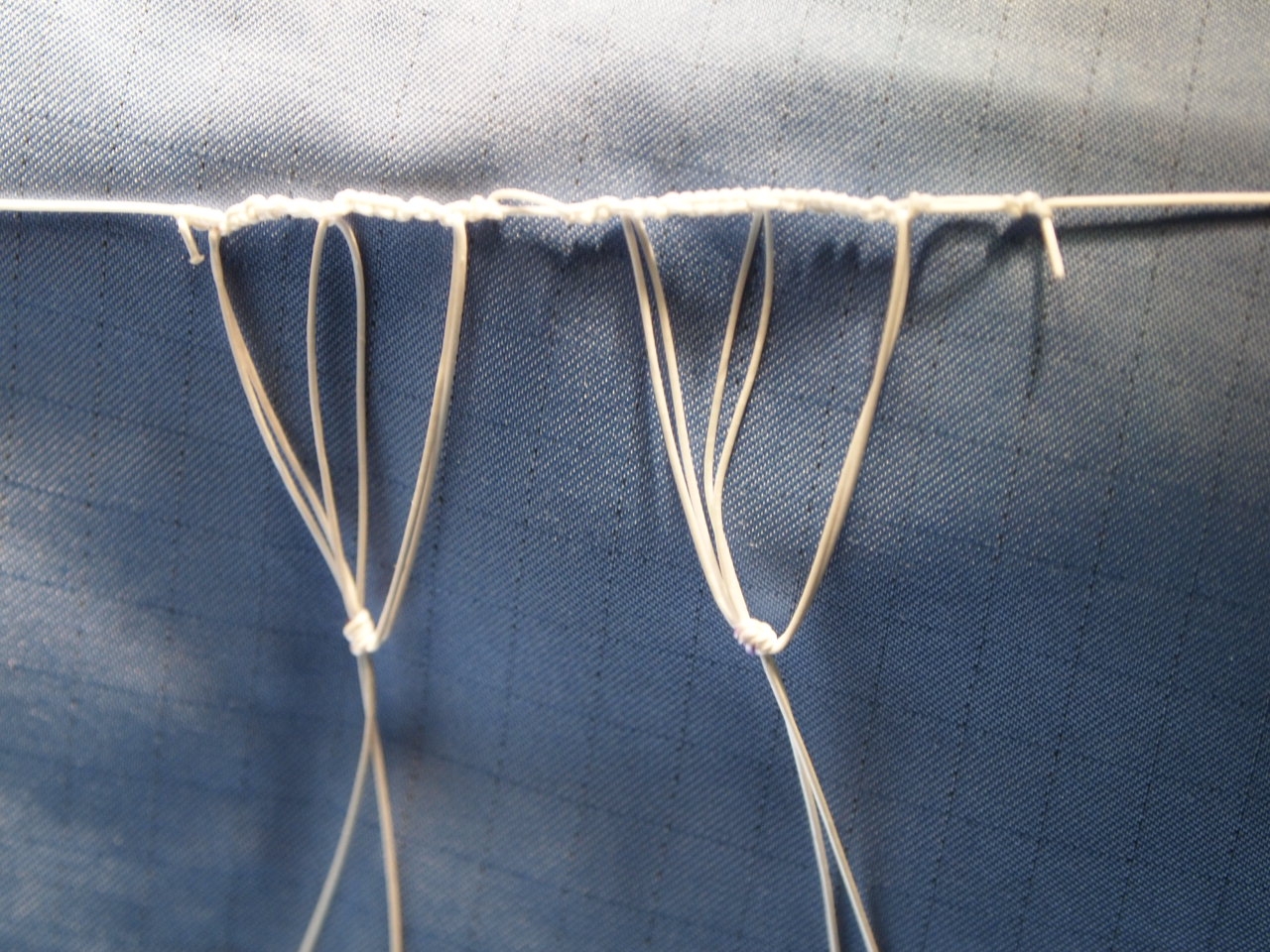
Manufacturing the chordae systemThe chordae system technique is an echocardiographically  pre-measured array of PTFE chordae, manufactured by hand during chest opening and placement on cardiopulmonary bypass.

The surgical technique then becomes very simple, avoiding complex measurements or leaflet resection. The surgeon only needs to determine the following factors: the middle of the prolapsed free edge of A2, and the fibro-tendinous tip of each papillary muscles (MAPP triad). The chordae system is then attached to the prolapsed free edge and anchored to the corresponding tip of the papillary muscle by only one stitch. It homogenously aligns the prolapsed edge to an ideal distance from papillary muscular plane, thus evenly equilibrating the systolic stress all along the strip of the device attached to the edge of the leaflet, with a potential advantageous role in terms of longevity.

The case report we present, concerns a 21 year-old male patient with a huge anterior leaflet prolapse without chordae rupture. Through a port-access incision, we implanted an echocardiographically  pre-measured chordae system that was 29 mm long, to suspend the whole of the prolapsed leaflet back to its normal coaptation level. A 36 mm annuloplastic mitral ring was implanted to treat the annulus dilatation.

This technique is simple, fast, and reproducible, requiring no valve resection nor complicate measurements. Although a long-term follow up is necessary, we believe the chordae system technique is a good surgical option.

Disclosure:

Dr Marcio Scorsin, MD, PhD: I have a patent deposited in June 2006 concerning this technique. I have not, though, any commercial agreements of any kind with any commercial entity.


Video:

Manufacturing the Chordae System:

Add Comments Cancel reply

You must be logged in to post a comment.

Not a member yet? Register now.
TAGS
  • Minimally Invasive Surgery
  • Valve Disease

Related Content

Video

Endoscopic Septal Tumor Resection With Biatrial Reconstruction

By: Oscar Flores Flores

Video

Thinking Outside the Box: Mitral Valve De-Repair

By: Sameh SaidGold ContributorSilver Commentor

Video

Surgical Repair of Mixed Supracardiac Total Anomalous Pulmonary Venous Connection

By: Zineb El Hasnaoui

Video

ISMICS 2026 | Innovations in Cardiac Surgery: Imaging, Robotics, and Autonomy

By: Feras Khaliel

Podcast

The Beat With Joel Dunning Ep. 171: Online Quiz League for Residents

By: Joel DunningGold ContributorSilver Commentor

Video

Upper Ministernotomy for Pulmonary Artery Banding: Facilitating Future Reentry

By: Alsayed Salem

JANS Article

Single-Stage Repair of Ruptured Aortic Arch With Coarctation Using Dual Perfusion Strategy

Author(s): Ziad Mansour

JANS Article

Performance Under Pressure: The Role of Self-Regulation and Leadership in Dealing With Pressures in the OR

Author(s): Vincent SierSilver Contributor

Video

Pulmonary Valve Replacement via Redo Ministernotomy

By: Jerome Soquet

Podcast

The Atrium: Oral Board AI Simulator

By: Alice CopperwheatBronze Contributor

233 S. Wacker Drive | Suite 4400
Chicago, Illinois 60606, USA

Linkedin X-twitter Facebook-f Youtube
  • Join CTSNet
  • Donate
  • Submit Content
  • Volunteer
  • Join CTSNet
  • Donate
  • Submit Content
  • Volunteer
  • Featured Partners
  • Careers
  • Press
  • Advertise on CTSNet
  • Featured Partners
  • Careers
  • Press
  • Advertise on CTSNet
  • CTSNet Policies
  • Privacy Policy
  • Disclaimer
  • Contact CTSNet
  • CTSNet Policies
  • Privacy Policy
  • Disclaimer
  • Contact CTSNet

233 S. Wacker Drive | Suite 4400
Chicago, Illinois 60606, USA

Instagram Linkedin X-twitter Facebook-f Youtube
  • Join CTSNet
  • Donate
  • Submit Content
  • Volunteer
  • Join CTSNet
  • Donate
  • Submit Content
  • Volunteer
  • Featured Partners
  • Careers
  • Press
  • Advertise on CTSNet
  • Featured Partners
  • Careers
  • Press
  • Advertise on CTSNet
  • CTSNet Policies
  • Privacy Policy
  • Disclaimer
  • Contact CTSNet
  • CTSNet Policies
  • Privacy Policy
  • Disclaimer
  • Contact CTSNet

233 S. Wacker Drive | Suite 4400
Chicago, Illinois 60606, USA

Instagram Linkedin X-twitter Facebook-f Youtube
  • Join CTSNet
  • Donate
  • Submit Content
  • Volunteer
  • CTSNet Policies
  • Privacy Policy
  • Join CTSNet
  • Donate
  • Submit Content
  • Volunteer
  • CTSNet Policies
  • Privacy Policy
  • Featured Partners
  • Careers
  • Press
  • Advertise on CTSNet
  • Disclaimer
  • Contact CTSNet
  • Featured Partners
  • Careers
  • Press
  • Advertise on CTSNet
  • Disclaimer
  • Contact CTSNet
  • Join CTSNet
  • Donate
  • Submit Content
  • Volunteer
  • Join CTSNet
  • Donate
  • Submit Content
  • Volunteer
  • Featured Partners
  • Careers
  • Press
  • Advertise on CTSNet
  • Featured Partners
  • Careers
  • Press
  • Advertise on CTSNet
  • CTSNet Policies
  • Privacy Policy
  • Disclaimer
  • Contact CTSNet
  • CTSNet Policies
  • Privacy Policy
  • Disclaimer
  • Contact CTSNet
© 2026 CTSNet Inc. All right reserved.
Go to Top