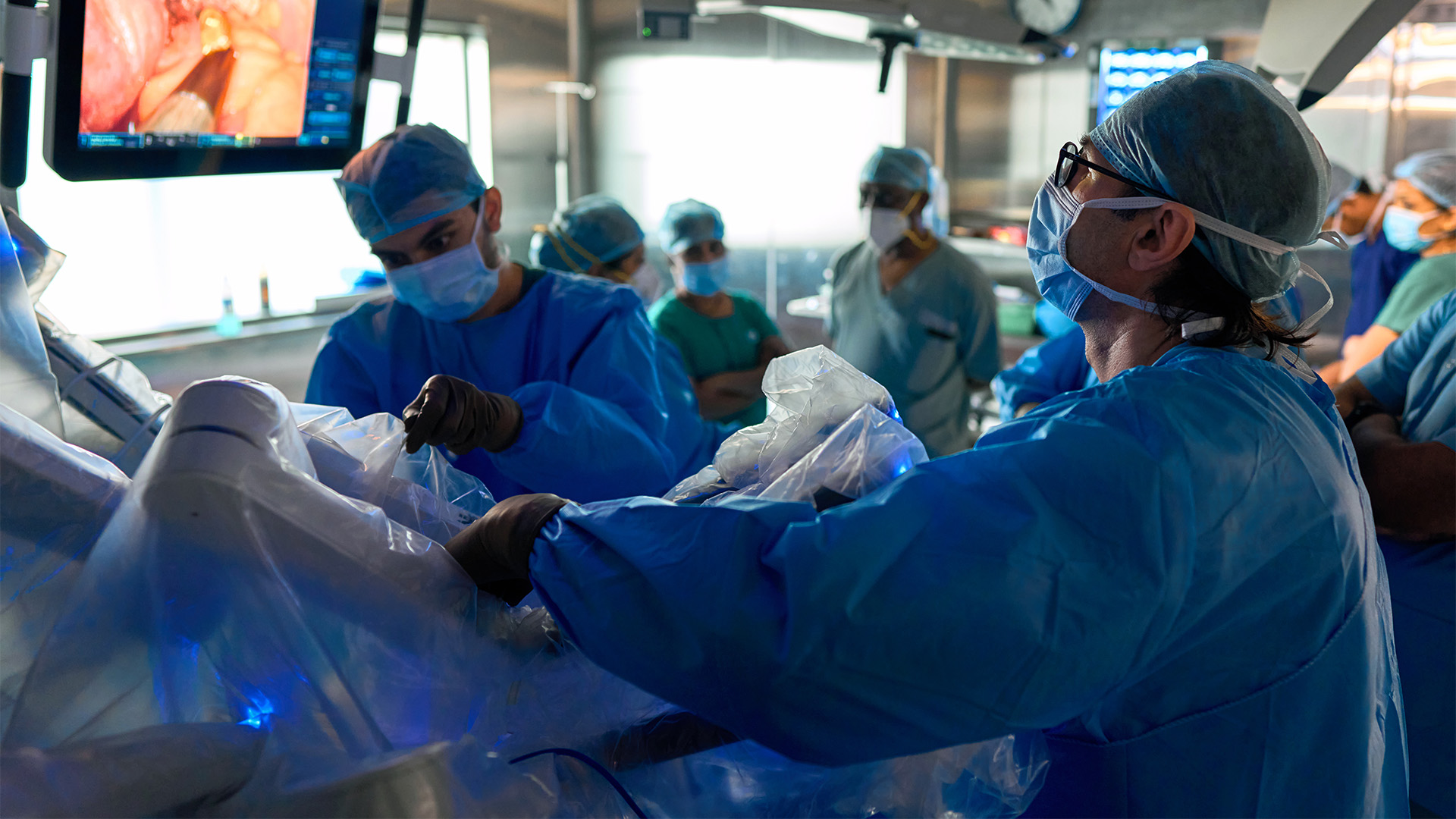
In this video, the authors explain their technique for intrathoracic rib fixation as a treatment for rib pseudoarthrosis. They present the case of a 52-year-old female smoker with chronic obstructive pulmonary disease (COPD) who worked as a glassblower. She experienced a fall at home, impacting the left hemithorax, which resulted in fractures of the sixth to eighth left ribs.
The patient was initially managed conservatively with multimodal analgesia, however, she developed persistent mechanical pain that was disabling for her occupational activities, associated with a clicking sensation. Given these symptoms, a chest computed tomography (CT) scan was requested.
A thoracic CT scan was performed, and as shown in the 3D reconstruction, there was evidence of nonunion of the left seventh and eighth ribs.
Rib pseudoarthrosis is defined as the failure of fracture healing after 6 to12 weeks.
Clinically, it presents with:
- Persistent chronic pain
- Abnormal mobility at the fracture site (clicking sensation)
- Chest wall instability
- Functional limitations affecting quality of life
The gold standard for diagnosis is thoracic CT imaging.
Initial management consists of conservative treatment, including:
- Multimodal analgesia
- Respiratory physiotherapy
- Functional rehabilitation
However, these approaches do not correct the underlying mechanical instability. Therefore, surgical treatment is indicated in cases of symptomatic pseudoarthrosis when:
- Pain is disabling and refractory to conservative management
- There is evident deformity or pathological mobility
Surgery involves removal of fibrocartilaginous tissue and the restoration of mechanical stability through rib fixation, promoting definitive bone healing.
In this patient, due to persistent mechanical pain that prevented her from performing her work as a glassblower, intrathoracic rib fixation via video-assisted thoracoscopic surgery (VATS) was indicated. Under general anesthesia and in a right lateral decubitus position, a thoracoscopic approach was performed through the left fifth intercostal space.
Rib Fixation Steps
The authors have divided rib fixation into four steps:
1. Fracture Identification and Incision Planning
A transthoracic needle puncture was performed under thoracoscopic visualization to locate the pseudoarthrosis site and plan the second incision. A 2 cm incision was made over the nonunion site. Two incisions are shown in the video: one over the pseudoarthrosis and another at the fifth intercostal space. At the pseudoarthrosis site, pathological mobility and interposed fibrocartilaginous tissue were observed. The nonunion site was debrided by resecting fibrous tissue and neoformed cartilage until viable bone edges were obtained.
2. Guidewire Placement and Tract Maintenance
At 1.5 to 2 cm from the fracture site, drilling was performed on both sides, penetrating both cortices. A 4 mm guide tube was inserted and exteriorized through the VATS incision with forceps. Guidewires were then passed through the tubes, and the tubes were removed, leaving the guidewires in place.
3. Rib Fixation Plate Insertion
The plate consisted of a scalloped bridge with two sliding screws that adapted to the rib contour, allowing adequate fracture reduction. The guidewires were passed through the plate, which was introduced under thoracoscopic visualization to ensure correct positioning and prevent rotation.
4. Fracture Reduction and Stabilization
Once the plate was inside the thoracic cavity, upward traction was applied to the guidewires to achieve fracture reduction. While maintaining traction, washers and screws were placed over the guidewires and screws were tightened to stabilize the fracture
Finally, guidewires were removed and screws were cut flush with the outer cortical surface of the rib. A pleural drain was placed, and both incisions were closed.
Postoperative Course
The postoperative course was uneventful, with the patient experiencing good pain control and complete lung reexpansion. The chest drain was removed at 24 hours
The patient was discharged on postoperative day two.
This video submission is from the 2026 CTSNet Instructional Video Competition. Stay tuned to CTSNet.org and the CTSNet YouTube channel in the coming weeks to watch all entries from the competition, including the winning videos.
Disclaimer
The information and views presented on CTSNet.org represent the views of the authors and contributors of the material and not of CTSNet. Please review our full disclaimer page here.
 145 views on Vimeo