


Esophageal Cancer - Surgery

Esophagectomy is associated with significant postoperative morbidity and mortality (1). In an effort to reduce these outcomes, many medical communities have adopted minimally invasive techniques for esophagectomy. A variety of minimally invasive techniques have been...


This study aimed to explore the impact of socioeconomic disparities on the uptake of neoadjuvant therapy in patients with locally advanced esophageal cancer. Using data from the American National Cancer...

The patient is a sixty-two-year-old male with notable past medical history of GERD who was diagnosed with T3N1 esophageal adenocarcinoma during an endoscopy for dysphagia. Endoscopic evaluation demonstrated gross changes...
Esophagectomy is associated with significant postoperative morbidity and mortality (1). In an effort to reduce these outcomes, many medical communities have adopted minimally invasive techniques for esophagectomy. A variety of...

This study aimed to measure the quality of life (QOL) as reported by patients after esophagectomy, a procedure which has a high rate of mortality. Researchers found that the one...
The authors review their clinical experience with management of postoperative chylothorax among 97 patients. They favor duct ligation over embolization, and recommend intervention in patients with outputs greater than 1,100/day.
...Helminen and colleagues employ near-infrared imaging as a novel technique for lymphatic mapping in minimally invasive esophagectomy of distal esophageal cancer. Indocyanine green dye was injected endoscopically and used to...
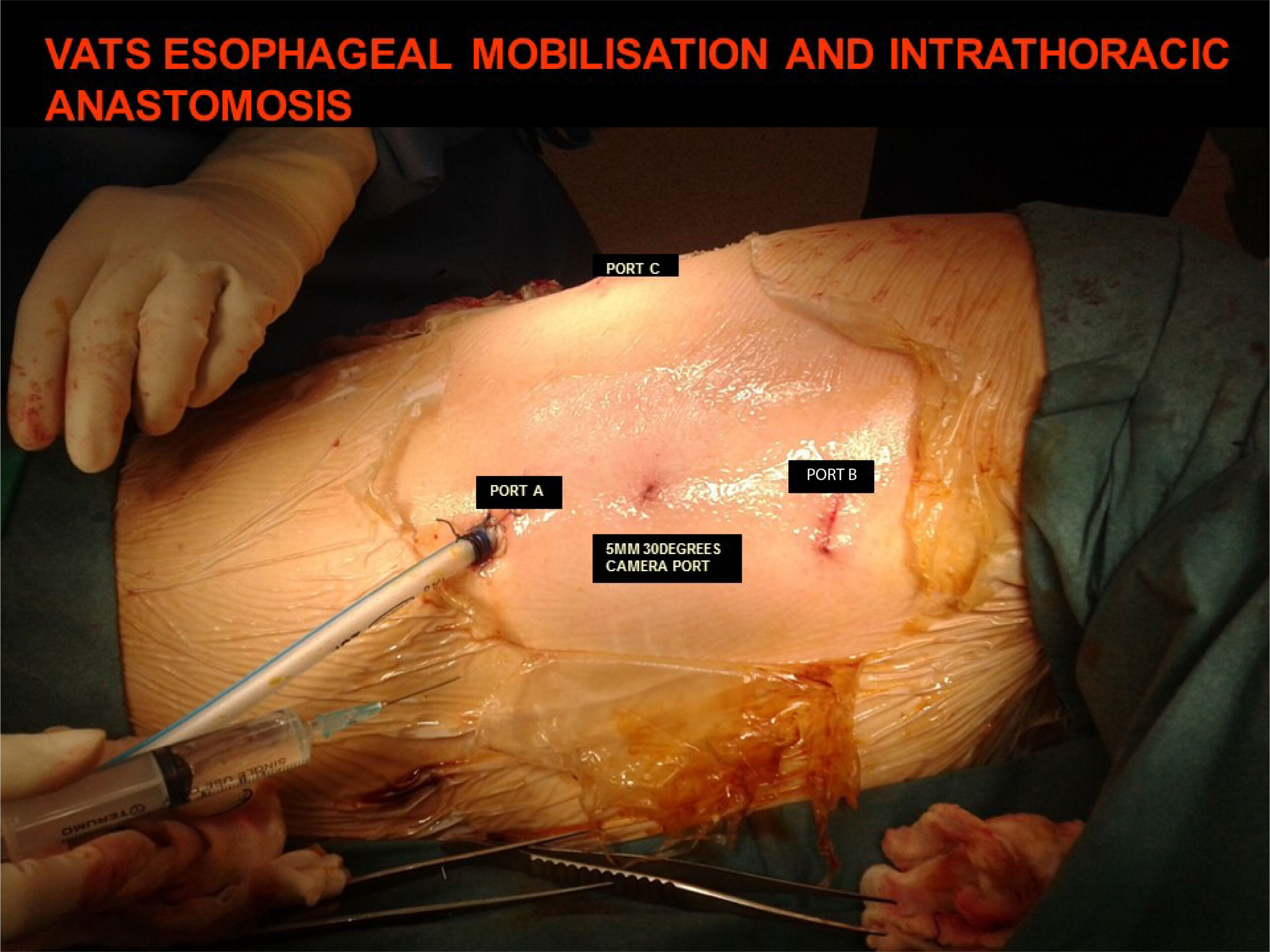
Introduction Totally endoscopic two-stage (laparoscopic and VATS) esophagectomy for carcinoma of the lower third esophagus is a well-established procedure [1, 2]. There are currently many methods to perform an intrathoracic...
The authors compare outcomes of open versus minimally invasive esophagectomy (OE, MIE) from the National Cancer Databased (NCDB) 2010-2012 and use propensity scoring to match patients (977 pairs). Short term...
In a retrospective review of patients undergoing esophagectomy at two high volume centers, the incidence of hiatal hernia was 5% – 10%. The incidence did not differ between open and...
This retrospective single institution study evaluated the relationship between radiation dose to the gastric fundus and the incidence of esophageal anastomotic leak after esophagectomy for cancer. The leak rate was...
The authors queried the NCDB to compare outcomes for patients undergoing induction chemotherapy vs chemoradiotherapy followed by resection for esophageal cancer. The vast majority received chemoradiotherapy (87.5%), which was associated...

 …
…In an interview filmed at the 2016 STS Annual Meeting in Phoenix, Arizona, Leanne Harling speaks with Daniela Molena, Director of the Esophageal Surgery Program at Memorial Sloan Kettering Cancer...