Skip to content
Skip to content

The 6th Annual Innovation Video Competition Is Now Accepting Entries!

READ MORE
Not a member yet? Register now.
  • ABOUT
    • Leadership
    • Participation
    • Featured Sponsors
    • Submission Guidelines
    • Competitions
      • Innovation Video Competition
    • Community
      • Volunteer
      • Badges
    • Contact Us
  • EXPLORE CTSNET
    • CARDIAC
    • THORACIC
    • CONGENITAL
    • Clinical Care Professionals
    • JANS
    • Events
    • Journals
  • Videos
    • Atlas of Cardiac Surgery
    • Webinars
    • Master Class
    • Guest Interviews
    • Conference Sessions
  • Podcasts
    • The Beat With Joel Dunning
    • The Atrium
    • The Cardiac Recovery Room
    • The Lifeline
  • Profiles
    • Users Directory
    • Organizations
  • CAREERS
    • US Career Center
    • European Career Center
  • ABOUT
    • Leadership
    • Participation
    • Featured Sponsors
    • Submission Guidelines
    • Competitions
      • Innovation Video Competition
    • Community
      • Volunteer
      • Badges
    • Contact Us
  • EXPLORE CTSNET
    • CARDIAC
    • THORACIC
    • CONGENITAL
    • Clinical Care Professionals
    • JANS
    • Events
    • Journals
  • Videos
    • Atlas of Cardiac Surgery
    • Webinars
    • Master Class
    • Guest Interviews
    • Conference Sessions
  • Podcasts
    • The Beat With Joel Dunning
    • The Atrium
    • The Cardiac Recovery Room
    • The Lifeline
  • Profiles
    • Users Directory
    • Organizations
  • CAREERS
    • US Career Center
    • European Career Center
SUBMIT CONTENT
DONATE
JOIN

welcomes you to the new, improved website!

READ MORE
  • ABOUT
    • Leadership
    • Participation
    • Featured Sponsors
    • Submission Guidelines
    • Competitions
      • Innovation Video Competition
    • Community
      • Volunteer
      • Badges
    • Contact Us
  • EXPLORE CTSNET
    • CARDIAC
    • THORACIC
    • CONGENITAL
    • Clinical Care Professionals
    • JANS
    • Events
    • Journals
  • Videos
    • Atlas of Cardiac Surgery
    • Webinars
    • Master Class
    • Guest Interviews
    • Conference Sessions
  • Podcasts
    • The Beat With Joel Dunning
    • The Atrium
    • The Cardiac Recovery Room
    • The Lifeline
  • Profiles
    • Users Directory
    • Organizations
  • CAREERS
    • US Career Center
    • European Career Center
Not a member yet? Register now.
  • ABOUT
    • Leadership
    • Participation
    • Featured Sponsors
    • Submission Guidelines
    • Competitions
      • Innovation Video Competition
    • Community
      • Volunteer
      • Badges
    • Contact Us
  • EXPLORE CTSNET
    • CARDIAC
    • THORACIC
    • CONGENITAL
    • Clinical Care Professionals
    • JANS
    • Events
    • Journals
  • Videos
    • Atlas of Cardiac Surgery
    • Webinars
    • Master Class
    • Guest Interviews
    • Conference Sessions
  • Podcasts
    • The Beat With Joel Dunning
    • The Atrium
    • The Cardiac Recovery Room
    • The Lifeline
  • Profiles
    • Users Directory
    • Organizations
  • CAREERS
    • US Career Center
    • European Career Center
  • ABOUT
    • Leadership
    • Participation
    • Featured Sponsors
    • Submission Guidelines
    • Competitions
      • Innovation Video Competition
    • Community
      • Volunteer
      • Badges
    • Contact Us
  • EXPLORE CTSNET
    • CARDIAC
    • THORACIC
    • CONGENITAL
    • Clinical Care Professionals
    • JANS
    • Events
    • Journals
  • Videos
    • Atlas of Cardiac Surgery
    • Webinars
    • Master Class
    • Guest Interviews
    • Conference Sessions
  • Podcasts
    • The Beat With Joel Dunning
    • The Atrium
    • The Cardiac Recovery Room
    • The Lifeline
  • Profiles
    • Users Directory
    • Organizations
  • CAREERS
    • US Career Center
    • European Career Center
SUBMIT CONTENT
DONATE
JOIN
You are here:
  1. Esophagus

Modified Technique for Abdominal Phase of Minimally Invasive McKeown Esophagectomy

  • January 25, 2024

By: Aizemaiti Rusidanmu

Keywords:

  • Thoracic
  • Esophagus

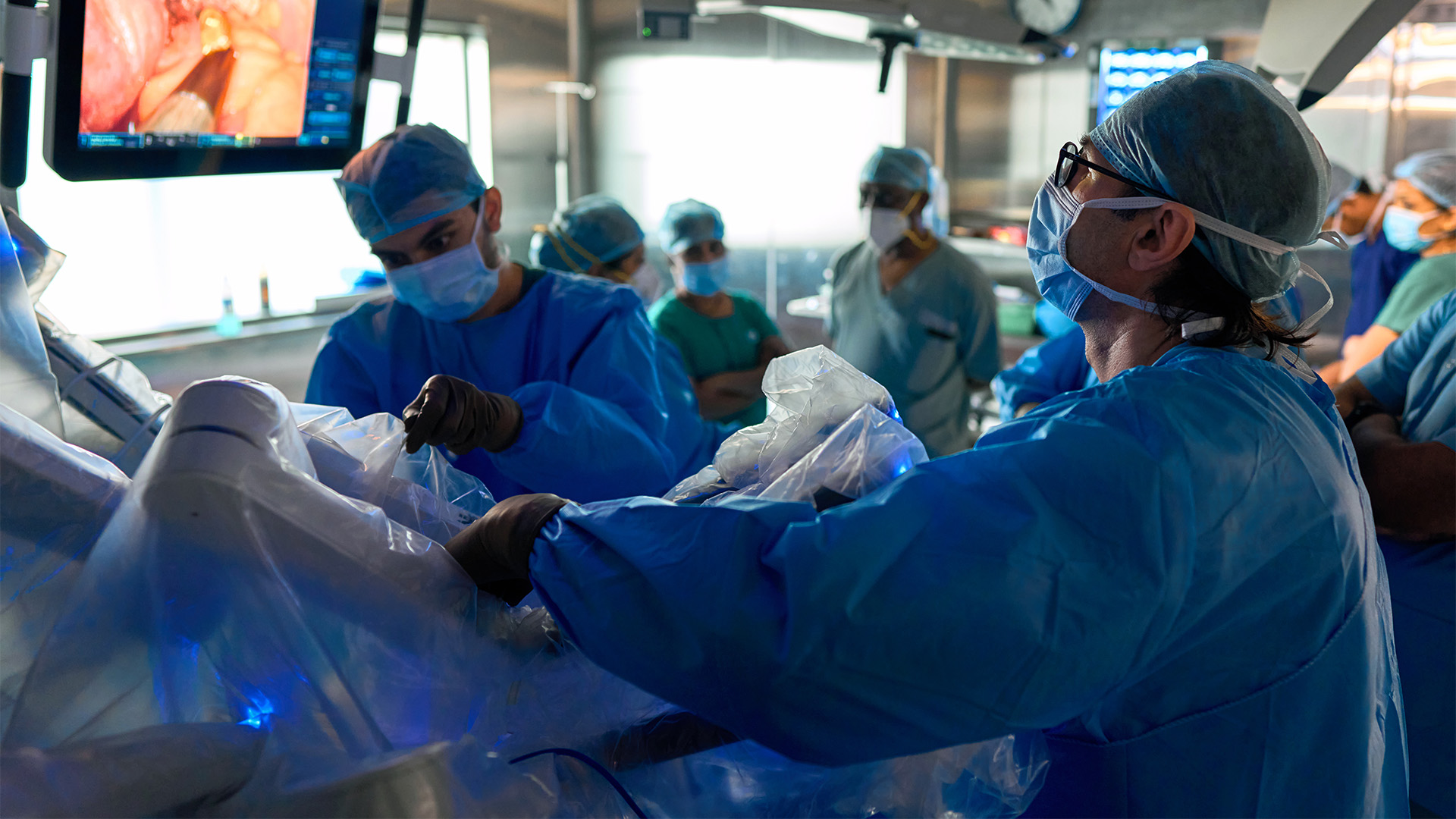
Esophagectomy is associated with significant postoperative morbidity and mortality (1). In an effort to reduce these outcomes, many medical communities have adopted minimally invasive techniques for esophagectomy. A variety of minimally invasive techniques have been established (2,3). The authors’ center has been offering minimally invasive McKeown esophagectomy with extracorporeal gastric conduit formation since 2012, using a safe and straightforward eight-step technique for the abdominal component of the procedure. Patient positioning and port placement techniques are illustrated in the accompanying visual media.

Step 1: Liver Retraction

Surgeons use the “fan” retractor from the fifth port at the xiphoid process to retract the liver. Some surgeons use suturing techniques to retract the liver, but it takes some time. The fan retractor gives an excellent view without suturing.

Step 2: Opening the Gastrohepatic Ligament

The dissection starts at the gastrohepatic ligament and proceeds towards the right crus of the diaphragm along the gastrodiaphragmatic ligament. The right gastric artery is preserved at the site of the lesser curvature. With the help of the assistant, compression of the stomach improves surgical visualization of the vascular structures within the omental bursa. Circumferential dissection of the right and left crura, including complete division of the phrenoesophageal ligament, is performed.

Step 3: Abdominal Lymph Node Dissection

During the abdominal phase, a critical step is to begin the dissection by incising the peritoneum covering the pancreas and proceeding towards the common hepatic artery. Due to the presence of small vascular structures, great care must be taken to avoid unnecessary bleeding. The use of the Harmonic scalpel during this procedure offers significant advantages. The arterial sheath at the junction of the left gastric artery and the common hepatic artery is then opened, allowing extensive and safe dissection of the lymph nodes. While lymph node dissection around the celiac trunk is occasionally performed, this is not standard practice due to the low likelihood of metastasis. Paracardial nodes are always dissected.

Step 4: Management of the Left Gastric Vessels

After a complete dissection of the lymph nodes, surgeons can easily dissect the left gastric bundle. The left gastric artery is transected with Hem-o-lok clips or staplers.

Step 5: Management of Posterior Gastric Vessels and Adhesions

Retraction of the gastric fundus allows optimal visualization of the gastroesophageal junction and the esophageal hilum. Further dissection facilitates identification of the distal end of the esophagus, previously dissected in the thoracic phase. Increased mobilization may widen the esophageal hiatus and reduce the abdominal pressure resulting from carbon dioxide insufflation. According to the authors’ experience, this reduced pressure should not affect the subsequent surgical procedure.

Step 6: Management of the Short Gastric Arteries and the Splenic Hilum

The assistant surgeon performs appropriate lateral retraction of the stomach using a gauze band. Dissection of four to five rows of short gastric arteries and selected arterial branches from the splenic artery is performed with direct visualization of the spleen and its vasculature. Dissection continues along the gastric wall. The fundus of the stomach is delicate and prone to tearing if handled during the laparoscopic part of the procedure. Therefore, it is imperative to avoid contact with this region of the stomach.

Step 7: Dissection of the Gastrocolic Ligament Along the Greater Curvature by Mini Laparotomy

The skin incision below the subxiphoid process is extended to create the gastric conduit. The stomach is pulled up through the incision and the gastrocolic ligament is dissected, preserving the right gastroepiploic artery. To the right, the gastrocolic ligament is completely dissected to the proximal duodenum. On the left side, the gastrocolic ligament is completely divided.

Step 8: Creation of the Gastric Conduit

The gastric conduit is created extracorporeally using a linear stapler, taking care to maintain a width of 4 to 5 cm. The staple line is reinforced with a continuous 4-0 prolene suture. Hemostasis along the staple line is assessed and the viability of the gastric conduit is assessed. A feeding jejunostomy is then created.

In conclusion, this modified technique provides a safe operating environment and is easily reproducible and learnable for thoracic surgeons with limited laparoscopic experience. By eliminating the possibility of touching or clamping the gastric conduit throughout the procedure, it minimizes the risk of conduit injury. It also provides better exposure of the splenic hilum and reduces the likelihood of splenic injury. In addition, it has the potential to reduce overall operative time.


References

  1. Hao Wang, Han Tang, Yong Fang, Lijie Tan, Jun Yin, Yaxing Shen, et al. Morbidity and Mortality of Patients Who Underwent Minimally Invasive Esophagectomy After Neoadjuvant Chemoradiotherapy vs. Neoadjuvant Chemotherapy for Locally Advanced Esophageal Squamous Cell Carcinoma: A Randomized Clinical Trial; JAMA Surg. 2021 May 1;156(5):444-451.
  2. Shawn S Groth, Bryan M Burt. Minimally invasive esophagectomy: Direction of the art. J Thorac Cardiovasc Surg. 2021 Sep;162(3):701-704.
  3. van der Sluis PC, Schizas D, Liakakos T, van Hillegersberg R. Minimally invasive esophagectomy. Dig Surg. 2020; 37(2):93-100.

Disclaimer

The information and views presented on CTSNet.org represent the views of the authors and contributors of the material and not of CTSNet. Please review our full disclaimer page here.

Add Comments Cancel reply

You must be logged in to post a comment.

Not a member yet? Register now.
Vimeo 292 views on Vimeo
TAGS
  • Esophageal Cancer - Surgery

Related Content

Video

Insertion of the Axillary Impella 5.5

By: Zhen-Yu Tong

Video

A Step-by-Step Guide to Transaxillary Minimally Invasive Aortic Valve Replacement, Mitral Valve Repair, and Rhythm Surgery

By: Jelle Fleerakkers

Video

Robotic-Assisted Resection of a Giant Anterior Mediastinal Lipoma

By: Marissa Matto

Article

Register for the Inaugural ‘In Africa for Africa’ Cardio-Thoracic Conference in Cape Town!

By: Marianna Mast

Podcast

The Beat With Joel Dunning Ep. 168: Humanoid Robots and AI in Surgery

By: Joel DunningGold ContributorSilver Commentor

Video

Robotic-Assisted Biventricular Durable Assist Device Implantation: The First In Human Experience

By: Feras Khaliel

JANS Article

Humanoid Robots in the Operating Room: A Framework for Staged Integration of Embodied AI in Surgery

Author(s): Aamir Amin

JANS Article

Total Endovascular Repair of Ascending Aortic Pathology: The ENDOASC Multicentre Global Study

Author(s): Vincent SierSilver Contributor

Video

Management of SVC Injury During Right VATS Thymectomy for Myasthenia Gravis

By: Jakraphan Yu

Video

Single-Stage Repair of Left Ventricular Diverticulum with Ventricular Septal Defect Closure: A Video Illustration

By: Vatsal Vora

233 S. Wacker Drive | Suite 4400
Chicago, Illinois 60606, USA

Linkedin X-twitter Facebook-f Youtube
  • Join CTSNet
  • Donate
  • Submit Content
  • Volunteer
  • Join CTSNet
  • Donate
  • Submit Content
  • Volunteer
  • Featured Partners
  • Careers
  • Press
  • Advertise on CTSNet
  • Featured Partners
  • Careers
  • Press
  • Advertise on CTSNet
  • CTSNet Policies
  • Privacy Policy
  • Disclaimer
  • Contact CTSNet
  • CTSNet Policies
  • Privacy Policy
  • Disclaimer
  • Contact CTSNet

233 S. Wacker Drive | Suite 4400
Chicago, Illinois 60606, USA

Instagram Linkedin X-twitter Facebook-f Youtube
  • Join CTSNet
  • Donate
  • Submit Content
  • Volunteer
  • Join CTSNet
  • Donate
  • Submit Content
  • Volunteer
  • Featured Partners
  • Careers
  • Press
  • Advertise on CTSNet
  • Featured Partners
  • Careers
  • Press
  • Advertise on CTSNet
  • CTSNet Policies
  • Privacy Policy
  • Disclaimer
  • Contact CTSNet
  • CTSNet Policies
  • Privacy Policy
  • Disclaimer
  • Contact CTSNet

233 S. Wacker Drive | Suite 4400
Chicago, Illinois 60606, USA

Instagram Linkedin X-twitter Facebook-f Youtube
  • Join CTSNet
  • Donate
  • Submit Content
  • Volunteer
  • CTSNet Policies
  • Privacy Policy
  • Join CTSNet
  • Donate
  • Submit Content
  • Volunteer
  • CTSNet Policies
  • Privacy Policy
  • Featured Partners
  • Careers
  • Press
  • Advertise on CTSNet
  • Disclaimer
  • Contact CTSNet
  • Featured Partners
  • Careers
  • Press
  • Advertise on CTSNet
  • Disclaimer
  • Contact CTSNet
  • Join CTSNet
  • Donate
  • Submit Content
  • Volunteer
  • Join CTSNet
  • Donate
  • Submit Content
  • Volunteer
  • Featured Partners
  • Careers
  • Press
  • Advertise on CTSNet
  • Featured Partners
  • Careers
  • Press
  • Advertise on CTSNet
  • CTSNet Policies
  • Privacy Policy
  • Disclaimer
  • Contact CTSNet
  • CTSNet Policies
  • Privacy Policy
  • Disclaimer
  • Contact CTSNet
© 2026 CTSNet Inc. All right reserved.
Go to Top