


Congenital & Pediatric

Congenital diverticulum of the ventricle is a rare cardiac malformation and is usually associated with other congenital abnormalities, including intracardiac, midline thoracic, diaphragmatic, and anterior abdominal wall defects, first described by Cantrell, Haller and Ravitch...

Diaphragmatic paralysis following congenital cardiac surgery is an important cause of postoperative respiratory morbidity in neonates and infants. Prompt recognition and appropriate management are essential to reduce ventilator dependence and...


 …
…This week on The Beat, CTSNet Editor-in-Chief Joel Dunning spoke with James Cox, Professor of Cardiac Surgery at the Feinberg School of Medicine at Northwestern Medicine in Chicago, Illinois, USA,...

An 8-year-old male (24 kg) presented with intermittent fever for 45 days. Echocardiography demonstrated infective endocarditis of a bicuspid aortic valve with multiple vegetations (largest 8 × 6 mm), severe...

This video demonstrates the modified trapdoor technique for direct reimplantation of an anomalous left coronary artery from the pulmonary artery. Case Presentation Following cardiopulmonary resuscitation, a three-month-old, 4.7 kg infant,...
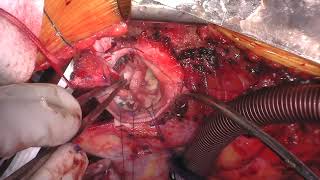
Adults or other patient groups with congenital heart disease can present with aortic insufficiency. This is most likely due to annular dilation, but it can also be related to other...
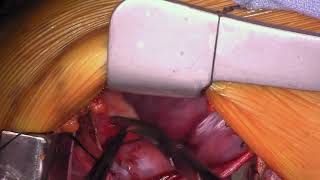 …
…An eight-year-old female presented with at least a moderate size paramembranous ventricular septal defect (VSD) and large left-to-right shunt. This closure procedure was performed via a vertical right axillary thoracotomy...

Surgical repair of a cardiac type total anomalous pulmonary venous connection (TAPVC) is a simple yet challenging surgical procedure, especially when done in a neonate. The goal of the surgery...
 …
…CTSNet associate editor Joel Dunning sits down with Dr. Sameh Said, associate professor at the University of Minnesota, who has contributed more than twenty-five videos to CTSNet. Dr. Said’s Ross...
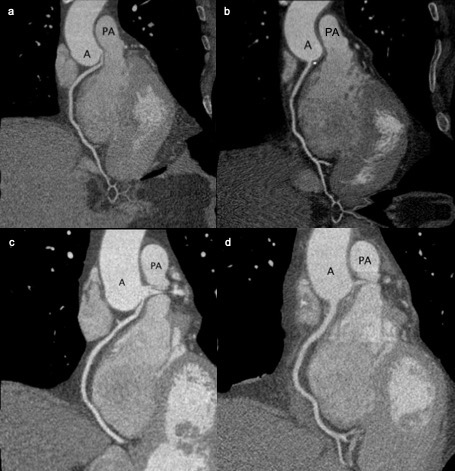
Background Historically, direct reimplantation is a technique that requires a partial aortotomy and xeno-pericardial patch (1). A recent report outlined a simplified approach for the reimplantation of a right anomalous...
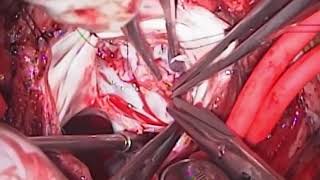
Severe neonatal Ebstein’s Anomaly can present a surgical challenge, and the advent of the Starnes procedure has improved survival in these critically ill neonates. Importantly, however; this does not commit...
 …
…This is the case of a 3. 3 kg, male neonate who was born with a prenatal diagnosis of dextro-transposition of the great arteries (d-TGA) and an intact ventricular septum....
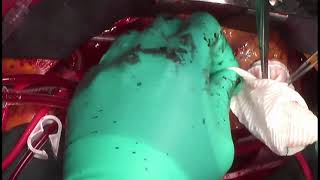
This is a case involving a 28-year-old male patient with a history of bicuspid aortic valve and previous repair of aortic coarctation via left thoracotomy as a child, which involved...