
ALERT!
This site is not optimized for Internet Explorer 8 (or older).
Please upgrade to a newer version of Internet Explorer or use an alternate browser such as Chrome or Firefox.
Intern Survival Guide - Table of Contents
CARDIAC SURGERY
Intern "Survival" Guide
Kirk J. Fleischer, M.D.
At most teaching institutions, there are junior surgical housestaff on the cardiac surgery service. Because they are often unfamiliar with the "routine" of the cardiac surgery service, we developed an "Intern Survival Guide" which outlines the responsibilities of the junior housestaff and provides guidance on how best to deal with common clinical scenarios.
We are presenting this for you to serve as a guide for your junior housestaff. We have made an attempt to keep this applicable to all institutions; however there are certain points which will clearly vary between programs. For instance, our thoracic and cardiac surgical services are split; therefore, our thoracic intern cross covers the cardiac patients every third night. Lastly, we are currently working on putting this into a downloadable format. Until then, you can simply print it out from your browser.
Introduction:
Cardiac surgery is a demanding service, but one where you will have the most direct experience in the management of arrhythmias and the care of patients with coronary/vascular disease. Interns are a critical component of the two person physician teams. During the day, the fellow is often in the O.R. and not immediately available (except for emergencies); at night, the fellow is ultimately responsible for the patients in the cardiac surgery intensive care unit (CSICU), the pediatric ICU (PICU), the ward, the preops, as well as for frequent communication with discharged patients. Needless to say, the fellows depend a great deal on the hard work of the interns.
| Table of Contents |
|||||||||||||||
| Rounds | |||||||||||||||
| Questions from Ward while fellow in O.R. | |||||||||||||||
| The "Book" | |||||||||||||||
| Notes | |||||||||||||||
| The "Routine" Cardiac Surgery Admission | |||||||||||||||
| Preops | |||||||||||||||
| Sign-out: | Daily "To Do" List Prior to Signing Out | ||||||||||||||
| Conferences | |||||||||||||||
| Postoperative Management of the Cardiac Surgery Patient: | |||||||||||||||
| Anticoagulation | |||||||||||||||
| Anemia | |||||||||||||||
| Arrhythmias: | Atrial fibrillation/flutter: | Pushing IV Calcium Channel Blockers | |||||||||||||
| Ventricular arrhythmias | |||||||||||||||
| AV Conduction Abnormalities | |||||||||||||||
| Chest Pain | |||||||||||||||
| Chest Tubes: | Removal of Chest Tubes | ||||||||||||||
| Chest X-Rays | |||||||||||||||
| CPR | |||||||||||||||
| Discharges | |||||||||||||||
| EKG | |||||||||||||||
| Hyperkalemia | |||||||||||||||
| Hypokalemia | |||||||||||||||
| Operating Room Experience | |||||||||||||||
| Outside Calls and Consults | |||||||||||||||
| Pacemakers: | Pacing Wires: Use for Pacing | ||||||||||||||
| Pacing Wires: Removal | |||||||||||||||
| Transcutaneous Pacing | |||||||||||||||
| Physical Therapy | |||||||||||||||
| Premature Atrial Contractions | |||||||||||||||
| Premature Ventricular Contractions | |||||||||||||||
| ST Segment Elevation | |||||||||||||||
| Staples | |||||||||||||||
| Transplantation | |||||||||||||||
| Transports from CSICU | |||||||||||||||
| Unstable Patients on the Floor (and Urgent Transfers to the CSICU) | |||||||||||||||
| Vascular Access | |||||||||||||||
| Miscellaneous | |||||||||||||||
| Thoracic Surgery: | Role of the Thoracic Surgery Intern | ||||||||||||||
| Appendix: | Preop Checklist Sheet | ||||||||||||||
| Anticoagulation Sheet | |||||||||||||||
| 12 General Survival Tips for Intership | |||||||||||||||
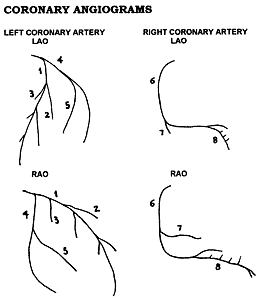
| Angiograms | |||||||||||||||
|
|
|||||||||||||||
|
|||||||||||||||
|
|||||||||||||||
|
Table of Contents | CTSNet HOME | RESIDENTS' Section | NEXT Page
|
|||||||||||||||
| COPYRIGHT© 1998 by Kirk J. Fleischer, M.D. All rights reserved. | |||||||||||||||
 Printer-friendly


