Skip to content
Skip to content

AI-Powered Oral Board Training Is Available to CTSNet Users Now!

LEARN MORE
Not a member yet? Register now.
  • ABOUT
    • Leadership
    • Participation
    • Featured Sponsors
    • Submission Guidelines
    • Competitions
      • Innovation Video Competition
      • Resident Video Competition
    • Community
      • Volunteer
      • Badges
    • Contact Us
  • EXPLORE CTSNET
    • CARDIAC
    • THORACIC
    • CONGENITAL
    • Clinical Care Professionals
    • JANS
    • Events
    • Journals
  • Videos
    • Atlas of Cardiac Surgery
    • Webinars
    • Master Class
    • Guest Interviews
    • Conference Sessions
  • Podcasts
    • The Beat With Joel Dunning
    • The Atrium
    • The Cardiac Recovery Room
    • The Lifeline
  • Profiles
    • Users Directory
    • Organizations
  • CAREERS
    • US Career Center
    • European Career Center
  • ABOUT
    • Leadership
    • Participation
    • Featured Sponsors
    • Submission Guidelines
    • Competitions
      • Innovation Video Competition
      • Resident Video Competition
    • Community
      • Volunteer
      • Badges
    • Contact Us
  • EXPLORE CTSNET
    • CARDIAC
    • THORACIC
    • CONGENITAL
    • Clinical Care Professionals
    • JANS
    • Events
    • Journals
  • Videos
    • Atlas of Cardiac Surgery
    • Webinars
    • Master Class
    • Guest Interviews
    • Conference Sessions
  • Podcasts
    • The Beat With Joel Dunning
    • The Atrium
    • The Cardiac Recovery Room
    • The Lifeline
  • Profiles
    • Users Directory
    • Organizations
  • CAREERS
    • US Career Center
    • European Career Center
SUBMIT CONTENT
DONATE
JOIN

AI-Powered Oral Board Training Is Available to CTSNet Users Now!

READ MORE
  • ABOUT
    • Leadership
    • Participation
    • Featured Sponsors
    • Submission Guidelines
    • Competitions
      • Innovation Video Competition
      • Resident Video Competition
    • Community
      • Volunteer
      • Badges
    • Contact Us
  • EXPLORE CTSNET
    • CARDIAC
    • THORACIC
    • CONGENITAL
    • Clinical Care Professionals
    • JANS
    • Events
    • Journals
  • Videos
    • Atlas of Cardiac Surgery
    • Webinars
    • Master Class
    • Guest Interviews
    • Conference Sessions
  • Podcasts
    • The Beat With Joel Dunning
    • The Atrium
    • The Cardiac Recovery Room
    • The Lifeline
  • Profiles
    • Users Directory
    • Organizations
  • CAREERS
    • US Career Center
    • European Career Center
Not a member yet? Register now.
  • ABOUT
    • Leadership
    • Participation
    • Featured Sponsors
    • Submission Guidelines
    • Competitions
      • Innovation Video Competition
      • Resident Video Competition
    • Community
      • Volunteer
      • Badges
    • Contact Us
  • EXPLORE CTSNET
    • CARDIAC
    • THORACIC
    • CONGENITAL
    • Clinical Care Professionals
    • JANS
    • Events
    • Journals
  • Videos
    • Atlas of Cardiac Surgery
    • Webinars
    • Master Class
    • Guest Interviews
    • Conference Sessions
  • Podcasts
    • The Beat With Joel Dunning
    • The Atrium
    • The Cardiac Recovery Room
    • The Lifeline
  • Profiles
    • Users Directory
    • Organizations
  • CAREERS
    • US Career Center
    • European Career Center
  • ABOUT
    • Leadership
    • Participation
    • Featured Sponsors
    • Submission Guidelines
    • Competitions
      • Innovation Video Competition
      • Resident Video Competition
    • Community
      • Volunteer
      • Badges
    • Contact Us
  • EXPLORE CTSNET
    • CARDIAC
    • THORACIC
    • CONGENITAL
    • Clinical Care Professionals
    • JANS
    • Events
    • Journals
  • Videos
    • Atlas of Cardiac Surgery
    • Webinars
    • Master Class
    • Guest Interviews
    • Conference Sessions
  • Podcasts
    • The Beat With Joel Dunning
    • The Atrium
    • The Cardiac Recovery Room
    • The Lifeline
  • Profiles
    • Users Directory
    • Organizations
  • CAREERS
    • US Career Center
    • European Career Center
SUBMIT CONTENT
DONATE
JOIN
You are here:
  1. Cardiac

CTSNet Step-by-Step Series: Central Cannulation

  • August 7, 2018

By: Andrel Yoong, Omar Jarral, Shruti JayakumarBronze Contributor, Jason Varzaly, Leanne Harling (Ashrafian)Silver Contributor, James Edwards

Keywords:

  • Mechanical Support & Transplant

This video demonstrates a central cannulation in a step-by-step fashion, using diagrams and surgical video to illustrate key technical elements.

Step 1

Aortic cannulation is always done prior to atrial cannulation. At this step in the video, you can see partial thickness purse string sutures being placed into the aorta, which are then snared. Next, an incision is made into the aorta through the middle of the purse string suture, and a cannula is placed into the aorta through the incision. This should ideally be done when the systolic blood pressure is below 120 mm Hg. Do not force the cannula through if there is resistance. The cannula and snare are then tied together. This part is then completed by connecting the cannula to the aortic line of the pump, ensuring that no air bubbles are entrapped.

Step 2

Place a full thickness purse string suture into the right atrial appendage, ensuring that the right coronary artery is not injured. This lies in the atrioventricular groove, just medial to the right atrial appendage. It is important to take multiple small bites of the atrial appendage and ensure that one follows the curvature of the needle to avoid tearing the atrium, which can be very fragile. The purse string suture is then snared before proceeding to the next step.

Step 3

Next, an incision is made into the right atrial appendage. A very easy technique is for the surgeon and assistant to retract in opposite directions at the chosen site, where a vertical incision is made with scissors or an 11-blade. This technique avoids significant blood loss, as both sides of the incision can then be brought together while the cannula is being prepared for placement. When inserting the cannula, it should be directed towards the patient’s feet, as this is the direction in which the inferior vena cava (IVC) lies. Do not force the cannula if there is any resistance. There is usually a mark on the cannula to indicate how far it should be inserted. Once the cannula is inserted, the snare is tightened and tied to the cannula. This whole procedure is completed by connecting the cannula to the venous line of the pump, which should ideally be done with as little air allowed in as possible.

Complications

There are six common complications during atrial cannulation.

  1. When one can’t get the venous cannula into the right atrium. You may have made your incision too small, so try gently dilating it with the tips of the McIndoe scissors or with a little finger.
  2. When one can’t get the venous cannula into the IVC. This may be due to a prominent valve. Try gently manipulating the cannula into the IVC, while using your right hand to guide it from the outside of the heart. Call for a senior help if you are still unable to cannulate.
  3. If the right atrium tears. Close the tear carefully, with pledgets if required. Significant tears can progress quickly and senior help will be required.
  4. On bypass, there may be poor venous drainage. Discuss this with your perfusionist, as the cannula may need to be repositioned and other causes investigated. Other potential causes include kinking of the lines, hypovolemia, and vasodilation.
  5. Venous “chattering” occurs when venous drainage is faster than blood returning to the heart, which causes intermitted collapse of the coronary artery and atrium against the cannula, and can interfere with drainage. The perfusionist will often deal with this by gently occluding their end of the venous line.
  6. Airlock on bypass occurs when substantial amounts of air enter the venous line, which results in cessation of venous return. In this situation, reposition the cannula if grossly displaced and address any sources of air entry (eg, loose purse string, perforation in right atrium, communication between open left atrium and right atrial cannula). After that, chase the air down to the reservoir by elevating each section of the venous line from the heart to the pump. The venous line may need to be manually refilled at the table.

Suggested Reading

  1. Chikwe J, Cooke D, Weiss A. Oxford Specialist Handbook of Cardiothoracic Surgery. Oxford, UK: Oxford University Press; 2013:110-119.

Add Comments Cancel reply

You must be logged in to post a comment.

Not a member yet? Register now.
Vimeo 5343 views on Vimeo

CITATION

Yoong A, Jarral OA, Jayakumar S, Varzaly J, Harling L, Edwards J. CTSNet Step-by-Step Series: Central Cannulation. August 2018. doi:10.25373/ctsnet.6877502.
DOI https://doi.org/10.25373/ctsnet.6877502
TAGS
  • Extracorporeal Circulation

Related Content

Video

Surgical Management of Porcelain Aorta: Aortic Valve Replacement, Mitral Valve Repair, and CABG

By: Oleksandr BabliakBronze Contributor

Video

Bicuspid Valve-Sparing Aortic Root Replacement

By: Sebastian Cirio

Video

Sequential Bilateral Lung Transplant in Situs Inversus Totalis and Kartagener Syndrome

By: Mireia Espinós Arnau

Video

ECS Club | Can the Endoscope “Challenge” the Catheter?

By: Joseph Zacharias

Video

Downstaging-Driven Surgical Strategy in Locally Advanced NSCLC

By: Ilaria Potenza

Video

ASAIO 2026 | Perioperative Catheter Ablation and LVAD Patients With Ventricular Arrhythmias

Video

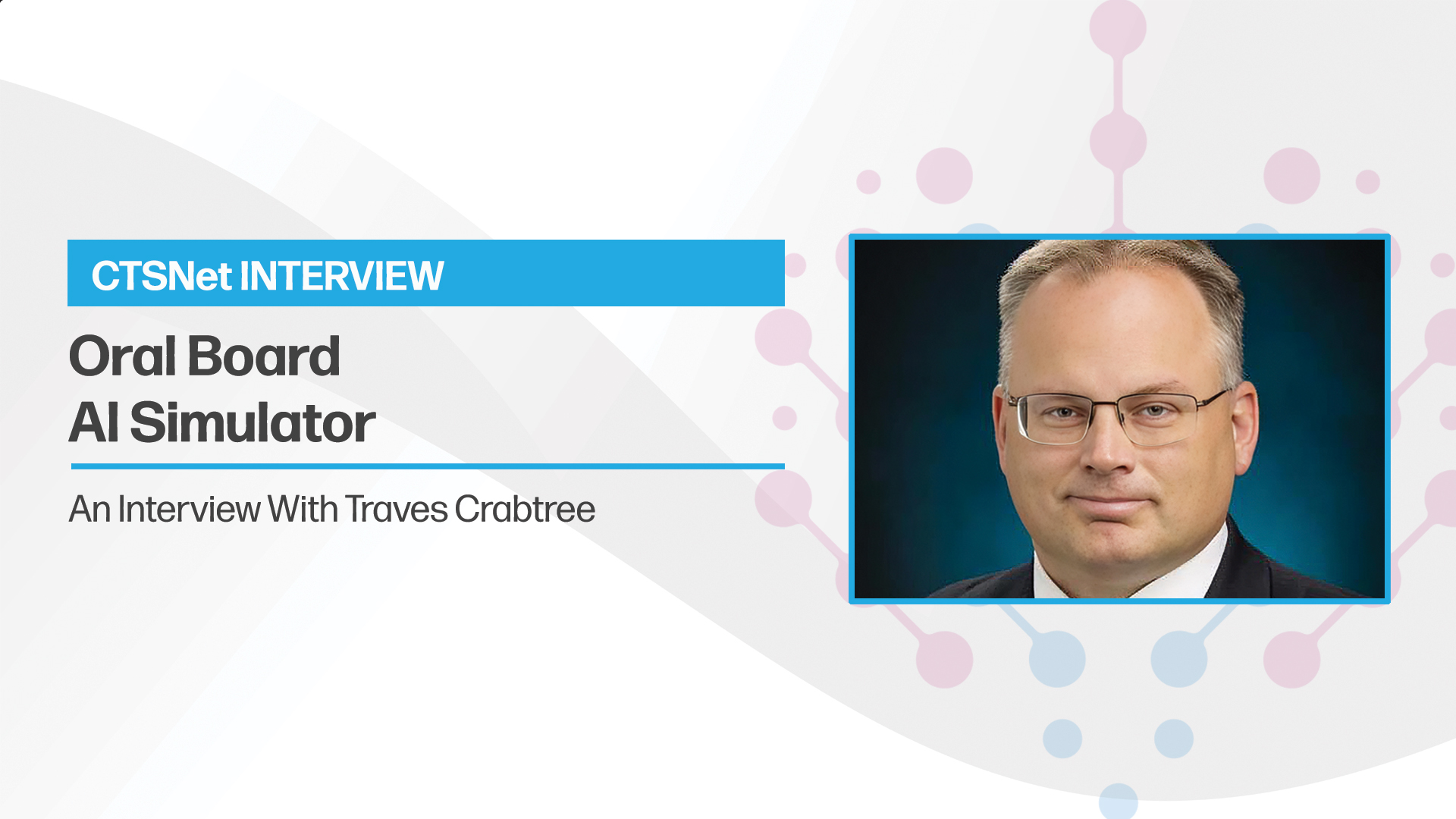
Oral Board AI Simulator: An Interview With Traves Crabtree

By: Traves Crabtree

Podcast

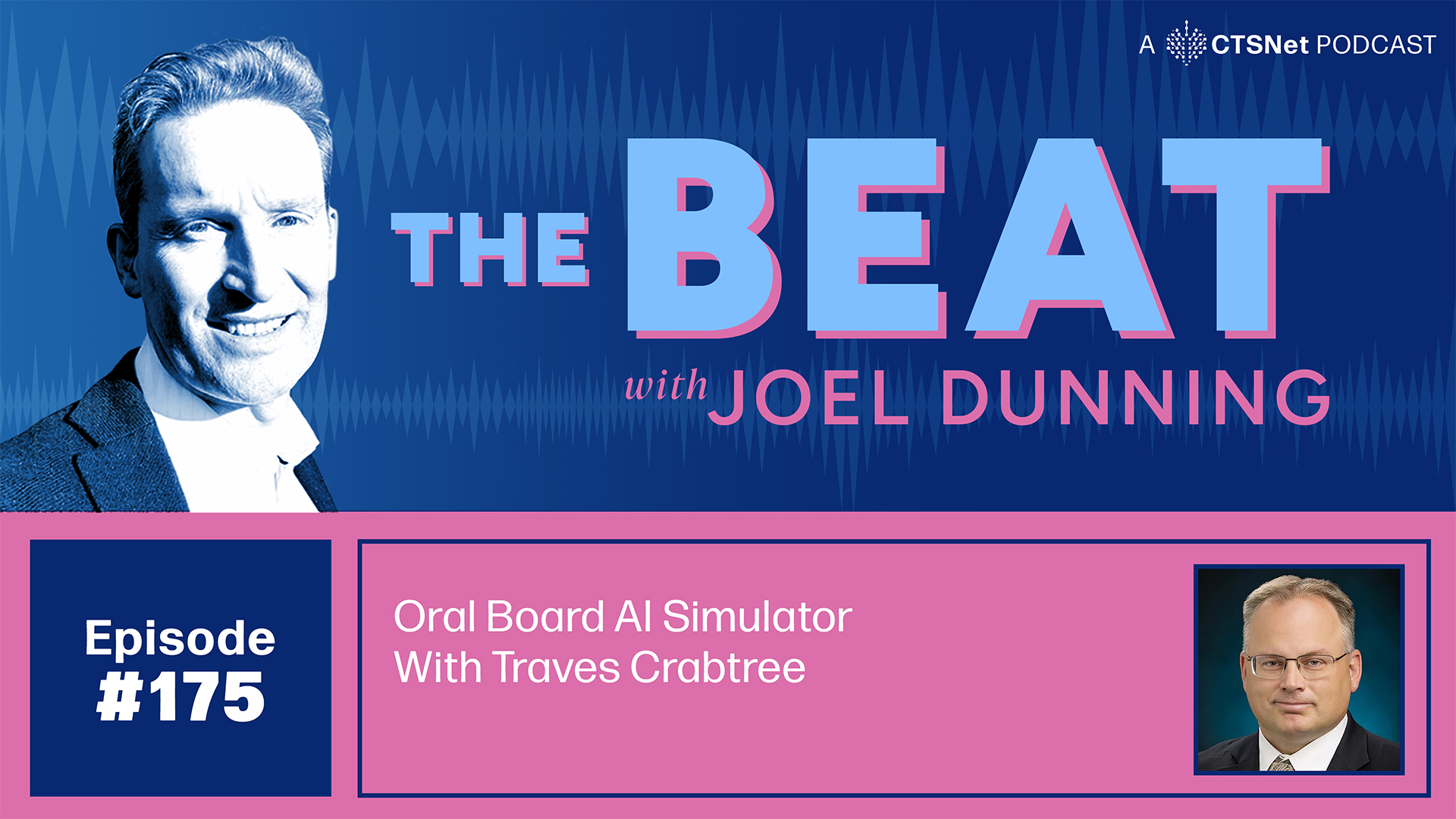
The Beat With Joel Dunning Ep. 175: Oral Board AI Simulator

By: Joel DunningGold ContributorSilver Commentor

Video

ASAIO 2026 | Stepdown Unit Management of Hemodynamically Stable Patients on Impella 5.5

JANS Article

Mid-Term Outcomes After Bilateral Versus Single Internal Mammary Artery Grafting in MIDCAB

Author(s): Shrikar Modukuri

233 S. Wacker Drive | Suite 4400
Chicago, Illinois 60606, USA

Linkedin X-twitter Facebook-f Youtube
  • Join CTSNet
  • Donate
  • Submit Content
  • Volunteer
  • Join CTSNet
  • Donate
  • Submit Content
  • Volunteer
  • Featured Partners
  • Careers
  • Press
  • Advertise on CTSNet
  • Featured Partners
  • Careers
  • Press
  • Advertise on CTSNet
  • CTSNet Policies
  • Privacy Policy
  • Disclaimer
  • Contact CTSNet
  • CTSNet Policies
  • Privacy Policy
  • Disclaimer
  • Contact CTSNet

233 S. Wacker Drive | Suite 4400
Chicago, Illinois 60606, USA

Instagram Linkedin X-twitter Facebook-f Youtube
  • Join CTSNet
  • Donate
  • Submit Content
  • Volunteer
  • Join CTSNet
  • Donate
  • Submit Content
  • Volunteer
  • Featured Partners
  • Careers
  • Press
  • Advertise on CTSNet
  • Featured Partners
  • Careers
  • Press
  • Advertise on CTSNet
  • CTSNet Policies
  • Privacy Policy
  • Disclaimer
  • Contact CTSNet
  • CTSNet Policies
  • Privacy Policy
  • Disclaimer
  • Contact CTSNet

233 S. Wacker Drive | Suite 4400
Chicago, Illinois 60606, USA

Instagram Linkedin X-twitter Facebook-f Youtube
  • Join CTSNet
  • Donate
  • Submit Content
  • Volunteer
  • CTSNet Policies
  • Privacy Policy
  • Join CTSNet
  • Donate
  • Submit Content
  • Volunteer
  • CTSNet Policies
  • Privacy Policy
  • Featured Partners
  • Careers
  • Press
  • Advertise on CTSNet
  • Disclaimer
  • Contact CTSNet
  • Featured Partners
  • Careers
  • Press
  • Advertise on CTSNet
  • Disclaimer
  • Contact CTSNet
  • Join CTSNet
  • Donate
  • Submit Content
  • Volunteer
  • Join CTSNet
  • Donate
  • Submit Content
  • Volunteer
  • Featured Partners
  • Careers
  • Press
  • Advertise on CTSNet
  • Featured Partners
  • Careers
  • Press
  • Advertise on CTSNet
  • CTSNet Policies
  • Privacy Policy
  • Disclaimer
  • Contact CTSNet
  • CTSNet Policies
  • Privacy Policy
  • Disclaimer
  • Contact CTSNet
© 2026 CTSNet Inc. All right reserved.
Go to Top