Background and Rationale
Coronary artery bypass graft (CABG) surgery remains a cornerstone treatment for advanced coronary heart disease. However, the long-term efficacy of CABG is frequently compromised by the failure of saphenous vein grafts (SVGs). Unlike arteries, veins are not physiologically adapted to the high-pressure arterial environment, leading to pathological tissue remodeling, neointimal hyperplasia, and eventual graft occlusion.
The authors previously demonstrated that tissue inhibitor of metalloproteinases-3 (TIMP-3) inhibits matrix metalloproteinase (MMP) activity and promotes vascular smooth muscle cell apoptosis when overexpressed, using an adenoviral approach (1, 2). It has been proposed that it may impede neointima formation in vein grafts. To test this, adenoviral gene transfer was used in an established in vivo model of neointima formation, namely the pig saphenous vein–to–carotid artery interposition grafts. The results showed that overexpression of TIMP-3 significantly reduced neointima formation in short-term pig vein grafts (1).
The authors then assessed whether a recombinant adenovirus that overexpresses TIMP-3 (RAdTIMP-3) affects vein graft intimal thickening in the longer term (at three months) and concluded that overexpression of TIMP-3 provides a sustained slowing of vein graft intimal thickening, highlighting the translational potential for ex vivo TIMP-3 gene therapy (3).
The Placebo-Controlled Trial of Ad5.CMVTO.TIMP-3 to Prevent Coronary Artery Bypass Graft Failure (PROTECT) study, a collaboration between NHS Greater Glasgow and Clyde and the University of Glasgow, is a prospective, randomized, open-label, phase 1 trial that investigates a novel gene therapy designed to enhance the durability of SVGs.
Therapeutic Target
The therapy utilizes a viral vector to deliver the gene for tissue inhibitor of metalloproteinases-3 (TIMP-3).
Mechanism of Action
TIMP-3 is a key protein involved in regulating tissue remodeling. By overexpressing TIMP-3 within the graft wall, the treatment aims to prevent the thickening and subsequent blockage of the vein.
Delivery Protocol
The delivery method is highly localized. The harvested vein is treated ex vivo with the viral vector immediately following its removal from the patient’s leg. This approach allows for direct, efficient delivery to the target tissue before the graft is surgically implanted into the heart, minimizing systemic exposure.
Clinical Case Report: First-in-Human Application
In August 2025, a 73-year-old male patient with a history of myocardial infarction and previous percutaneous coronary intervention became the first individual to receive this treatment.
Procedure
The patient underwent open-heart CABG at the Golden Jubilee University National Hospital, Clydebank, Scotland, where the TIMP-3-treated vein was used as a bypass graft.
Preliminary Outcomes
Postoperative recovery was unremarkable. At early follow-up, the patient reported significant improvements in functional capacity, exercise tolerance, and quality of life compared to his status following previous interventions.
This trial represents a major milestone in cardiovascular translational medicine, moving gene therapy from laboratory proof-of-concept to clinical application. The study is supported by the Medical Research Council (MRC) and the British Heart Foundation (BHF). If successful, this approach could significantly reduce the incidence of graft failure, improve life expectancy, and decrease the necessity for repeat revascularization procedures in cardiac patients.
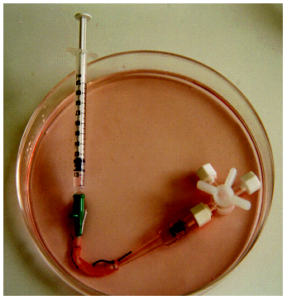
Figure 1: Treatment of the saphenous vein using an adenovirus vector (gene therapy).
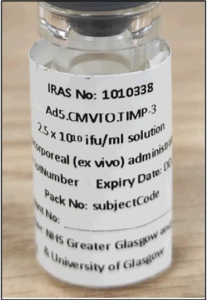
Figure 2: Vial of Ad5.CMVTO.TIMP-3 gene therapy.
Disclosure
Dr. Nawwar Al-Attar is a Principal Investigator (PI) for the PROTECT trial.
References
- George SJ, Lloyd CT, Angelini GD, Newby AC, Baker AH. Inhibition of late vein graft neointima formation in human and porcine models by adenovirus-mediated overexpression of tissue inhibitor of metalloproteinase-3. Circulation. 2000;101:296 –30
- Baker AH, Zaltsman AB, George SJ, Newby AC. Divergent effects of tissue inhibitor of metalloproteinase-1, -2, or -3 overexpression on rat vascular smooth muscle cell invasion, proliferation, and death in vitro. TIMP-3 promotes apoptosis. J Clin Invest. 1998;101:1478 –1487.
- George SJ, Wan S, Hu J, MacDonald R, Johnson JL, Baker AH. Sustained reduction of vein graft neointima formation by ex vivo TIMP-3 gene therapy. Circulation. 2011;124(11 Suppl):S135-42.
Disclaimer
The information and views presented on CTSNet.org represent the views of the authors and contributors of the material and not of CTSNet. Please review our full disclaimer page here.