Skip to content
Skip to content

The 6th Annual Innovation Video Competition Is Now Accepting Entries!

READ MORE
Not a member yet? Register now.
  • ABOUT
    • Leadership
    • Participation
    • Featured Sponsors
    • Submission Guidelines
    • Competitions
      • Innovation Video Competition
    • Community
      • Volunteer
      • Badges
    • Contact Us
  • EXPLORE CTSNET
    • CARDIAC
    • THORACIC
    • CONGENITAL
    • Clinical Care Professionals
    • JANS
    • Events
    • Journals
  • Videos
    • Atlas of Cardiac Surgery
    • Webinars
    • Master Class
    • Guest Interviews
    • Conference Sessions
  • Podcasts
    • The Beat With Joel Dunning
    • The Atrium
    • The Cardiac Recovery Room
    • The Lifeline
  • Profiles
    • Users Directory
    • Organizations
  • CAREERS
    • US Career Center
    • European Career Center
  • ABOUT
    • Leadership
    • Participation
    • Featured Sponsors
    • Submission Guidelines
    • Competitions
      • Innovation Video Competition
    • Community
      • Volunteer
      • Badges
    • Contact Us
  • EXPLORE CTSNET
    • CARDIAC
    • THORACIC
    • CONGENITAL
    • Clinical Care Professionals
    • JANS
    • Events
    • Journals
  • Videos
    • Atlas of Cardiac Surgery
    • Webinars
    • Master Class
    • Guest Interviews
    • Conference Sessions
  • Podcasts
    • The Beat With Joel Dunning
    • The Atrium
    • The Cardiac Recovery Room
    • The Lifeline
  • Profiles
    • Users Directory
    • Organizations
  • CAREERS
    • US Career Center
    • European Career Center
SUBMIT CONTENT
DONATE
JOIN

welcomes you to the new, improved website!

READ MORE
  • ABOUT
    • Leadership
    • Participation
    • Featured Sponsors
    • Submission Guidelines
    • Competitions
      • Innovation Video Competition
    • Community
      • Volunteer
      • Badges
    • Contact Us
  • EXPLORE CTSNET
    • CARDIAC
    • THORACIC
    • CONGENITAL
    • Clinical Care Professionals
    • JANS
    • Events
    • Journals
  • Videos
    • Atlas of Cardiac Surgery
    • Webinars
    • Master Class
    • Guest Interviews
    • Conference Sessions
  • Podcasts
    • The Beat With Joel Dunning
    • The Atrium
    • The Cardiac Recovery Room
    • The Lifeline
  • Profiles
    • Users Directory
    • Organizations
  • CAREERS
    • US Career Center
    • European Career Center
Not a member yet? Register now.
  • ABOUT
    • Leadership
    • Participation
    • Featured Sponsors
    • Submission Guidelines
    • Competitions
      • Innovation Video Competition
    • Community
      • Volunteer
      • Badges
    • Contact Us
  • EXPLORE CTSNET
    • CARDIAC
    • THORACIC
    • CONGENITAL
    • Clinical Care Professionals
    • JANS
    • Events
    • Journals
  • Videos
    • Atlas of Cardiac Surgery
    • Webinars
    • Master Class
    • Guest Interviews
    • Conference Sessions
  • Podcasts
    • The Beat With Joel Dunning
    • The Atrium
    • The Cardiac Recovery Room
    • The Lifeline
  • Profiles
    • Users Directory
    • Organizations
  • CAREERS
    • US Career Center
    • European Career Center
  • ABOUT
    • Leadership
    • Participation
    • Featured Sponsors
    • Submission Guidelines
    • Competitions
      • Innovation Video Competition
    • Community
      • Volunteer
      • Badges
    • Contact Us
  • EXPLORE CTSNET
    • CARDIAC
    • THORACIC
    • CONGENITAL
    • Clinical Care Professionals
    • JANS
    • Events
    • Journals
  • Videos
    • Atlas of Cardiac Surgery
    • Webinars
    • Master Class
    • Guest Interviews
    • Conference Sessions
  • Podcasts
    • The Beat With Joel Dunning
    • The Atrium
    • The Cardiac Recovery Room
    • The Lifeline
  • Profiles
    • Users Directory
    • Organizations
  • CAREERS
    • US Career Center
    • European Career Center
SUBMIT CONTENT
DONATE
JOIN

New Fleece-Bound Sealants for Thoracic Surgery

  • April 8, 2008

By: Walter Klepetko

Keywords:

  • Thoracic
Tissue sealing remains a requirement for advanced general thoracic procedures with the aims of improving hemostasis, diminishing lymphatic fluid production, and prevention of postoperative air leaks.  Different products have become available in recent years that include commercial biological glues, autologous glues made on-site, and biological fibrin-based products.

Introduction

Tissue sealing remains a requirement for advanced general thoracic procedures with the aims of improving hemostasis, diminishing lymphatic fluid production, and prevention of postoperative air leaks.  Different products have become available in recent years that include commercial biological glues, autologous glues made on-site, and biological fibrin-based products. More recently, fleece-bound sealing components have been introduced; compared to other products, these have the potential advantage of covering a considerable surface area. In this review, practical experience with a sterile ready-to-use absorbable fleece-bound sealing patch is discussed.

Technical background

This material was developed to achieve a hemostatic and tissue sealant effect.  It consists of an equine collagen patch carrying the fibrin glue components human fibrinogen and human thrombin.  The product is manufactured and distributed by Nycomed GmbH under the commercial name of Tachosil®.

The patch size is 9.5 x 4.8 x 0.5 cm and the product needs no special storage conditions. When applied to wet tissue surfaces, the coagulation factors dissolve and form a stable fibrin clot which tightly glues the collagen fleece to the tissue surface. Similar to conventional fibrin glues, the effect of fleece bound sealants is based on reproducing the last step of the blood coagulation cascade. Conglutination between the fleece and the tissue site is accomplished by way of a two-component glue, but due to the high concentration of fibrin in the clot, the strength of adhesion is about 15- to 30-fold higher than in a physiologic clot. Due to the elastic properties of the fleece-bound sealant, the product can be easily attached to the lung surface without impairing its elastic properties. The components are enzymatically degraded within 3-6 weeks [1,2].

Mode of application
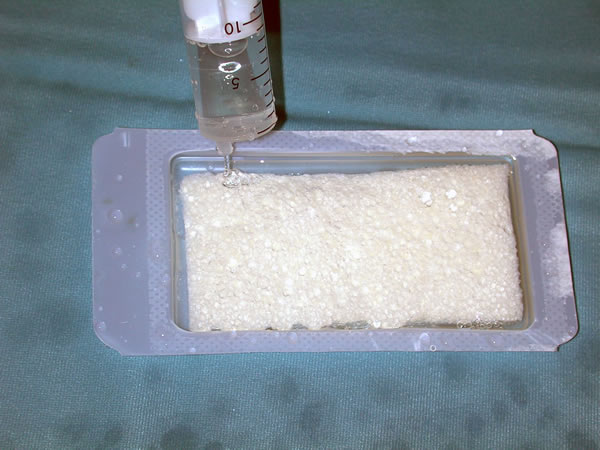
Figure 1: The fleece is dipped into sterile saline solution

The fleece-bound sealant can be applied in two different ways. The dry fleece can be mounted on a wet compress and pressed against the surface that has to be sealed. With gentle pressure the compress is held for 20 – 30 seconds. Full attachment of the fleece is achieved within that time and the compress can be removed thereafter.  Alternatively, the fleece is dipped into sterile saline fluid [Figure 1] and then handled with forceps to press it in a similar way against the tissue surface [Figure 2]. For sealing of the lung, gentle inflation allows placement of the fleece in accordance to the normal size of the lung. The elastic properties of the fleece allow adaptation to the changes in lung surface during normal breathing excursions.

Indications for use in GTS

Prevention and treatment of parenchymal air leaks of the lung
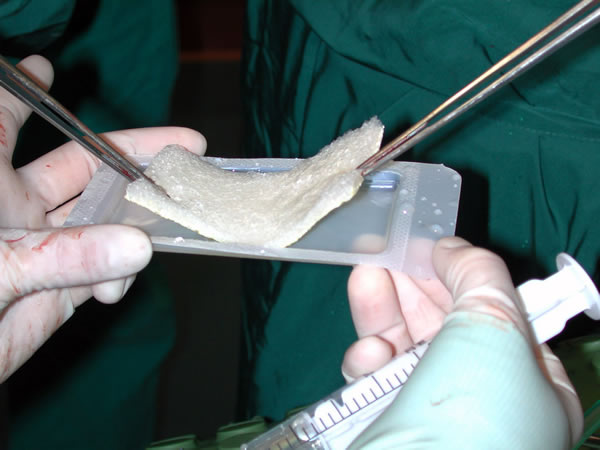
Figure 2: Handling of the moistened fleece

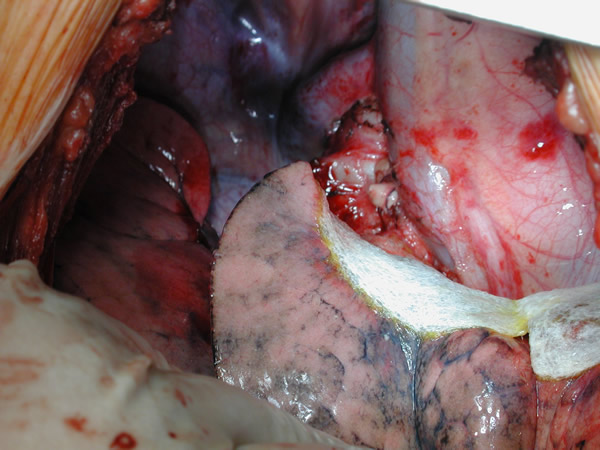
Effective sealing of established air leaks with fleece-bound sealant was proven in a multi-center study of standard lobectomy with significant reduction of duration and magnitude of postoperative air leaks.  However, no benefit from prophylactic use was demonstrated, limiting the application of fleece-bound sealant to the treatment of intra-operatively detected air leaks only [3]. This method seems to be very effective in emphysematous disease, where other forms of treatment are difficult and eventually impossible [Figure 3].

Achieving adequate hemostasis in diffuse chest wall bleeding

Diffuse bleeding from the chest wall can be observed especially in patients with a history of previous major thoracic procedures or

Figure 3: Coverage of the parenchymal resection line of the lung

episodes of recurrent pleural infections, or after extended chest wall resections including sternum, ribs, and vertebral bodies. Covering the apex or other sites of the thoracic wall or the resected bone surfaces with one or more fleeces helps achieve hemostasis even over large surface areas. Since the patch is fully active in patients with severe clotting disorders and thus under partial or full heparinization, this can be of extreme usefulness especially in the case of lung transplantation, where sometimes inadequate coagulation due to the use of CPB or reduction of overall platelet count is present.

Prevention of lymphatic fistula from the mediastinum

In situations of extended mediastinal dissection, especially radical mediastinal lymphadenectomy, postoperative lymphatic fistulas sometimes occur. Coverage of the area at risk with fleece-bound sealant allows reduction of fluid production and helps to minimize drainage time in these patients [Figure 4]. The benefit of this strategy has been proven in a series of
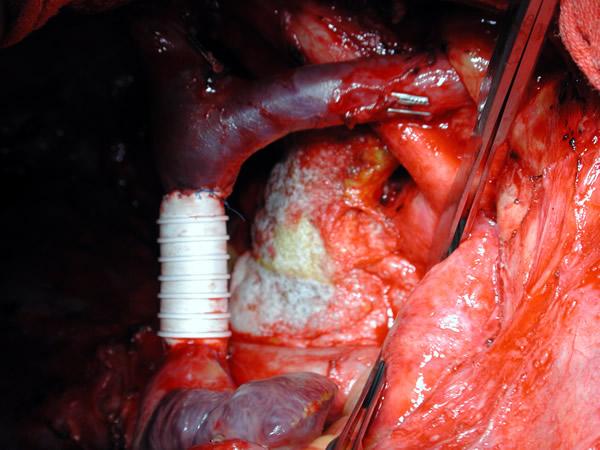
Figure 4: Mediastinal coverage after extended surgery with replacement of the superior vena cava

patients undergoing lobectomy combined with radical mediastinal lymphadenectomy [4].

Situations where the use of fleece-bound sealant cannot be recommended

Coverage of bronchial stumps with fleece-bound sealant has been tried occasionally with the goal of preventing postoperative stump fistula. However, such an effect has never been proven. Even more importantly, experimental data support that an opposite effect – impairment of microcirculation – might occur [5]. For this reason, the use of fleece-bound sealant for this purpose is contraindicated and bronchial stump coverage with biological tissue remains the standard of care.  A similar lack of information currently exists about the use of fleece-bound sealant for coverage of intestinal and especially esophageal anastomoses.

Conclusion

The use of Tachosil in the above mentioned indications can be recommended based on experience with the use of the product since several years. A careful and selective application allows achieving cost reductions by prevention of complications resulting in reductions of postoperative in hospital times.       

References

  1. Lewandrowski KU, Wise DL, Trantolo DJ, Gresser JD, Yaszemski MJ, Altobelli DE. Carbon RT. Evaluation of biodegradable fleece bound sealing: history, material science, and clinical application. In: Tissue Engineering and Biodegradable Equivalents. , Eds. Markel Dekker, Inc., USA, 2002, 599-614.
  2. Carbon RT, Baar S, Kriegelstein S, Huemmer HP, Baar K, Simon SI. Evaluating the in vitro adhesive strength of biomaterials. Biosimulator for selective leak closure. Biomaterials, 2003;24:1469-75.
  3. Lang G, Csekeo A, Stamatis G, et al.  Efficacy and safety of topical application of human fibrinogen/thrombin-coated collagen patch (TachoComb) for treatment of air leakage after standard lobectomy. Eur J Cardiothorac Surg 2004;25:160-6.
  4. Czerny M, Fleck T, Salat A, et al.  Sealing of the mediastinum with a local hemostyptic agent reduces chest tube duration after complete mediastinal lymph node dissection for stage I and II non-small cell lung carcinoma. Ann Thorac Surg 2004;77:1028-32.
  5. Getman V, Devyatko E, Hojjat F, et al. Reconstruction of blood supply of the denuded bronchial stump. Abstract from the 3rd EACTS/ESTS Joint Meeting, Leipzig, Germany, 12-15 September, 2004
Add Comments Cancel reply

You must be logged in to post a comment.

Not a member yet? Register now.
TAGS
  • Diaphragm

Related Content

Video

Laparoscopic Nissen Sleeve Gastrectomy for GERD and Obesity

By: Ahmad S. Ashrafi

Video

Insertion of the Axillary Impella 5.5

By: Zhen-Yu Tong

Video

A Step-by-Step Guide to Transaxillary Minimally Invasive Aortic Valve Replacement, Mitral Valve Repair, and Rhythm Surgery

By: Jelle Fleerakkers

Video

Robotic-Assisted Resection of a Giant Anterior Mediastinal Lipoma

By: Marissa Matto

Article

Register for the Inaugural ‘In Africa for Africa’ Cardio-Thoracic Conference in Cape Town!

By: Marianna Mast

Podcast

The Beat With Joel Dunning Ep. 168: Humanoid Robots and AI in Surgery

By: Joel DunningGold ContributorSilver Commentor

Video

Robotic-Assisted Biventricular Durable Assist Device Implantation: The First In Human Experience

By: Feras Khaliel

JANS Article

Humanoid Robots in the Operating Room: A Framework for Staged Integration of Embodied AI in Surgery

Author(s): Aamir Amin

JANS Article

Total Endovascular Repair of Ascending Aortic Pathology: The ENDOASC Multicentre Global Study

Author(s): Vincent SierSilver Contributor

Video

Management of SVC Injury During Right VATS Thymectomy for Myasthenia Gravis

By: Jakraphan Yu

233 S. Wacker Drive | Suite 4400
Chicago, Illinois 60606, USA

Linkedin X-twitter Facebook-f Youtube
  • Join CTSNet
  • Donate
  • Submit Content
  • Volunteer
  • Join CTSNet
  • Donate
  • Submit Content
  • Volunteer
  • Featured Partners
  • Careers
  • Press
  • Advertise on CTSNet
  • Featured Partners
  • Careers
  • Press
  • Advertise on CTSNet
  • CTSNet Policies
  • Privacy Policy
  • Disclaimer
  • Contact CTSNet
  • CTSNet Policies
  • Privacy Policy
  • Disclaimer
  • Contact CTSNet

233 S. Wacker Drive | Suite 4400
Chicago, Illinois 60606, USA

Instagram Linkedin X-twitter Facebook-f Youtube
  • Join CTSNet
  • Donate
  • Submit Content
  • Volunteer
  • Join CTSNet
  • Donate
  • Submit Content
  • Volunteer
  • Featured Partners
  • Careers
  • Press
  • Advertise on CTSNet
  • Featured Partners
  • Careers
  • Press
  • Advertise on CTSNet
  • CTSNet Policies
  • Privacy Policy
  • Disclaimer
  • Contact CTSNet
  • CTSNet Policies
  • Privacy Policy
  • Disclaimer
  • Contact CTSNet

233 S. Wacker Drive | Suite 4400
Chicago, Illinois 60606, USA

Instagram Linkedin X-twitter Facebook-f Youtube
  • Join CTSNet
  • Donate
  • Submit Content
  • Volunteer
  • CTSNet Policies
  • Privacy Policy
  • Join CTSNet
  • Donate
  • Submit Content
  • Volunteer
  • CTSNet Policies
  • Privacy Policy
  • Featured Partners
  • Careers
  • Press
  • Advertise on CTSNet
  • Disclaimer
  • Contact CTSNet
  • Featured Partners
  • Careers
  • Press
  • Advertise on CTSNet
  • Disclaimer
  • Contact CTSNet
  • Join CTSNet
  • Donate
  • Submit Content
  • Volunteer
  • Join CTSNet
  • Donate
  • Submit Content
  • Volunteer
  • Featured Partners
  • Careers
  • Press
  • Advertise on CTSNet
  • Featured Partners
  • Careers
  • Press
  • Advertise on CTSNet
  • CTSNet Policies
  • Privacy Policy
  • Disclaimer
  • Contact CTSNet
  • CTSNet Policies
  • Privacy Policy
  • Disclaimer
  • Contact CTSNet
© 2026 CTSNet Inc. All right reserved.
Go to Top