


Diaphragm

Diaphragmatic paralysis following congenital cardiac surgery is an important cause of postoperative respiratory morbidity in neonates and infants. Prompt recognition and appropriate management are essential to reduce ventilator dependence and improve clinical outcomes. Case Presentation...
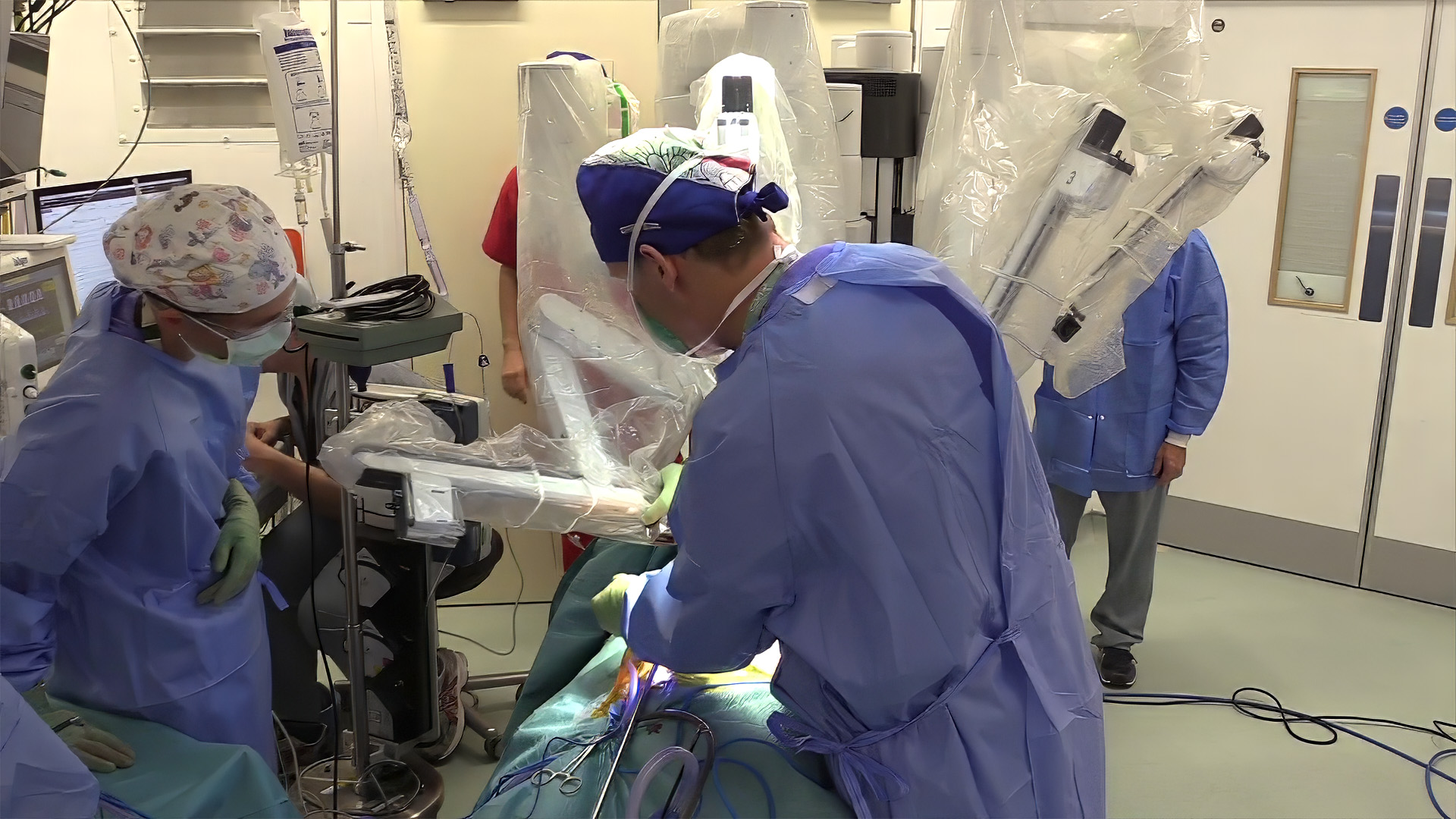


This video demonstrates the implantation of bilateral phrenic nerve pacing leads using a robotic subxiphoid approach without lung isolation. This approach was utilized because the patient presented with central hypoventilation...

 …
…In this panel discussion, surgeons Leanne Ashrafian and Andrea Bille, both consultant thoracic surgeons in the Department of Thoracic Surgery at Guy’s St Thomas’ NHS Foundation Trust, join Ammara Watkins,...

Diaphragmatic defects involving the central tendon are uncommon and may present diagnostic uncertainty, particularly when identified incidentally on imaging. Surgical management can be technically challenging due to attenuated tissue quality...

The patient in this case is a sixty-year-old woman with increasing shortness of breath, especially in a horizontal position. She was diagnosed with right-sided diaphragmatic paralysis. Surgeons suspected trauma or...

A 57-year-old woman, with a history of pericardiectomy 20 years before, reported progressive dyspnea and orthopnea. A chest computed tomography scan showed a large anterior diaphragmatic (Morgagni) hernia containing a...

Solitary fibrous tumors (SFT) are rare neoplasms representing less than 5% of pleural tumors (1, 2). Sixty to eighty percent of SFTs arise from the visceral pleura (3, 4), but...

Unilateral phrenic nerve injury often results in symptomatic hemidiaphragm paralysis. Although diaphragmatic plication is a treatment option, phrenic nerve repair may also be considered in an attempt to restore function...

Find it here: The SCTS “Take on the Experts” Video Competition On Tuesday, March 12, the top four cardiac and top three thoracic videos submitted for this session of the...

In this video, the authors present a diaphragmatic plication. Diaphragm paralysis can have a wide variety of causes such as trauma, malignant pathologies, or infectious diseases. Sometimes it can be...


The Editorial Group is grateful to Dr Manos Kapetanakis for bringing to our attention their small case series on a ‘ lifestyle’ late complication of pneumonectomy for malignancy. It will...

Objective The authors present a video-assisted thoracoscopic surgical (VATS) technique for diaphragmatic plication due to phrenic nerve paralysis. The primary goal of this procedure is to decrease abdominal compression over...

This is a video demonstrating the use of the FlexDex™ needle holder to perform a left video-assisted thoracoscopic (VATS) diaphragm plication (1). The FlexDex™ needle holder is a new device...