Skip to content
Skip to content

AI-Powered Oral Board Training Is Available to CTSNet Users Now!

LEARN MORE
Not a member yet? Register now.
  • ABOUT
    • Leadership
    • Participation
    • Featured Sponsors
    • Submission Guidelines
    • Competitions
      • Innovation Video Competition
    • Community
      • Volunteer
      • Badges
    • Contact Us
  • EXPLORE CTSNET
    • CARDIAC
    • THORACIC
    • CONGENITAL
    • Clinical Care Professionals
    • JANS
    • Events
    • Journals
  • Videos
    • Atlas of Cardiac Surgery
    • Webinars
    • Master Class
    • Guest Interviews
    • Conference Sessions
  • Podcasts
    • The Beat With Joel Dunning
    • The Atrium
    • The Cardiac Recovery Room
    • The Lifeline
  • Profiles
    • Users Directory
    • Organizations
  • CAREERS
    • US Career Center
    • European Career Center
  • ABOUT
    • Leadership
    • Participation
    • Featured Sponsors
    • Submission Guidelines
    • Competitions
      • Innovation Video Competition
    • Community
      • Volunteer
      • Badges
    • Contact Us
  • EXPLORE CTSNET
    • CARDIAC
    • THORACIC
    • CONGENITAL
    • Clinical Care Professionals
    • JANS
    • Events
    • Journals
  • Videos
    • Atlas of Cardiac Surgery
    • Webinars
    • Master Class
    • Guest Interviews
    • Conference Sessions
  • Podcasts
    • The Beat With Joel Dunning
    • The Atrium
    • The Cardiac Recovery Room
    • The Lifeline
  • Profiles
    • Users Directory
    • Organizations
  • CAREERS
    • US Career Center
    • European Career Center
SUBMIT CONTENT
DONATE
JOIN

AI-Powered Oral Board Training Is Available to CTSNet Users Now!

READ MORE
  • ABOUT
    • Leadership
    • Participation
    • Featured Sponsors
    • Submission Guidelines
    • Competitions
      • Innovation Video Competition
    • Community
      • Volunteer
      • Badges
    • Contact Us
  • EXPLORE CTSNET
    • CARDIAC
    • THORACIC
    • CONGENITAL
    • Clinical Care Professionals
    • JANS
    • Events
    • Journals
  • Videos
    • Atlas of Cardiac Surgery
    • Webinars
    • Master Class
    • Guest Interviews
    • Conference Sessions
  • Podcasts
    • The Beat With Joel Dunning
    • The Atrium
    • The Cardiac Recovery Room
    • The Lifeline
  • Profiles
    • Users Directory
    • Organizations
  • CAREERS
    • US Career Center
    • European Career Center
Not a member yet? Register now.
  • ABOUT
    • Leadership
    • Participation
    • Featured Sponsors
    • Submission Guidelines
    • Competitions
      • Innovation Video Competition
    • Community
      • Volunteer
      • Badges
    • Contact Us
  • EXPLORE CTSNET
    • CARDIAC
    • THORACIC
    • CONGENITAL
    • Clinical Care Professionals
    • JANS
    • Events
    • Journals
  • Videos
    • Atlas of Cardiac Surgery
    • Webinars
    • Master Class
    • Guest Interviews
    • Conference Sessions
  • Podcasts
    • The Beat With Joel Dunning
    • The Atrium
    • The Cardiac Recovery Room
    • The Lifeline
  • Profiles
    • Users Directory
    • Organizations
  • CAREERS
    • US Career Center
    • European Career Center
  • ABOUT
    • Leadership
    • Participation
    • Featured Sponsors
    • Submission Guidelines
    • Competitions
      • Innovation Video Competition
    • Community
      • Volunteer
      • Badges
    • Contact Us
  • EXPLORE CTSNET
    • CARDIAC
    • THORACIC
    • CONGENITAL
    • Clinical Care Professionals
    • JANS
    • Events
    • Journals
  • Videos
    • Atlas of Cardiac Surgery
    • Webinars
    • Master Class
    • Guest Interviews
    • Conference Sessions
  • Podcasts
    • The Beat With Joel Dunning
    • The Atrium
    • The Cardiac Recovery Room
    • The Lifeline
  • Profiles
    • Users Directory
    • Organizations
  • CAREERS
    • US Career Center
    • European Career Center
SUBMIT CONTENT
DONATE
JOIN
You are here:
  1. Cardiac

Prognostic value of fractional flow reserve: linking physiologic severity to clinical outcomes.

  • October 19, 2014

Submitted by: J. Rafael Sadaba

Source: Journal of the American College of Cardiology
Source URL: http://content.onlinejacc.org/article.aspx?articleID=1915294

Keywords:

Author(s): Johnson NP, Tóth GG, Lai D, Zhu H, Açar G, Agostoni P, Appelman Y, Arslan F, Barbato E, Chen SL, Di Serafino L, Domínguez-Franco AJ, Dupouy P, Esen AM, Esen OB, Hamilos M, Iwasaki K, Jensen LO, Jiménez-Navarro MF, Katritsis DG, Kocaman SA, Koo BK, López-Palop R, Lorin JD, Miller LH, Muller O, Nam CW, Oud N, Puymirat E, Rieber J, Rioufol G, Rodés-Cabau J, Sedlis SP, Takeishi Y, Tonino PA, Van Belle E, Verna E, Werner GS, Fearon WF, Pijls NH, De Bruyne B, Gould KL

In this manuscript, the authors use meta-analysis techniques to evaluate the relationship between measured coronary fractional flow reserve (FFR) and patients’ outcomes. They demonstrate that FFR provides a continuous and independent marker of subsequent MACE as modulated by treatment (medical therapy vs revascularization) in a broad range of clinical scenarios. Lesions with lower FFR values receive larger absolute benefits from PCI or CABG. When FFR values are high, we can do harm by proceeding with revascularization. The cut-point for determining revascularization strategy using this statistical analysis remains in the 0.75-0.80 range, which is in keeping with previous reports on this subject. According to the findings, the authors conclude that an FFR-guided revascularization strategy significantly reduces MACE and increases freedom from angina with less PCI or CABG than an anatomy-based strategy.

1 Comment

  1. Peter Alison says:
    October 30, 2014 at 8:28 pm

    a classic error to assume that CABG and PCI are equivalent when analysisng FFR. If I am interpreting the meta- analysis correctly virtually no patient had CABG and yet the authors have extrapolated the data to assume all revascularisation strategies are equivalent. It would seem the concept of burdon of disease and distal vessel grafting protecting against future disease will be dismissed as cardiologists use FFR to downgrade the number of diseased vessels to justify limited PCI revascularisation. Perhaps another interpretation is that FFR results demonstrate as many have long suspected that cardiologists are not as good as they think at picking the “culprit” lesion and therefore have suffered worse results as a result of the incomplete revascularisation.

     Log in to Reply

Add Comments Cancel reply

You must be logged in to post a comment.

Not a member yet? Register now.
ADD TO PLAYLIST
REMOVE FROM PLAYLIST
TAGS
  • Coronary Disease
  • Coronary Disease - Other
  • Coronary Disease - PCI
  • Coronary Disease - Surgery

Related Content

Image 307
Video

Endoscopic Septal Tumor Resection With Biatrial Reconstruction

By: Oscar Flores Flores

ISMICS cardiac session 7 900x506 V1
Video

ISMICS 2026 | Innovations in Cardiac Surgery: Imaging, Robotics, and Autonomy

By: Feras Khaliel

The Beat Ep 8.27 Thumbnail_EPISODE
Podcast

The Beat With Joel Dunning Ep. 171: Online Quiz League for Residents

By: Joel DunningGold ContributorSilver Commentor

ctsnet-jans-image
JANS Article

Single-Stage Repair of Ruptured Aortic Arch With Coarctation Using Dual Perfusion Strategy

By: Ziad Mansour

ctsnet-jans-image
JANS Article

Performance Under Pressure: The Role of Self-Regulation and Leadership in Dealing With Pressures in the OR

By: Vincent SierSilver Contributor

Image 79
Video

Pulmonary Valve Replacement via Redo Ministernotomy

By: Jerome Soquet

The Atrium Ep 25 Thumbnail_EPISODE
Podcast

The Atrium: Oral Board AI Simulator

By: Alice CopperwheatBronze Contributor

Image 51
Video

Transaortic Alfieri Stitch for Mitral Valve Repair, Modified Bentall, and Hemiarch Repair

By: Komal khania

Screenshot 2026-07-16 at 3.24.14 PM (2)
Article

AI-Powered Oral Board Training Is Available to CTSNet Users Now

SCTS-2027-Call-for-Abstracts_banners_840x560
Article

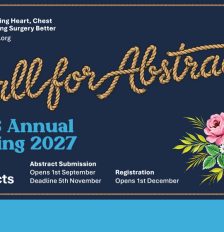
Save the Date – SCTS Annual Meeting 2027

233 S. Wacker Drive | Suite 4400
Chicago, Illinois 60606, USA

Linkedin X-twitter Facebook-f Youtube
  • Join CTSNet
  • Donate
  • Submit Content
  • Volunteer
  • Join CTSNet
  • Donate
  • Submit Content
  • Volunteer
  • Featured Partners
  • Careers
  • Press
  • Advertise on CTSNet
  • Featured Partners
  • Careers
  • Press
  • Advertise on CTSNet
  • CTSNet Policies
  • Privacy Policy
  • Disclaimer
  • Contact CTSNet
  • CTSNet Policies
  • Privacy Policy
  • Disclaimer
  • Contact CTSNet

233 S. Wacker Drive | Suite 4400
Chicago, Illinois 60606, USA

Instagram Linkedin X-twitter Facebook-f Youtube
  • Join CTSNet
  • Donate
  • Submit Content
  • Volunteer
  • Join CTSNet
  • Donate
  • Submit Content
  • Volunteer
  • Featured Partners
  • Careers
  • Press
  • Advertise on CTSNet
  • Featured Partners
  • Careers
  • Press
  • Advertise on CTSNet
  • CTSNet Policies
  • Privacy Policy
  • Disclaimer
  • Contact CTSNet
  • CTSNet Policies
  • Privacy Policy
  • Disclaimer
  • Contact CTSNet

233 S. Wacker Drive | Suite 4400
Chicago, Illinois 60606, USA

Instagram Linkedin X-twitter Facebook-f Youtube
  • Join CTSNet
  • Donate
  • Submit Content
  • Volunteer
  • CTSNet Policies
  • Privacy Policy
  • Join CTSNet
  • Donate
  • Submit Content
  • Volunteer
  • CTSNet Policies
  • Privacy Policy
  • Featured Partners
  • Careers
  • Press
  • Advertise on CTSNet
  • Disclaimer
  • Contact CTSNet
  • Featured Partners
  • Careers
  • Press
  • Advertise on CTSNet
  • Disclaimer
  • Contact CTSNet
  • Join CTSNet
  • Donate
  • Submit Content
  • Volunteer
  • Join CTSNet
  • Donate
  • Submit Content
  • Volunteer
  • Featured Partners
  • Careers
  • Press
  • Advertise on CTSNet
  • Featured Partners
  • Careers
  • Press
  • Advertise on CTSNet
  • CTSNet Policies
  • Privacy Policy
  • Disclaimer
  • Contact CTSNet
  • CTSNet Policies
  • Privacy Policy
  • Disclaimer
  • Contact CTSNet
© 2026 CTSNet Inc. All right reserved.
Go to Top