Skip to content
Skip to content

AI-Powered Oral Board Training Is Available to CTSNet Users Now!

LEARN MORE
Not a member yet? Register now.
  • ABOUT
    • Leadership
    • Participation
    • Featured Sponsors
    • Submission Guidelines
    • Competitions
      • Innovation Video Competition
    • Community
      • Volunteer
      • Badges
    • Contact Us
  • EXPLORE CTSNET
    • CARDIAC
    • THORACIC
    • CONGENITAL
    • Clinical Care Professionals
    • JANS
    • Events
    • Journals
  • Videos
    • Atlas of Cardiac Surgery
    • Webinars
    • Master Class
    • Guest Interviews
    • Conference Sessions
  • Podcasts
    • The Beat With Joel Dunning
    • The Atrium
    • The Cardiac Recovery Room
    • The Lifeline
  • Profiles
    • Users Directory
    • Organizations
  • CAREERS
    • US Career Center
    • European Career Center
  • ABOUT
    • Leadership
    • Participation
    • Featured Sponsors
    • Submission Guidelines
    • Competitions
      • Innovation Video Competition
    • Community
      • Volunteer
      • Badges
    • Contact Us
  • EXPLORE CTSNET
    • CARDIAC
    • THORACIC
    • CONGENITAL
    • Clinical Care Professionals
    • JANS
    • Events
    • Journals
  • Videos
    • Atlas of Cardiac Surgery
    • Webinars
    • Master Class
    • Guest Interviews
    • Conference Sessions
  • Podcasts
    • The Beat With Joel Dunning
    • The Atrium
    • The Cardiac Recovery Room
    • The Lifeline
  • Profiles
    • Users Directory
    • Organizations
  • CAREERS
    • US Career Center
    • European Career Center
SUBMIT CONTENT
DONATE
JOIN

AI-Powered Oral Board Training Is Available to CTSNet Users Now!

READ MORE
  • ABOUT
    • Leadership
    • Participation
    • Featured Sponsors
    • Submission Guidelines
    • Competitions
      • Innovation Video Competition
    • Community
      • Volunteer
      • Badges
    • Contact Us
  • EXPLORE CTSNET
    • CARDIAC
    • THORACIC
    • CONGENITAL
    • Clinical Care Professionals
    • JANS
    • Events
    • Journals
  • Videos
    • Atlas of Cardiac Surgery
    • Webinars
    • Master Class
    • Guest Interviews
    • Conference Sessions
  • Podcasts
    • The Beat With Joel Dunning
    • The Atrium
    • The Cardiac Recovery Room
    • The Lifeline
  • Profiles
    • Users Directory
    • Organizations
  • CAREERS
    • US Career Center
    • European Career Center
Not a member yet? Register now.
  • ABOUT
    • Leadership
    • Participation
    • Featured Sponsors
    • Submission Guidelines
    • Competitions
      • Innovation Video Competition
    • Community
      • Volunteer
      • Badges
    • Contact Us
  • EXPLORE CTSNET
    • CARDIAC
    • THORACIC
    • CONGENITAL
    • Clinical Care Professionals
    • JANS
    • Events
    • Journals
  • Videos
    • Atlas of Cardiac Surgery
    • Webinars
    • Master Class
    • Guest Interviews
    • Conference Sessions
  • Podcasts
    • The Beat With Joel Dunning
    • The Atrium
    • The Cardiac Recovery Room
    • The Lifeline
  • Profiles
    • Users Directory
    • Organizations
  • CAREERS
    • US Career Center
    • European Career Center
  • ABOUT
    • Leadership
    • Participation
    • Featured Sponsors
    • Submission Guidelines
    • Competitions
      • Innovation Video Competition
    • Community
      • Volunteer
      • Badges
    • Contact Us
  • EXPLORE CTSNET
    • CARDIAC
    • THORACIC
    • CONGENITAL
    • Clinical Care Professionals
    • JANS
    • Events
    • Journals
  • Videos
    • Atlas of Cardiac Surgery
    • Webinars
    • Master Class
    • Guest Interviews
    • Conference Sessions
  • Podcasts
    • The Beat With Joel Dunning
    • The Atrium
    • The Cardiac Recovery Room
    • The Lifeline
  • Profiles
    • Users Directory
    • Organizations
  • CAREERS
    • US Career Center
    • European Career Center
SUBMIT CONTENT
DONATE
JOIN
You are here:
  1. Thoracic

Endoluminal Complex Esophageal Management: Stitches, Stents, and Clips

  • October 26, 2015

By: Shanda BlackmonSilver Contributor

Keywords:

  • Esophagus

Surgeons performing esophageal surgery should have endoscopic skills to manage endoluminal situations. Meticulous attention to detail, draining infection, sealing leaks, and removing stents before they erode into adjacent structures is critical to achieving a good patient outcome. The objective of this video is to review tools that may be used when endoluminally managing an esophageal leak, perforation, or stricture. The skills needed to deploy the stents, suture leaks closed, and manage infected cavities are described. In this video series (the first video in the series can be viewed by clicking here), multiple cases are reviewed, including ones that demonstrate management skills following the case in order to educate the viewer about the usage of different devices.   

Endoluminal Devices Reviewed

  • Esophageal Stents
  • Ovesco Endoclips
  • Resolutions Clips
  • Apollo Endoluminal Suturing Device
  • Para-esophageal Irrigation and Drainage Devices
  • Anti-migration Devices
Figure

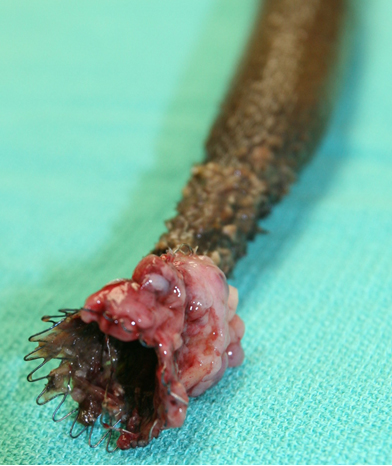
Figure 1: Esophageal stent after removal. Portions of the esophagus wall grew into the uncovered portion of the stent.
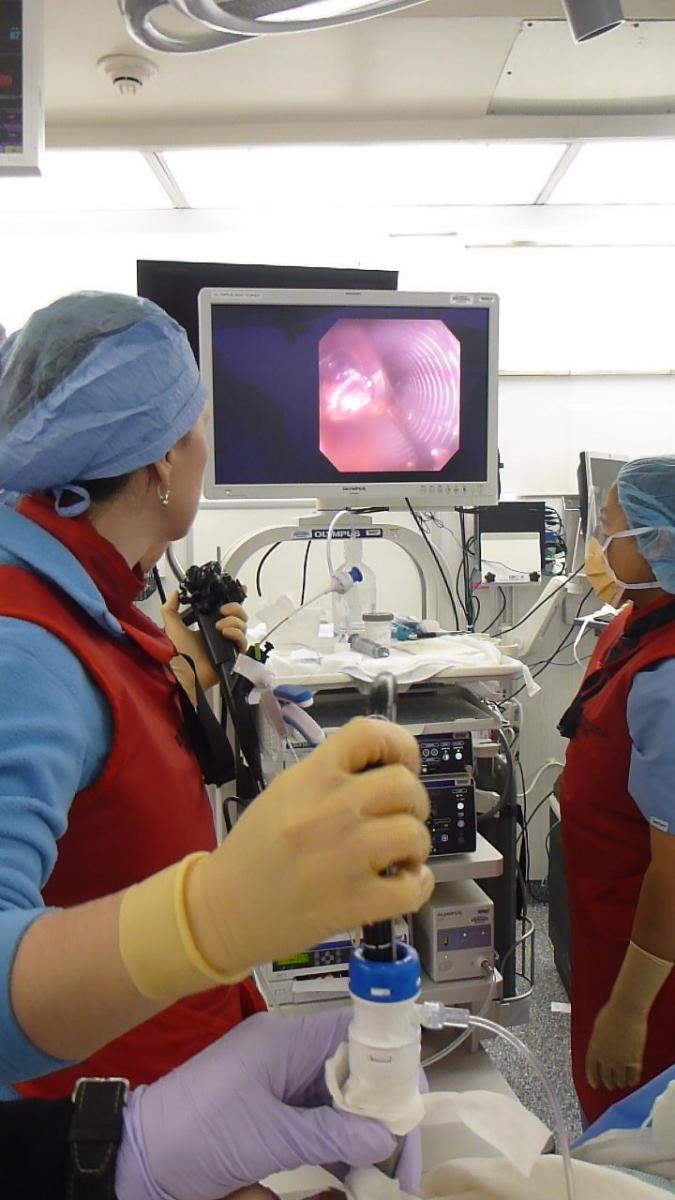
Figure

Figure 2: Bedside arrangement to perform endoluminal esophageal suturing. The overtube, dual-channel endoscope, CO2 insufflator, and Apollo equipment is necessary for such a procedure.
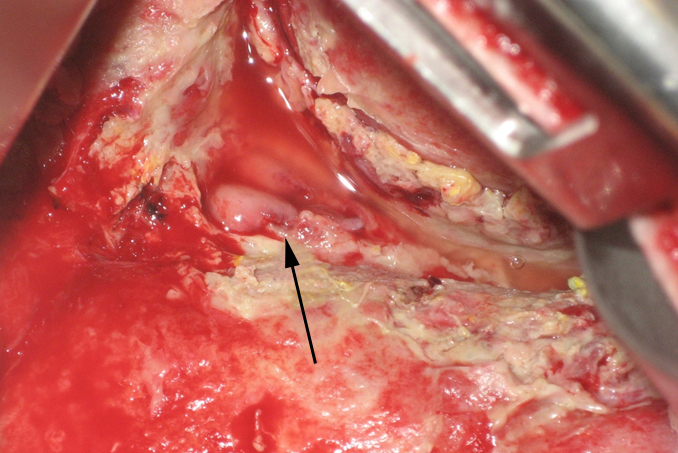
Figure

Figure 3: Esophageal leak as seen from a thoracotomy. Hybrid surgeries can be combined with endoluminal techniques for a “belt and suspender” approach.

Tips

  • Esophageal stents deployed for a leak should not be left inside the esophagus for more than three weeks to prevent erosion into adjacent structures.
  • If a leak does not heal after the first round, the stents should be removed and replaced in a new landing zone.
  • All extravasating esophageal leaks should be drained externally. Leaks that cannot be addressed endoluminally should be treated with surgery when appropriate, making sure that the patient stays informed about the off-label nature of many of the devices used in the video.
  • Interventionalists treating esophageal leaks and fistulas should have surgical training and understand the principles of fistula management.
  • Stents deployed near the aorta or airway should be surrounded by fat or a muscle flap to buttress and avoid erosion.
  • Stents should never be deployed against structures that would be fragile if erosion occurred. Clips are typically used for fresh incision closures
  • The larger Ovesco clips may close larger perforations, but do not typically close chronic fistulae well.
  • The new Apollo endosuturing tool is an excellent device that may be used to both close leaks and secure stents to prevent migration. 

Add Comments Cancel reply

You must be logged in to post a comment.

Not a member yet? Register now.
YouTube 1.1K views on YouTube
TAGS
  • Esophagus - Other

Related Content

Video

Panel Discussion: Complex Thoracic Endometriosis

By: Leanne Harling (Ashrafian)Silver Contributor

Video

Endoscopic Septal Tumor Resection With Biatrial Reconstruction

By: Oscar Flores Flores

Video

Thinking Outside the Box: Mitral Valve De-Repair

By: Sameh SaidGold ContributorSilver Commentor

Video

Surgical Repair of Mixed Supracardiac Total Anomalous Pulmonary Venous Connection

By: Zineb El Hasnaoui

Podcast

The Beat With Joel Dunning Ep. 171: Online Quiz League for Residents

By: Joel DunningGold ContributorSilver Commentor

Video

Upper Ministernotomy for Pulmonary Artery Banding: Facilitating Future Reentry

By: Alsayed Salem

JANS Article

Performance Under Pressure: The Role of Self-Regulation and Leadership in Dealing With Pressures in the OR

Author(s): Vincent SierSilver Contributor

Video

Pulmonary Valve Replacement via Redo Ministernotomy

By: Jerome Soquet

Podcast

The Atrium: Oral Board AI Simulator

By: Alice CopperwheatBronze Contributor

Video

Transaortic Alfieri Stitch for Mitral Valve Repair, Modified Bentall, and Hemiarch Repair

By: Komal khania

233 S. Wacker Drive | Suite 4400
Chicago, Illinois 60606, USA

Linkedin X-twitter Facebook-f Youtube
  • Join CTSNet
  • Donate
  • Submit Content
  • Volunteer
  • Join CTSNet
  • Donate
  • Submit Content
  • Volunteer
  • Featured Partners
  • Careers
  • Press
  • Advertise on CTSNet
  • Featured Partners
  • Careers
  • Press
  • Advertise on CTSNet
  • CTSNet Policies
  • Privacy Policy
  • Disclaimer
  • Contact CTSNet
  • CTSNet Policies
  • Privacy Policy
  • Disclaimer
  • Contact CTSNet

233 S. Wacker Drive | Suite 4400
Chicago, Illinois 60606, USA

Instagram Linkedin X-twitter Facebook-f Youtube
  • Join CTSNet
  • Donate
  • Submit Content
  • Volunteer
  • Join CTSNet
  • Donate
  • Submit Content
  • Volunteer
  • Featured Partners
  • Careers
  • Press
  • Advertise on CTSNet
  • Featured Partners
  • Careers
  • Press
  • Advertise on CTSNet
  • CTSNet Policies
  • Privacy Policy
  • Disclaimer
  • Contact CTSNet
  • CTSNet Policies
  • Privacy Policy
  • Disclaimer
  • Contact CTSNet

233 S. Wacker Drive | Suite 4400
Chicago, Illinois 60606, USA

Instagram Linkedin X-twitter Facebook-f Youtube
  • Join CTSNet
  • Donate
  • Submit Content
  • Volunteer
  • CTSNet Policies
  • Privacy Policy
  • Join CTSNet
  • Donate
  • Submit Content
  • Volunteer
  • CTSNet Policies
  • Privacy Policy
  • Featured Partners
  • Careers
  • Press
  • Advertise on CTSNet
  • Disclaimer
  • Contact CTSNet
  • Featured Partners
  • Careers
  • Press
  • Advertise on CTSNet
  • Disclaimer
  • Contact CTSNet
  • Join CTSNet
  • Donate
  • Submit Content
  • Volunteer
  • Join CTSNet
  • Donate
  • Submit Content
  • Volunteer
  • Featured Partners
  • Careers
  • Press
  • Advertise on CTSNet
  • Featured Partners
  • Careers
  • Press
  • Advertise on CTSNet
  • CTSNet Policies
  • Privacy Policy
  • Disclaimer
  • Contact CTSNet
  • CTSNet Policies
  • Privacy Policy
  • Disclaimer
  • Contact CTSNet
© 2026 CTSNet Inc. All right reserved.
Go to Top