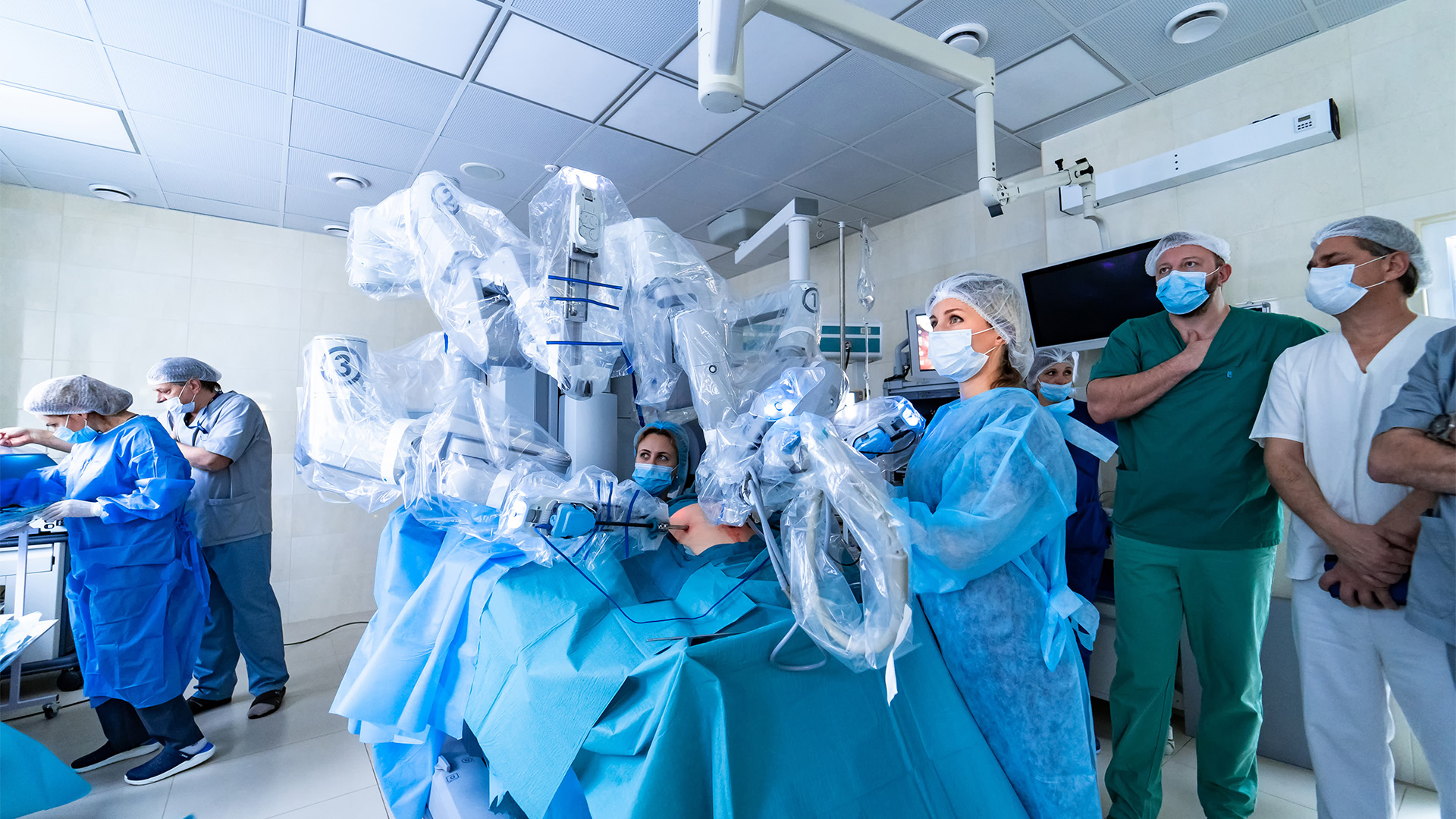
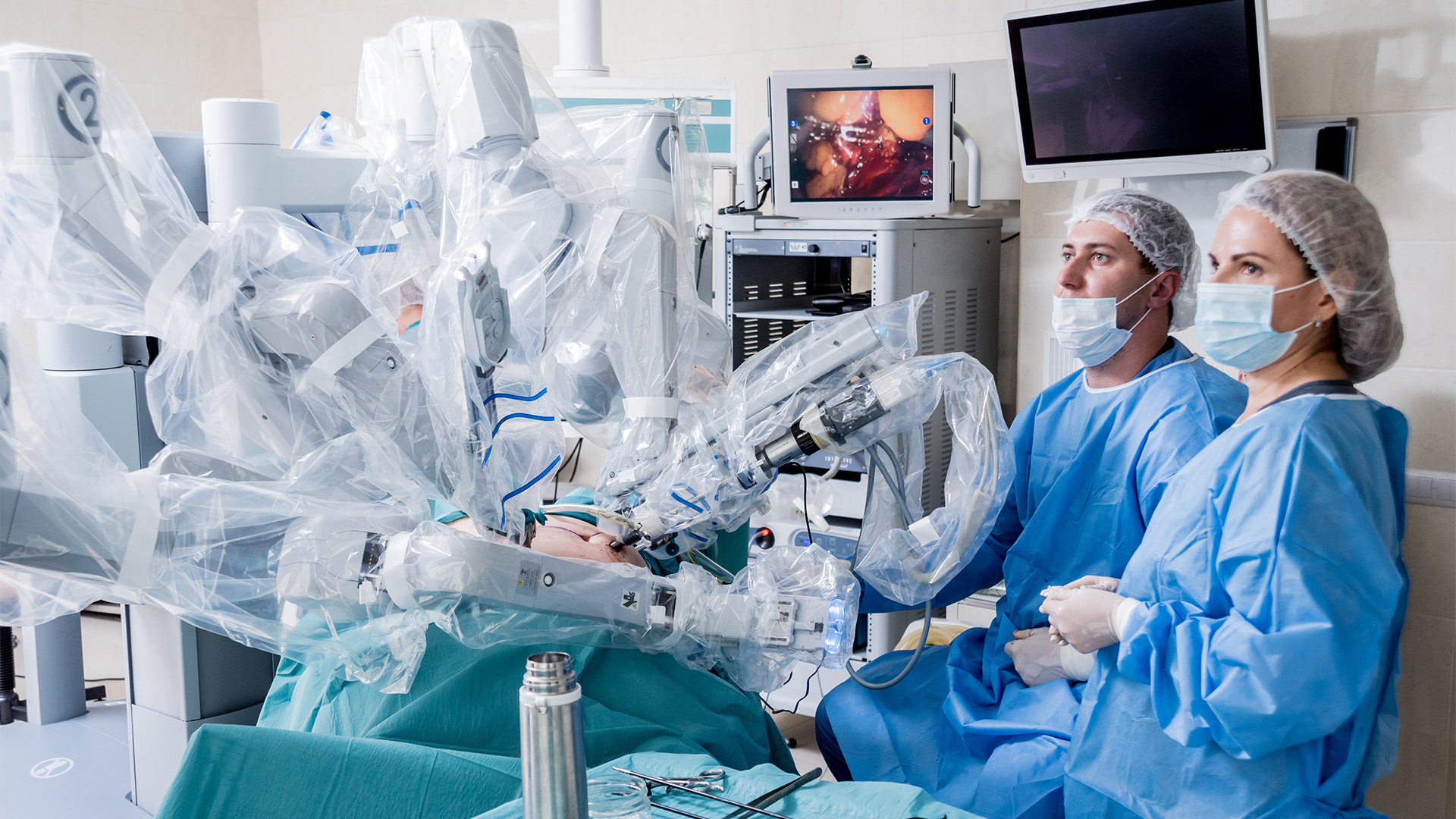
Resection of locally advanced lung cancer after neoadjuvant chemoimmunotherapy can be technically challenging when induction therapy yields minimal radiographic response and the tumor abuts or occludes the hilar structures. Dense post-treatment fibrosis and dysplasia can obscure the standard dissection planes, increasing the risk of vascular or airway injury during minimally invasive resection. The authors present a case of robotic right middle and lower bilobectomy and illustrates techniques for managing hostile hilar anatomy.
Patient Selection
A 60-year-old woman with a history of smoking presented with pneumonia and a right lower lobe cavitary mass with apparent inferior pulmonary vein occlusion and hilar abutment. Biopsy showed cT3N1 squamous cell carcinoma.
Methods
After neoadjuvant chemoimmunotherapy produced minimal response, robotic resection was performed. Intraoperative transesophageal echocardiography confirmed the absence of left atrial tumor/thrombus extension.
Given the tumor’s proximity, an intrapericardial approach to the inferior pulmonary vein was utilized to resect a left atrial cuff en bloc with the inferior vein. Dense desmoplasia between the bronchus intermedius and interlobar pulmonary artery precluded safe airway dissection’ therefore, proximal hilar vascular control was obtained. The superior pulmonary vein and main pulmonary artery were encircled with vessel loops and secured extracorporeally. The bronchus intermedius was divided sharply to facilitate dissection and was subsequently stapled just distal to the right upper lobe takeoff. The interlobar pulmonary artery was taken together with the parenchyma. A pedicled thymic flap was secured over the divided structures.
Results
Final pathology showed negative margins, including the left atrial cuff, with stage ypT1cN0. The patient recovered well without complication.
Key Techniques
Key techniques included intrapericardial left atrial cuff resection for an adequate margin, extracorporeal vessel-loop control of the hilum, distal sharp airway division when circumferential dissection was unsafe, and sequential stapling of the parenchyma together with the pulmonary artery when the fissure was incomplete. Together, these strategies offer a practical framework for difficult, post-induction robotic lobectomies.
References
- Asban A, Pachos N, Bizekis C, Cerfolio RJ, Snyder CA, Zervos MD. Control before crisis: A six-step robotic approach to pulmonary artery management. JTCVS Techniques. 2026;37:102333.
Disclaimer
The information and views presented on CTSNet.org represent the views of the authors and contributors of the material and not of CTSNet. Please review our full disclaimer page here.
 404 views on YouTube
 1,070 views