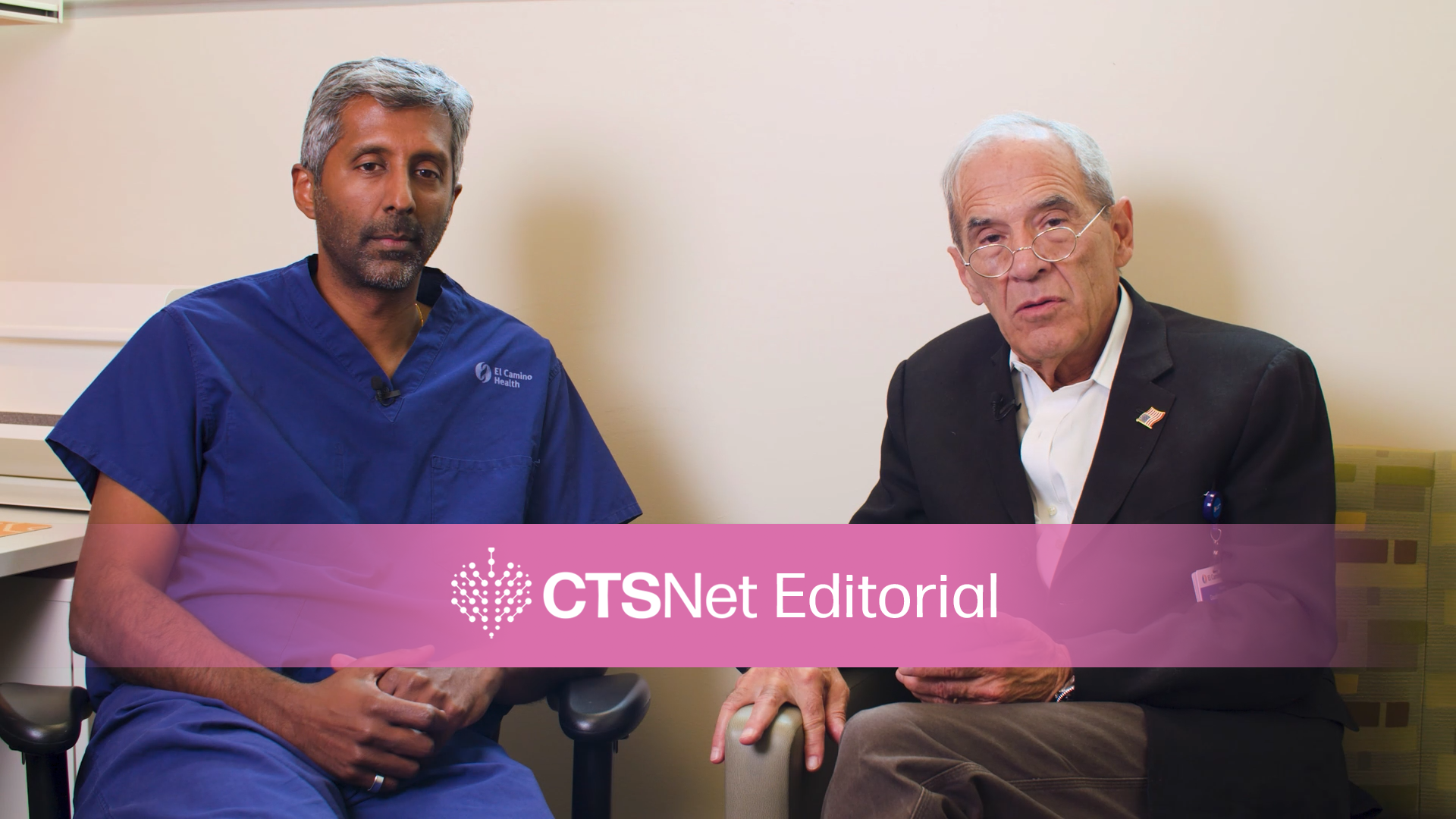
This week on The Beat, CTSNet Editor-in-Chief Joel Dunning speaks with Drs. Michael Mack and Tom Nguyen about the proposed US Centers for Medicare & Medicaid Services changes to how cardiologists and cardiac surgeons interact during transcatheter aortic valve replacement (TAVR) procedures. Dr. Mack explained the current heart team system, established in 2011 through collaboration with the US Food and Drug Administration (FDA) and CMS, which has been highly successful in ensuring safe and effective TAVR implementation. He argues that the proposed CMS changes could potentially dismantle this collaborative approach by allowing asynchronous patient evaluation and procedures to be performed by single operators without surgeon involvement. Dr. Nguyen provided insights from a system leader’s perspective, noting that while the proposed changes raise significant concerns about patient care and data collection, some cardiologists argue that surgeons are already not actively involved in many programs, making the single operator model the norm in practice. Both expressed concern that without mandatory surgeon participation and TAVR registry involvement, smaller programs may adopt practices that lack proper accountability and could lead to inappropriate patient selection and outcomes, potentially creating more contentious debates between TAVR and surgical approaches.
Joel also highlights recent JANS articles including a propensity-matched analysis comparing 10-year outcomes after SAPIEN 3 TAVR in the PARTNER 2 SAPIEN 3 Intermediate-risk Registry with surgery in the PARTNER 2A trial; a single-center retrospective study evaluated 61 patients who underwent cardiac surgery after prior TAVR during a 10-year period at a high-volume academic center; whether surgical aortic valve replacement (SAVR) should remain the first choice for aortic stenosis in patients with a life expectancy beyond five years; and an article examining the dramatic rise in the popularity of transcatheter aortic valves, early valve failure, and the impact it has on patients’ lives.
In addition, Joel explores axillary cannulation as a primary cannulation strategy, beating-heart endoscopic tricuspid valve replacement for high-risk redo patients after CABG and device-related tricuspid valve injury, and a Cox-Maze III operation combined with a left internal mammary artery (LIMA) to left anterior descending artery (LAD), as well as an ascending aortic replacement and aortic valve resuspension.
Before closing, Joel highlights upcoming events in CT surgery.
JANS Items Mentioned
- 10-Year Outcomes of SAPIEN 3 Transcatheter Aortic Valve Replacement or Surgery in Intermediate-Risk Patients
- A Decade of Cardiac Surgery After Transcatheter Aortic Valve Replacement: Short-Term Clinical Outcomes at a High-Volume Center
- Great Debate: Surgical Aortic Valve Replacement Is First Choice for Aortic Stenosis in Patients With a Life Expectancy Beyond 5 Years
- A Breakthrough Heart Procedure Comes With Risky Tradeoffs
CTSNet Content Mentioned
- Direct Axillary Artery Cannulation With the Open Seldinger Technique
- Endoscopic Redo Tricuspid Valve Replacement After CABG
- 3. The Cox-Maze III Procedure Combined With Valve-Sparing Aortic Surgery and CABG
Other Items Mentioned
Disclaimer
The information and views presented on CTSNet.org represent the views of the authors and contributors of the material and not of CTSNet. Please review our full disclaimer page here.
 487 views on Vimeo