Skip to content
Skip to content

The 6th Annual Innovation Video Competition Is Now Accepting Entries!

READ MORE
Not a member yet? Register now.
  • ABOUT
    • Leadership
    • Participation
    • Featured Sponsors
    • Submission Guidelines
    • Competitions
      • Innovation Video Competition
    • Community
      • Volunteer
      • Badges
    • Contact Us
  • EXPLORE CTSNET
    • CARDIAC
    • THORACIC
    • CONGENITAL
    • Clinical Care Professionals
    • JANS
    • Events
    • Journals
  • Videos
    • Atlas of Cardiac Surgery
    • Webinars
    • Master Class
    • Guest Interviews
    • Conference Sessions
  • Podcasts
    • The Beat With Joel Dunning
    • The Atrium
    • The Cardiac Recovery Room
    • The Lifeline
  • Profiles
    • Users Directory
    • Organizations
  • CAREERS
    • US Career Center
    • European Career Center
  • ABOUT
    • Leadership
    • Participation
    • Featured Sponsors
    • Submission Guidelines
    • Competitions
      • Innovation Video Competition
    • Community
      • Volunteer
      • Badges
    • Contact Us
  • EXPLORE CTSNET
    • CARDIAC
    • THORACIC
    • CONGENITAL
    • Clinical Care Professionals
    • JANS
    • Events
    • Journals
  • Videos
    • Atlas of Cardiac Surgery
    • Webinars
    • Master Class
    • Guest Interviews
    • Conference Sessions
  • Podcasts
    • The Beat With Joel Dunning
    • The Atrium
    • The Cardiac Recovery Room
    • The Lifeline
  • Profiles
    • Users Directory
    • Organizations
  • CAREERS
    • US Career Center
    • European Career Center
SUBMIT CONTENT
DONATE
JOIN

welcomes you to the new, improved website!

READ MORE
  • ABOUT
    • Leadership
    • Participation
    • Featured Sponsors
    • Submission Guidelines
    • Competitions
      • Innovation Video Competition
    • Community
      • Volunteer
      • Badges
    • Contact Us
  • EXPLORE CTSNET
    • CARDIAC
    • THORACIC
    • CONGENITAL
    • Clinical Care Professionals
    • JANS
    • Events
    • Journals
  • Videos
    • Atlas of Cardiac Surgery
    • Webinars
    • Master Class
    • Guest Interviews
    • Conference Sessions
  • Podcasts
    • The Beat With Joel Dunning
    • The Atrium
    • The Cardiac Recovery Room
    • The Lifeline
  • Profiles
    • Users Directory
    • Organizations
  • CAREERS
    • US Career Center
    • European Career Center
Not a member yet? Register now.
  • ABOUT
    • Leadership
    • Participation
    • Featured Sponsors
    • Submission Guidelines
    • Competitions
      • Innovation Video Competition
    • Community
      • Volunteer
      • Badges
    • Contact Us
  • EXPLORE CTSNET
    • CARDIAC
    • THORACIC
    • CONGENITAL
    • Clinical Care Professionals
    • JANS
    • Events
    • Journals
  • Videos
    • Atlas of Cardiac Surgery
    • Webinars
    • Master Class
    • Guest Interviews
    • Conference Sessions
  • Podcasts
    • The Beat With Joel Dunning
    • The Atrium
    • The Cardiac Recovery Room
    • The Lifeline
  • Profiles
    • Users Directory
    • Organizations
  • CAREERS
    • US Career Center
    • European Career Center
  • ABOUT
    • Leadership
    • Participation
    • Featured Sponsors
    • Submission Guidelines
    • Competitions
      • Innovation Video Competition
    • Community
      • Volunteer
      • Badges
    • Contact Us
  • EXPLORE CTSNET
    • CARDIAC
    • THORACIC
    • CONGENITAL
    • Clinical Care Professionals
    • JANS
    • Events
    • Journals
  • Videos
    • Atlas of Cardiac Surgery
    • Webinars
    • Master Class
    • Guest Interviews
    • Conference Sessions
  • Podcasts
    • The Beat With Joel Dunning
    • The Atrium
    • The Cardiac Recovery Room
    • The Lifeline
  • Profiles
    • Users Directory
    • Organizations
  • CAREERS
    • US Career Center
    • European Career Center
SUBMIT CONTENT
DONATE
JOIN
You are here:
  1. Coronary Artery

Highlighting Recent Research: Preoperative Renal Functional Reserve Predicts Risk of Acute Kidney Injury After Cardiac Surgery

  • June 29, 2018

By: Claire Vernon

Keywords:

  • Cardiac
  • Coronary Artery Mechanical Support & Transplant

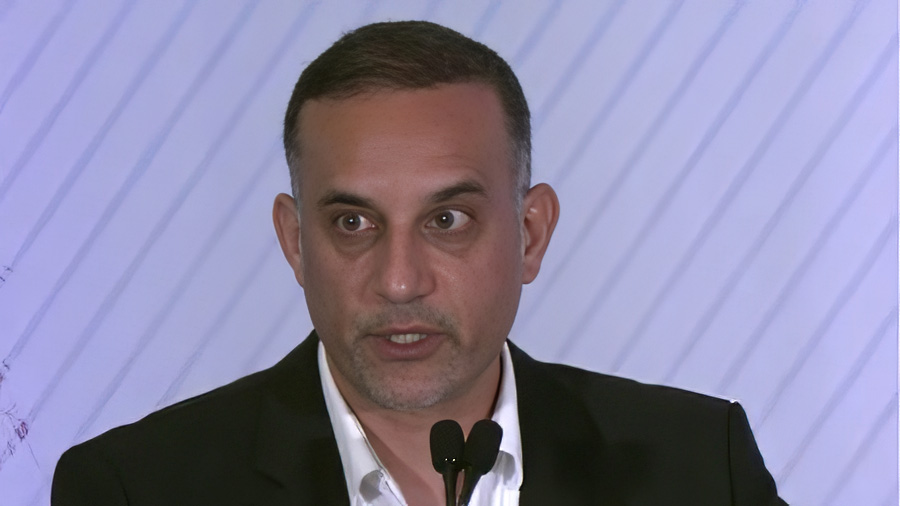
Dr Claudio Ronco, senior author of the study.

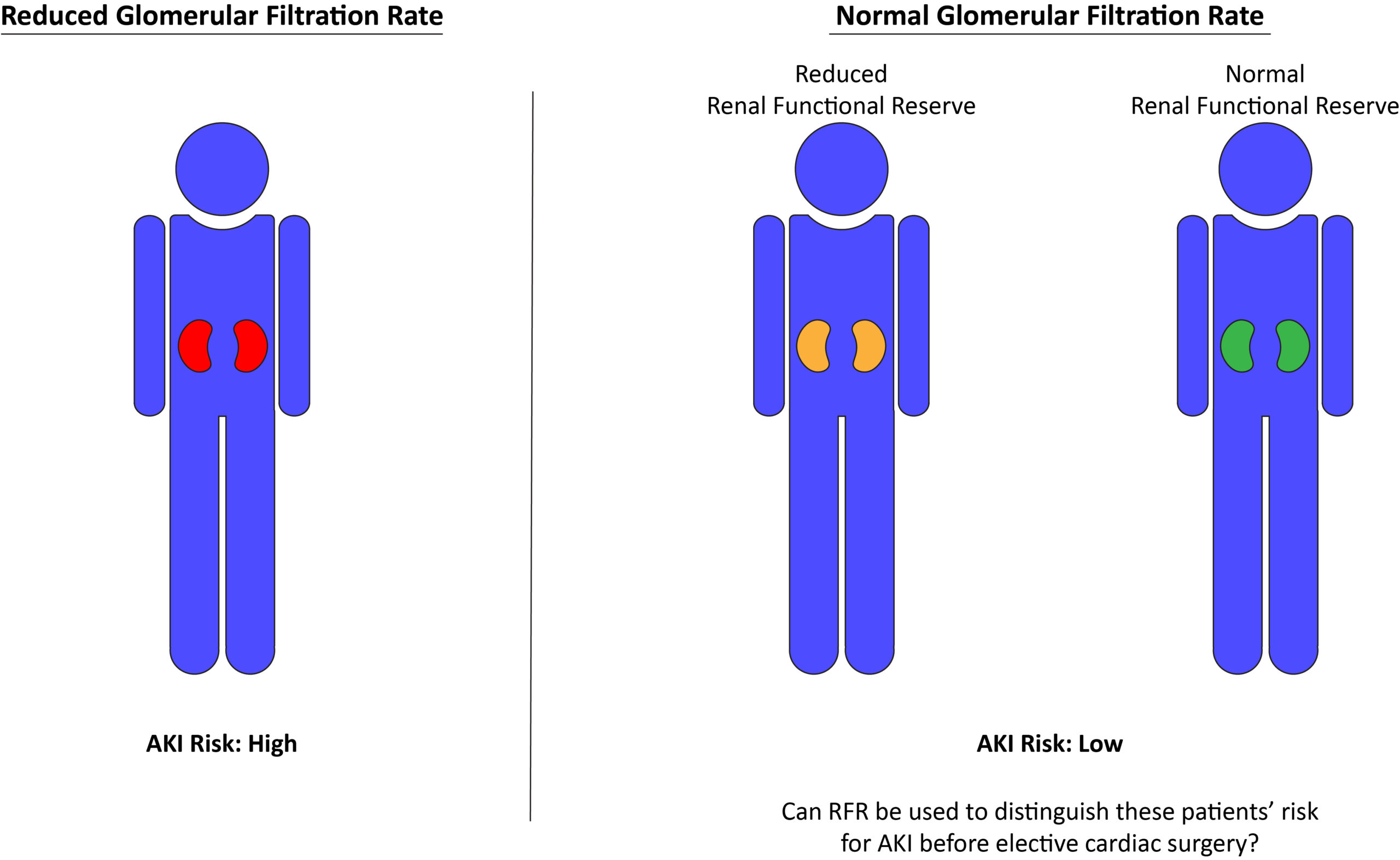
Research published recently in The Annals of Thoracic Surgery suggests a new approach for evaluating a patient’s risk for acute kidney injury before they undergo cardiac surgery. Acute kidney injury (AKI) is a major complication of cardiac surgery, occurring in up to a third of patients (Kuitunen, 2006; Xie, 2017). Although patients with the highest risk can be identified with current screening measures, many patients who are not identified ahead of surgery go on to develop kidney injury. To evaluate a new approach for predicting postsurgical kidney injury risk in patients without underlying chronic kidney disease, Husain-Syed and colleagues tested preoperative renal functional reserve (RFR) in patients with normal resting glomerular filtration rates (Husain-Syed, 2018). The authors sought to determine the value of preoperative RFR in predicting postoperative AKI in these lower-risk patients. RFR is the difference between the resting glomerular filtration rate (GFR), the commonly accepted standard measure of renal function, and the highest measured GFR under the stress of a high protein load. Because GFR is not maximal in an unstressed healthy kidney, RFR represents the capacity of the kidney to increase filtration from baseline in response to stimuli (Sharma, 2014). The senior author of the study, Claudio Ronco of San Bortolo Hospital in Vicenza, Italy, emphasized that “current predictors only identify a selected group of patients. This new predictor raises the warning in a previously-considered ‘low risk’ population.”

In this prospective observational study, the authors measured RFR using a high oral protein load test in 110 patients undergoing elective on-pump cardiac surgery. Importantly, all patients had GFR ≥60 ml/min/1.73 m2 and therefore would not be considered to have a high risk for AKI after surgery. Reduced preoperative RFR, defined as <30 ml/min/1.73 m2, was found in the majority of patients, with 4.5% having severe reduction (<10 ml/min/1.73 m2), 21.8% moderate reduction (≥10 and <20 ml/min/1.73 m2), and 46.4% mild reduction (≥20 and <30 ml/min/1.73 m2). Following surgery, 13.6% of patients developed AKI. Preoperative RFR was lower in patients who developed AKI than in those who did not, with the likelihood of AKI increasing with greater RFR reduction, and the authors found a cut-off RFR value of 15 ml/min/1.73 m2 to have good sensitivity (67%) and specificity (94%) for predicting postoperative AKI. Additionally, although preoperative biomarker levels did not differ between patients who did and did not develop AKI, postoperative levels of TIMP-2 and IGFBP7 were higher between 30 minutes and 12 hours after bypass in patients who developed AKI. Dr Ronco commented that the finding that reduced RFR predicted AKI was very important. “We can identify patients at risk that were considered normal before. This will have an impact on future practice, and at the same time it may explain different incidence in populations considered similar before.”

Dr Ronco, center, with his research team.

The authors suggest that RFR could be a novel indicator of increased risk for AKI following cardiac surgery. It is possible that reduced RFR could be employed ahead of nonurgent procedures to identify patients who might benefit from alternate surgical techniques such as off-pump surgery or to determine which patients should be more closely followed with biomarker testing after surgery. Dr Ronco encouraged cardiothoracic surgeons to collaborate with their hospital’s nephrologist. The take home message, he said, is that “chronic kidney disease does not start when creatinine rises but much earlier. The subclinical phase may be long and last years. In these years, however, the kidneys are not normal and they are more susceptible to exposures or insults.” For more discussion of the importance of the results, you can view this edition of Cappuccino with Claudio Ronco.


References

Husain-Syed F, Ferrari F, Sharma A, et al. Preoperative Renal Functional Reserve Predicts Risk of Acute Kidney Injury After Cardiac Operation. Ann Thorac Surg. 2018;105(4):1094-1101.

Kuitunen A, Vento A, Suojaranta-Ylinen R, Pettila V. Acute renal failure after cardiac surgery: evaluation of the RIFLE classification. Ann Thorac Surg. 2006;81(2):542-546.

Sharma A, Mucino MJ, Ronco C. Renal functional reserve and renal recovery after acute kidney injury. Nephron Clin Pract. 2014;127(1-4):94-100.

Xie X, Wan X, Ji X, et al. Reassessment of acute kidney injury after cardiac surgery: a retrospective study. Intern Med. 2017;56(3):275-282.

Add Comments Cancel reply

You must be logged in to post a comment.

Not a member yet? Register now.
TAGS
  • Coronary Disease - Surgery
  • Extracorporeal Circulation
  • Valve Disease

Related Content

Article

Register for the Inaugural ‘In Africa for Africa’ Cardio-Thoracic Conference in Cape Town!

By: Marianna Mast

Video

ISMICS 2026 | Cardiac Session—Intraoperative Pearls and Pitfalls

By: Mario Castillo-SangBronze ContributorBronze Commentor

Podcast

The Beat With Joel Dunning Ep. 168: Humanoid Robots and AI in Surgery

By: Joel DunningGold ContributorSilver Commentor

Video

Robotic-Assisted Biventricular Durable Assist Device Implantation: The First In Human Experience

By: Feras Khaliel

Video

THVGreece 2026 | Tricuspid Valve

By: Evangelos Leontiadis

JANS Article

Humanoid Robots in the Operating Room: A Framework for Staged Integration of Embodied AI in Surgery

Author(s): Aamir Amin

JANS Article

Quality of Life After Cardiac Surgery: The QUACS Study and Benefit Prediction Model

Author(s): EACTS StaffSilver Contributor

Video

Single-Stage Repair of Left Ventricular Diverticulum with Ventricular Septal Defect Closure: A Video Illustration

By: Vatsal Vora

Video

3D Endoscopic Aortic Valve Replacement Combined With Extended Septal Myectomy via Right Lateral Minithoracotomy

By: Glib Yemets

Video

Transaxillary Direct-View Double Valve Surgery: A Step-by-Step Procedural Guide

By: Michele Galeazzi

233 S. Wacker Drive | Suite 4400
Chicago, Illinois 60606, USA

Linkedin X-twitter Facebook-f Youtube
  • Join CTSNet
  • Donate
  • Submit Content
  • Volunteer
  • Join CTSNet
  • Donate
  • Submit Content
  • Volunteer
  • Featured Partners
  • Careers
  • Press
  • Advertise on CTSNet
  • Featured Partners
  • Careers
  • Press
  • Advertise on CTSNet
  • CTSNet Policies
  • Privacy Policy
  • Disclaimer
  • Contact CTSNet
  • CTSNet Policies
  • Privacy Policy
  • Disclaimer
  • Contact CTSNet

233 S. Wacker Drive | Suite 4400
Chicago, Illinois 60606, USA

Instagram Linkedin X-twitter Facebook-f Youtube
  • Join CTSNet
  • Donate
  • Submit Content
  • Volunteer
  • Join CTSNet
  • Donate
  • Submit Content
  • Volunteer
  • Featured Partners
  • Careers
  • Press
  • Advertise on CTSNet
  • Featured Partners
  • Careers
  • Press
  • Advertise on CTSNet
  • CTSNet Policies
  • Privacy Policy
  • Disclaimer
  • Contact CTSNet
  • CTSNet Policies
  • Privacy Policy
  • Disclaimer
  • Contact CTSNet

233 S. Wacker Drive | Suite 4400
Chicago, Illinois 60606, USA

Instagram Linkedin X-twitter Facebook-f Youtube
  • Join CTSNet
  • Donate
  • Submit Content
  • Volunteer
  • CTSNet Policies
  • Privacy Policy
  • Join CTSNet
  • Donate
  • Submit Content
  • Volunteer
  • CTSNet Policies
  • Privacy Policy
  • Featured Partners
  • Careers
  • Press
  • Advertise on CTSNet
  • Disclaimer
  • Contact CTSNet
  • Featured Partners
  • Careers
  • Press
  • Advertise on CTSNet
  • Disclaimer
  • Contact CTSNet
  • Join CTSNet
  • Donate
  • Submit Content
  • Volunteer
  • Join CTSNet
  • Donate
  • Submit Content
  • Volunteer
  • Featured Partners
  • Careers
  • Press
  • Advertise on CTSNet
  • Featured Partners
  • Careers
  • Press
  • Advertise on CTSNet
  • CTSNet Policies
  • Privacy Policy
  • Disclaimer
  • Contact CTSNet
  • CTSNet Policies
  • Privacy Policy
  • Disclaimer
  • Contact CTSNet
© 2026 CTSNet Inc. All right reserved.
Go to Top