This is the winning thoracic video from the 2025 CTSNet Instructional Video Competition. Watch all entries from the competition, including the cardiac and congenital first place winners.
Click here to watch Dr. Edward Kim’s interview with CTSNet Editor-in-Chief Joel Dunning.
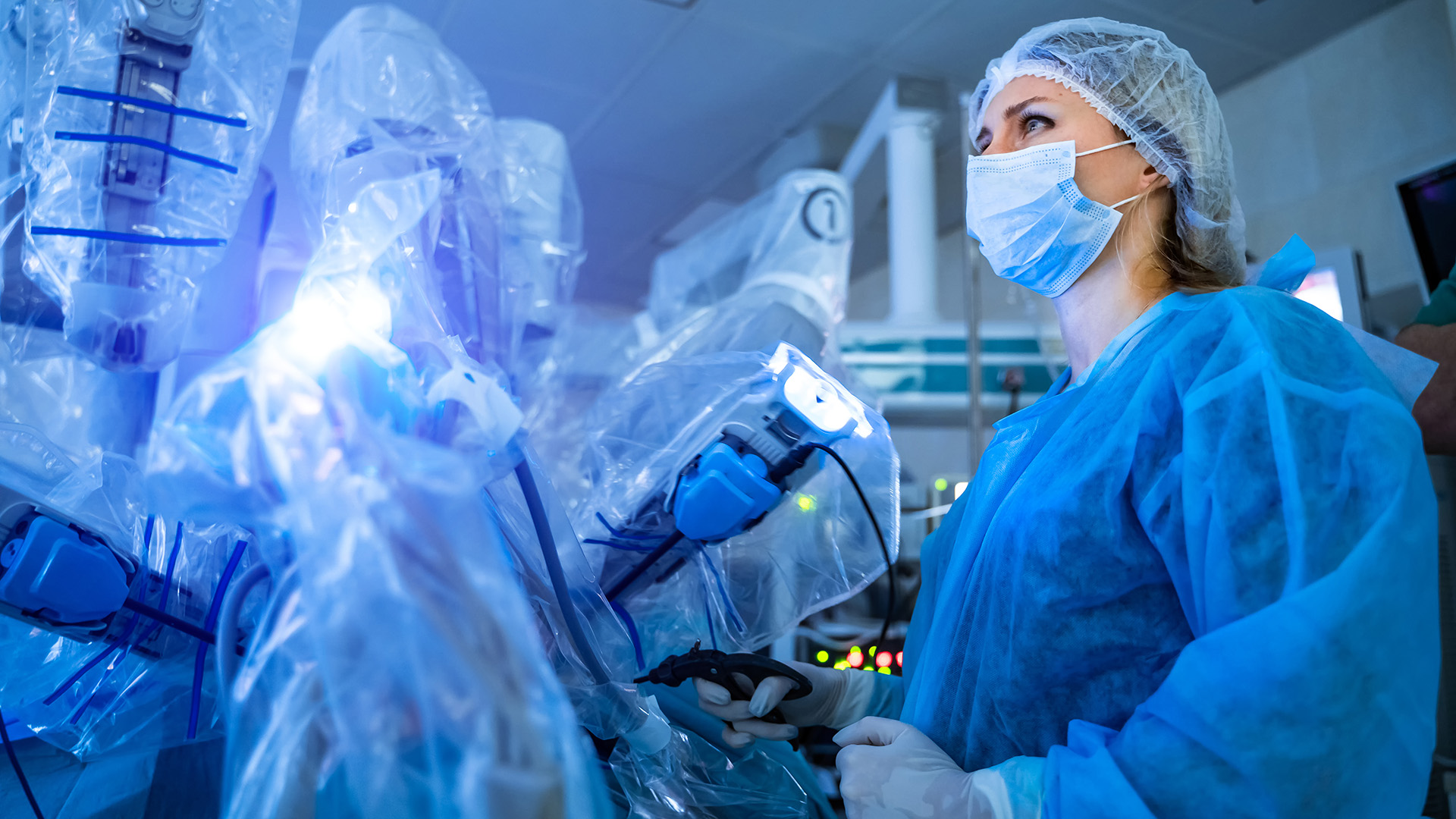
This video showcases a complex, robot-assisted intrapericardial pneumonectomy with bronchoplasty and thymic flap reinforcement in a patient with centrally located, post-neoadjuvant lung adenocarcinoma. The case highlights advanced techniques in hilar dissection, vascular control, and airway reconstruction using a robotic platform, with emphasis on surgical decision-making in the setting of distorted tissue planes due to chemoimmunotherapy.
The patient was a 60-year-old woman with cT3N0M0 left lower lobe adenocarcinoma, high PD-L1 expression (80 percent), and no targetable mutations. She completed four cycles of cisplatin, pemetrexed, and pembrolizumab prior to surgery. Imaging revealed a hypermetabolic hilar mass encasing the bronchus and abutting the pulmonary artery. Preoperative planning accounted for the possible need for bronchial sleeve resection or pneumonectomy.
The procedure began with a standard four-port robotic setup, with assistant access via a GelPort. Due to tumor adherence and fibrosis, early division of the pulmonary veins was performed, followed by level 11 nodal dissection. Despite sharp dissection, the posterior aspect of the left main pulmonary artery remained inaccessible. The bronchus was transected to improve exposure, but no adequate stapler landing zone was found, necessitating intrapericardial dissection. Using an EndoLead catheter, the left main pulmonary artery was safely encircled and divided with a stapler. Following specimen removal, bronchoplasty was performed using a running, double-layered barbed polydioxanone (PDS) suture. The case concluded with a vascularized thymic flap mobilized and tacked over the bronchial anastomosis to reinforce the repair and reduce the risk of fistula.
This case showcases how robotic surgery can be safely extended to the management of central tumors previously approached via thoracotomy. The use of robotic bronchoplasty in the setting of tight bronchial margins expands oncologic resection options and allows for more aggressive margin control without compromising safety. Additionally, the use of a thymic flap demonstrates a simple yet effective technique for anastomotic reinforcement.
This instructional video is intended for experienced thoracic surgeons aiming to advance their robotic skills in managing complex hilar tumors. It highlights key intraoperative decision points, technical pearls for dissection around major vessels, and practical strategies for robotic airway reconstruction. The authors’ goal is to contribute to the growing body of educational content in robotic thoracic surgery and support the broader adoption of these techniques in high-risk oncologic cases.
References
- National Comprehensive Cancer Network. NCCN Clinical Practice Guidelines in Oncology: Non-Small Cell Lung Cancer. Version 4.2024. https://www.nccn.org/professionals/physician_gls/pdf/nscl.pdf.
- Zirafa CC, Romano G, Sicolo E, et al. Robotic versus Open Surgery in Locally Advanced Non-Small Cell Lung Cancer: Evaluation of Surgical and Oncological Outcomes. Curr Oncol. Oct 12 2023;30(10):9104-9115. doi:10.3390/curroncol30100658
Disclaimer
The information and views presented on CTSNet.org represent the views of the authors and contributors of the material and not of CTSNet. Please review our full disclaimer page here.
 510 views on Vimeo