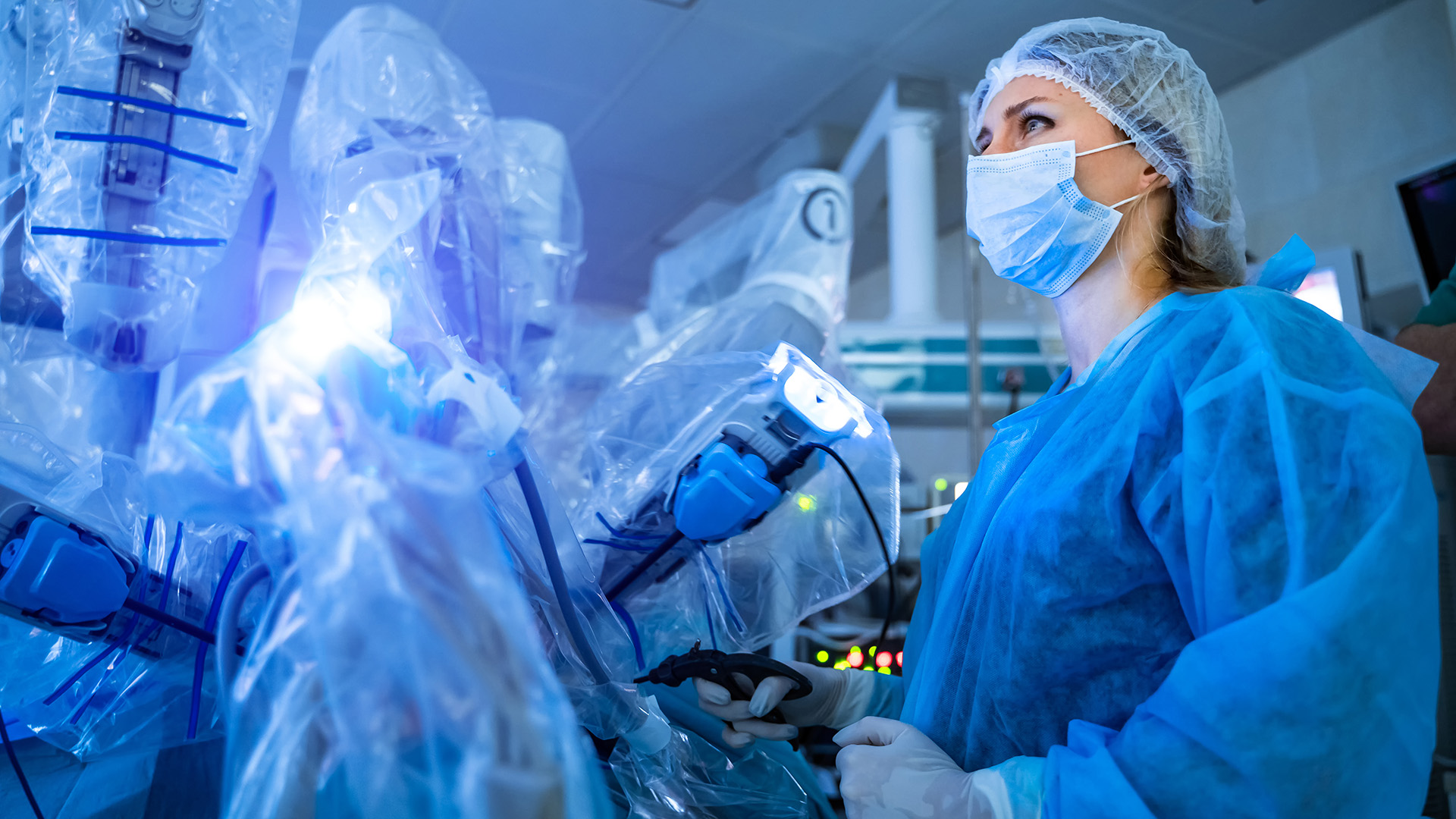
The surgical approach to tumors in the left secondary carina is complex due to their close proximity to the great vessels and the heart. The authors propose that the tumors in the left main bronchus can be divided into medial or lateral, depending on their relationship to the descending aorta, with the aorta being considered as the anatomical checkpoint for surgery. The tumors medial to the descending aorta can be approached with right thoracoscopy or median sternotomy, similar to carinal tumors, while tumors lateral to the descending aorta can be managed using a left robotic or thoracoscopic approach. Traditionally, these lateral tumors are managed with a posterolateral thoracotomy using a posterior approach (3).
The advantage of this traditional posterolateral approach is that the trachea is the most posterior structure in the left hilum, allowing for easier dissection when approached from behind. Additionally, in cases of palpable tumors, the margins can be palpated. However, significant disadvantages of this approach include the morbidity associated with open surgery and the risk of injuring the major vessels, such as the superior pulmonary vein and branches of the pulmonary artery, which will not be visible during reconstruction with this approach.
The difficulty faced during a minimally invasive approach for the left secondary carina is that the posterior approach is not possible, unlike the techniques commonly preferred for right-sided bronchial tumors. This limitation arises due to the close association of the left pulmonary artery, which takes a loop over the left secondary carina and lies posterior and lateral to the left bronchial tree. Consequently, with this posterior approach, the pulmonary artery will be just posterior to the left secondary carina, while the arch of the aorta allows only a narrow window for dissection.
Thus, the authors propose this novel minimally invasive anterolateral approach for these tumors in the left secondary carina. This technique ensures that all major vessels are visible during reconstruction and provides the added advantage of a minimally invasive approach that leads to enhanced recovery for the patient. Additionally, the hilar and interlobar nodal dissection offers a good view of the secondary carina for both resection and reconstruction, as previously explained. The traditional way of palpating the bronchus for margins can be comfortably replaced by the use of intraoperative bronchoscopy with indocyanine green (ICG) injection, to confirm the vascularity of the bronchial cut margins.
References
- Chen L, Campisi A, Wang Z, Dell’Amore A, Ciarrocchi AP, Zhao H, et al. Left secondary carinal resection and reconstruction for low-grade bronchial malignancies. JTCVS Tech. 2021 May 19;8:196.
- Mantovani S, Gust L, D’Journo XB, Thomas PA. Left main bronchial sleeve resection with total lung parenchymal preservation: a tailored surgical approach. Eur J Cardio-Thorac Surg Off J Eur Assoc Cardio-Thorac Surg. 2020 Mar 1;57(3):596–7.
Disclaimer
The information and views presented on CTSNet.org represent the views of the authors and contributors of the material and not of CTSNet. Please review our full disclaimer page here.
 385 views on Vimeo