Skip to content
Skip to content

The 6th Annual Innovation Video Competition Is Now Accepting Entries!

READ MORE
Not a member yet? Register now.
  • ABOUT
    • Leadership
    • Participation
    • Featured Sponsors
    • Submission Guidelines
    • Competitions
      • Innovation Video Competition
    • Community
      • Volunteer
      • Badges
    • Contact Us
  • EXPLORE CTSNET
    • CARDIAC
    • THORACIC
    • CONGENITAL
    • Clinical Care Professionals
    • JANS
    • Events
    • Journals
  • Videos
    • Atlas of Cardiac Surgery
    • Webinars
    • Master Class
    • Guest Interviews
    • Conference Sessions
  • Podcasts
    • The Beat With Joel Dunning
    • The Atrium
    • The Cardiac Recovery Room
    • The Lifeline
  • Profiles
    • Users Directory
    • Organizations
  • CAREERS
    • US Career Center
    • European Career Center
  • ABOUT
    • Leadership
    • Participation
    • Featured Sponsors
    • Submission Guidelines
    • Competitions
      • Innovation Video Competition
    • Community
      • Volunteer
      • Badges
    • Contact Us
  • EXPLORE CTSNET
    • CARDIAC
    • THORACIC
    • CONGENITAL
    • Clinical Care Professionals
    • JANS
    • Events
    • Journals
  • Videos
    • Atlas of Cardiac Surgery
    • Webinars
    • Master Class
    • Guest Interviews
    • Conference Sessions
  • Podcasts
    • The Beat With Joel Dunning
    • The Atrium
    • The Cardiac Recovery Room
    • The Lifeline
  • Profiles
    • Users Directory
    • Organizations
  • CAREERS
    • US Career Center
    • European Career Center
SUBMIT CONTENT
DONATE
JOIN

welcomes you to the new, improved website!

READ MORE
  • ABOUT
    • Leadership
    • Participation
    • Featured Sponsors
    • Submission Guidelines
    • Competitions
      • Innovation Video Competition
    • Community
      • Volunteer
      • Badges
    • Contact Us
  • EXPLORE CTSNET
    • CARDIAC
    • THORACIC
    • CONGENITAL
    • Clinical Care Professionals
    • JANS
    • Events
    • Journals
  • Videos
    • Atlas of Cardiac Surgery
    • Webinars
    • Master Class
    • Guest Interviews
    • Conference Sessions
  • Podcasts
    • The Beat With Joel Dunning
    • The Atrium
    • The Cardiac Recovery Room
    • The Lifeline
  • Profiles
    • Users Directory
    • Organizations
  • CAREERS
    • US Career Center
    • European Career Center
Not a member yet? Register now.
  • ABOUT
    • Leadership
    • Participation
    • Featured Sponsors
    • Submission Guidelines
    • Competitions
      • Innovation Video Competition
    • Community
      • Volunteer
      • Badges
    • Contact Us
  • EXPLORE CTSNET
    • CARDIAC
    • THORACIC
    • CONGENITAL
    • Clinical Care Professionals
    • JANS
    • Events
    • Journals
  • Videos
    • Atlas of Cardiac Surgery
    • Webinars
    • Master Class
    • Guest Interviews
    • Conference Sessions
  • Podcasts
    • The Beat With Joel Dunning
    • The Atrium
    • The Cardiac Recovery Room
    • The Lifeline
  • Profiles
    • Users Directory
    • Organizations
  • CAREERS
    • US Career Center
    • European Career Center
  • ABOUT
    • Leadership
    • Participation
    • Featured Sponsors
    • Submission Guidelines
    • Competitions
      • Innovation Video Competition
    • Community
      • Volunteer
      • Badges
    • Contact Us
  • EXPLORE CTSNET
    • CARDIAC
    • THORACIC
    • CONGENITAL
    • Clinical Care Professionals
    • JANS
    • Events
    • Journals
  • Videos
    • Atlas of Cardiac Surgery
    • Webinars
    • Master Class
    • Guest Interviews
    • Conference Sessions
  • Podcasts
    • The Beat With Joel Dunning
    • The Atrium
    • The Cardiac Recovery Room
    • The Lifeline
  • Profiles
    • Users Directory
    • Organizations
  • CAREERS
    • US Career Center
    • European Career Center
SUBMIT CONTENT
DONATE
JOIN

Surgery as Spectacle

  • July 15, 2005

By: Duke Cameron

Keywords:

Live telecasts of surgery are on a dramatic rise.  We are spammed daily with invitations to peer over the shoulders of master technicians, to learn nuances of operative technique and, in some, to even ask questions during the procedure.   Empowered by the prowess of the internet and the falling cost of transmitting video images around the globe, industry and hospitals have enthusiastically subsidized these media events, trying to “capture eyeballs” in the latest race of the information age. 

The value of video images in disseminating surgical knowledge is indisputable, but I question the added value of “live” broadcasts.   Ads for these programs imply that a live telecast somehow brings energy, honesty and drama.  And that is where I object.  I submit that live broadcasts serve neither the patient nor the audience well.  We should re-examine the effect of bringing a camera crew into the operating room, and of trying to coordinate the operation with an audience in another room (or country).  We should ask ourselves whether these distractions to the surgeon and the pressure to perform the promised operation are creating “surgery as spectacle”, a movement distinctly at odds with the patient safety initiative.

For several reasons, I believe broadcast of live surgery…..or reality surgery to plagiarize a term from our less restrained colleagues in the entertainment industry….should be rethought:

  1. It is a patient safety hazard.  The operating room should be a solemn, quiet environment focused without waver on the patient and the patient’s operation.  The presence of camera and microphone instead tend to redirect attention to the surgeon, who becomes master of ceremonies or worse, magician, rather than entrusted caretaker.  Who wants a chest operation performed by a surgeon who is talking to a remote audience, fielding questions, and trying to demonstrate rather than concentrate?  In one recent webcast, a surgeon handled impertinent questions from the audience during hypothermic circulatory arrest!  Would you want to be a passenger on a plane landing during a thunderstorm at O’Hare while the pilot was showing the Discovery Channel film crew how challenging bad weather can be?  Several of my colleagues have also been witness (rhymes with accomplice) to intraoperative disasters….including patient deaths in what should have been straightforward procedures…and who later confessed a sense of collective guilt and shame that discouraged them from pursuing their own experience with the new technique   I once viewed a live telecast valve repair that resulted in a clearly unacceptable outcome but was tolerated because…..I suspect…the surgeon did not want to publicly acknowledge failure and replace the valve.   Who was being served by this telecast, and what was the take-home message?
     
  2. It is a self-indulgent, inefficient way to communicate and teach surgery.   Too often, live surgery contains endless stretches of dissection, suturing, and knot-tying that have little educational merit.  Sometimes it is the surgeon’s ego that drives this performance, but more often it is just poor editing.  Technical difficulties, delays in the procedure itself, and problems with signal feed add to the chaos.  Isn’t a well-edited surgical video, with narration and figures added later by the surgeon after thoughtful review, better use of everyone’s time and attention?  If the Annals of Thoracic Surgery offered a “live edition”, with manuscripts unedited and unreviewed, I would still prefer to wait a month for the finished version, thank you. 
     
  3. Sensationalism is incompatible with professionalism.   Once at an international meeting, I watched a live aortic operation over remote monitor.  At the end of the operation, the surgeon returned to the lecture hall, still in scrubs after his video debut, and was met by a standing ovation from the attendees.  This, I thought, was spectacle at its worst.  My thoughts turned to the patient, who was still in the operating “theatre”….. bleeding.

Live television has invaded much of our lives already, with regrettable effect.  Has the legal process been improved by lawyers grandstanding in front of courtroom cameras?   Do teenagers in MTV’s Real World behave better or worse when the lights are on?  There are some events we all agree should not be televised out of respect for the dignity of the individual…….events such as boundless grief, painful death, or genuine intimacy.  I count cardiac operations among them.

I must restate that there is tremendous value in videos of surgical procedures.  In fact, as a profession we have underutilized video as a tool to educate surgeons and share information.  Video is powerful technology, which like other powerful tools must be used thoughtfully and with restraint.  So make a video of your best operation (with your patient’s permission, of course).  Review it, learn from it, edit it, narrate it, duplicate it and share it.  Leave out the classical music.  Better yet, include several other cases that illustrate other important lessons.  But please don’t ask me to watch it live. 
Add Comments Cancel reply

You must be logged in to post a comment.

Not a member yet? Register now.
TAGS
  • Ethics

Related Content

Article

Register for the Inaugural ‘In Africa for Africa’ Cardio-Thoracic Conference in Cape Town!

By: Marianna Mast

Video

ISMICS 2026 | Cardiac Session—Intraoperative Pearls and Pitfalls

By: Mario Castillo-SangBronze ContributorBronze Commentor

Video

THVGreece 2026 | Tricuspid Valve

By: Evangelos Leontiadis

Article

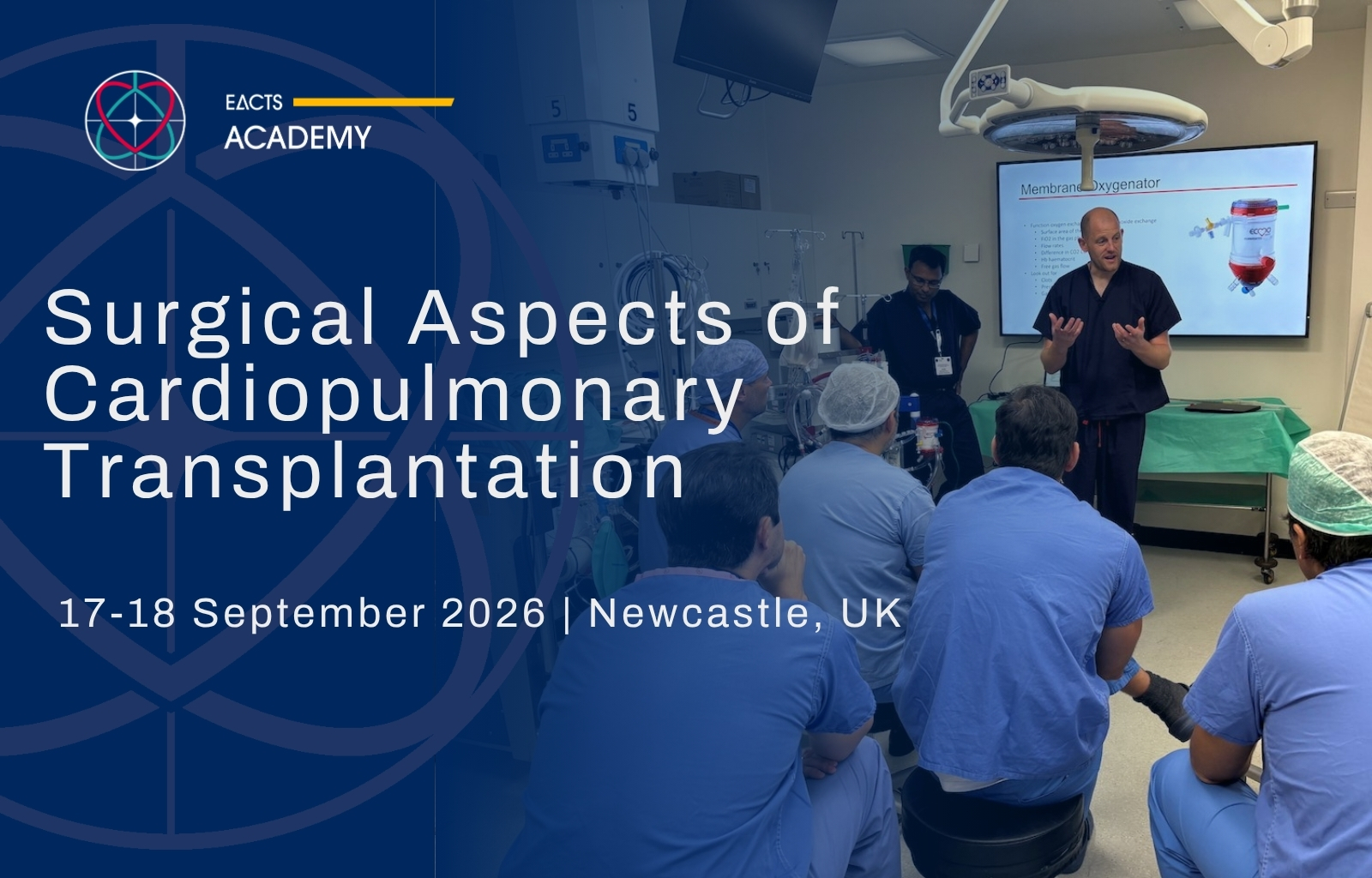
Sharpen Your Cardiopulmonary Transplantation Skills With Us This September!

By: Marianna Mast

Video

ISMICS 2026 | Cardiac Session 1—Robotic Valves

By: Johannes Bonatti

Video

THVGreece 2026 | Mitral Valve Interventions

By: Gregory Pattakos

Video

ISMICS 2026 | How to Do It Movie Session, Part 2

By: Tomas Holubec

Man standing behind a podium giving a presentation.
Video

THVGreece 2026 | Mitral Valve 2026: Who Should We Treat?

By: Vassilios Gulielmos

Man standing at podium explaining concepts to a live audience.
Video

Ancona Live Virtual Course: Combined Aortic and Mitral Valves

By: Thorsten Hanke

Article

Win Free On Demand Access to the 40th EACTS Annual Meeting

233 S. Wacker Drive | Suite 4400
Chicago, Illinois 60606, USA

Linkedin X-twitter Facebook-f Youtube
  • Join CTSNet
  • Donate
  • Submit Content
  • Volunteer
  • Join CTSNet
  • Donate
  • Submit Content
  • Volunteer
  • Featured Partners
  • Careers
  • Press
  • Advertise on CTSNet
  • Featured Partners
  • Careers
  • Press
  • Advertise on CTSNet
  • CTSNet Policies
  • Privacy Policy
  • Disclaimer
  • Contact CTSNet
  • CTSNet Policies
  • Privacy Policy
  • Disclaimer
  • Contact CTSNet

233 S. Wacker Drive | Suite 4400
Chicago, Illinois 60606, USA

Instagram Linkedin X-twitter Facebook-f Youtube
  • Join CTSNet
  • Donate
  • Submit Content
  • Volunteer
  • Join CTSNet
  • Donate
  • Submit Content
  • Volunteer
  • Featured Partners
  • Careers
  • Press
  • Advertise on CTSNet
  • Featured Partners
  • Careers
  • Press
  • Advertise on CTSNet
  • CTSNet Policies
  • Privacy Policy
  • Disclaimer
  • Contact CTSNet
  • CTSNet Policies
  • Privacy Policy
  • Disclaimer
  • Contact CTSNet

233 S. Wacker Drive | Suite 4400
Chicago, Illinois 60606, USA

Instagram Linkedin X-twitter Facebook-f Youtube
  • Join CTSNet
  • Donate
  • Submit Content
  • Volunteer
  • CTSNet Policies
  • Privacy Policy
  • Join CTSNet
  • Donate
  • Submit Content
  • Volunteer
  • CTSNet Policies
  • Privacy Policy
  • Featured Partners
  • Careers
  • Press
  • Advertise on CTSNet
  • Disclaimer
  • Contact CTSNet
  • Featured Partners
  • Careers
  • Press
  • Advertise on CTSNet
  • Disclaimer
  • Contact CTSNet
  • Join CTSNet
  • Donate
  • Submit Content
  • Volunteer
  • Join CTSNet
  • Donate
  • Submit Content
  • Volunteer
  • Featured Partners
  • Careers
  • Press
  • Advertise on CTSNet
  • Featured Partners
  • Careers
  • Press
  • Advertise on CTSNet
  • CTSNet Policies
  • Privacy Policy
  • Disclaimer
  • Contact CTSNet
  • CTSNet Policies
  • Privacy Policy
  • Disclaimer
  • Contact CTSNet
© 2026 CTSNet Inc. All right reserved.
Go to Top