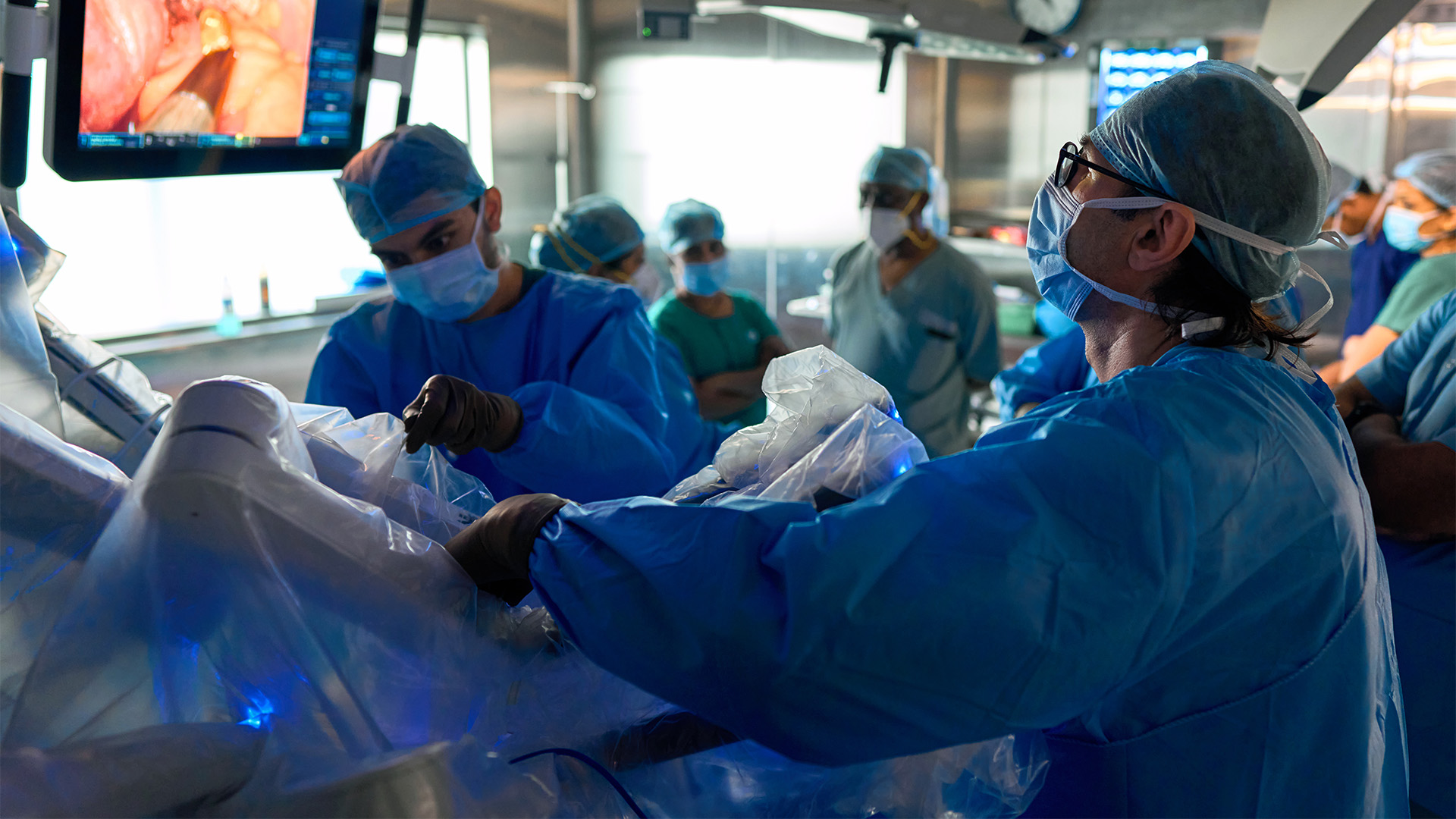
This video is one of the top 10 entries from the 2025 Endoscopic Cardiac Surgeons Club Video Competition. More videos featuring these outstanding presentations will be showcased in the coming weeks.
In this video, the team from Berlin Heart Center demonstrates a complex mitral valve repair in a 41-year-old male patient with P2 and P3 prolapse and severe mitral annular calcification, which was repaired with papillary muscle relocation.
The preoperative echocardiogram showed severe mitral regurgitation (MR) with mitral annular calcification (MAC) and preserved left ventricular ejection fraction (LVEF). A preoperative computed tomography (CT) scan was mandatory, as it allowed the surgeon to evaluate the aortic anatomy. In this case, it showed no calcification of the aorta. The strategy involved percutaneous femoral cannulation and a right anterolateral microthoracotomy. The surgeons used a 3D endoscopic camera in the fourth intercostal space and a Chitwood clamp was used. Cardiac arrest was achieved with antegrade del Nido cardioplegia.
The posterior mitral leaflet was resected at the base down to the myocardium, and the calcified tissue was resected using scissors from the annulus. The posterior mitral leaflet was then reattached to the annulus using a double-layer continuous suture. The cleft between the P2 and P3 segments was closed, and freehand neochords were implanted at the P2 area. A water test was used to adjust the chordae. The annuloplasty sutures were placed, and an incomplete Physioflex band was used. There was good coaptation without regurgitation. The patient was discharged on postoperative day six without complications.
Disclaimer
The information and views presented on CTSNet.org represent the views of the authors and contributors of the material and not of CTSNet. Please review our full disclaimer page here.
 381 views on Vimeo
 773 views