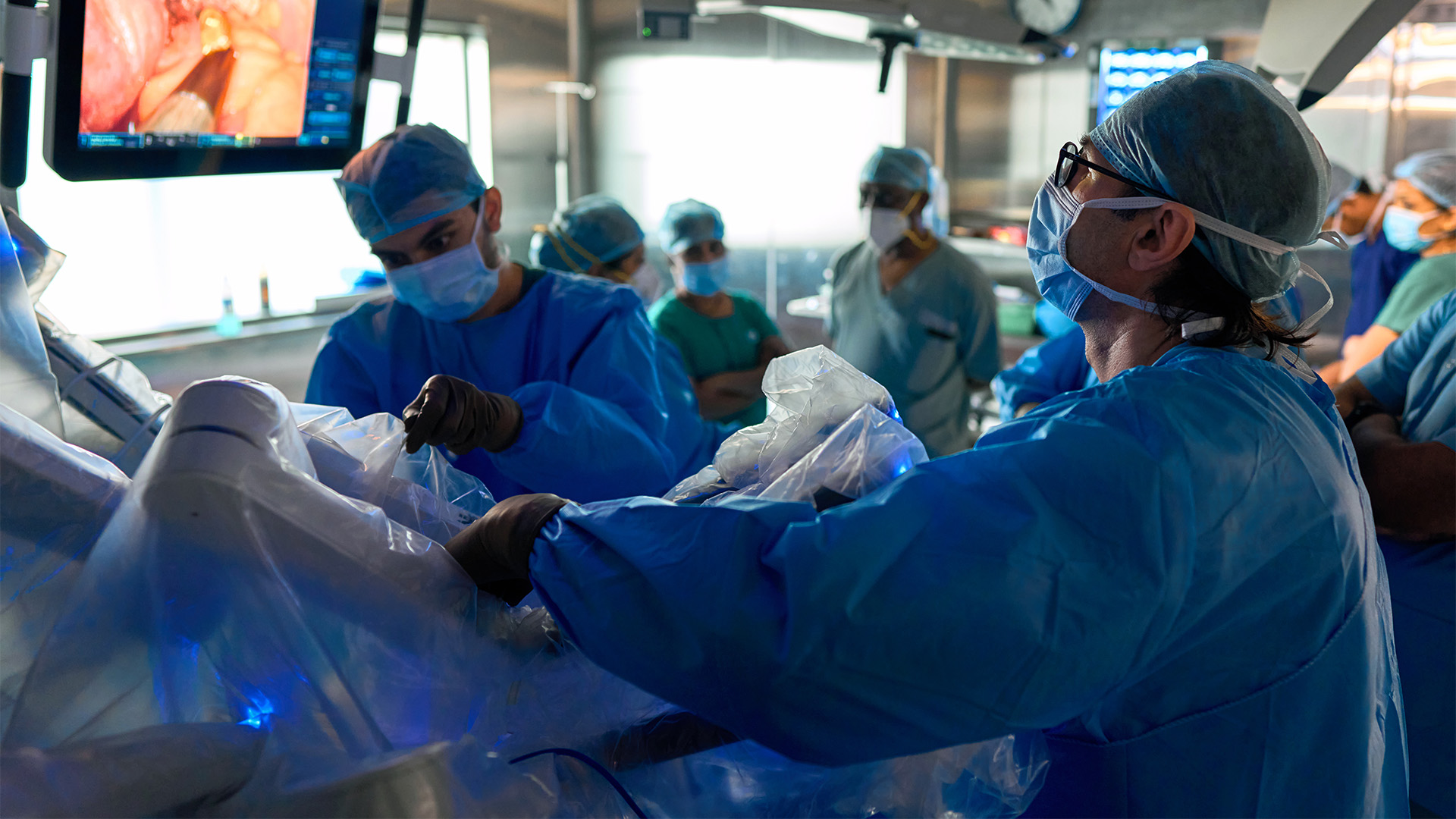
This video is one of the top 10 entries from the 2025 Endoscopic Cardiac Surgeons Club Video Competition. More videos featuring these outstanding presentations will be showcased in the coming weeks.
The patient was a 75-year-old female who had undergone previous tricuspid valve replacement in 2018 by endoscopic surgery. The patient had deterioration of the prosthesis and presented with heart failure due to an incompetent tricuspid valve.
The preoperative workup included transesophageal echocardiography (TEE) and cardiac magnetic resonance imaging (MRI), which showed preserved right ventricular ejection fraction (RVEF) and a massively enlarged right atrium, with the tricuspid valve very close to the aortic annulus.
The patient was taken for redo endoscopic tricuspid valve replacement (TVR). The adhesions of the lung to the pericardium were taken down using a Ligasure device.
The right atrium was opened en block with the pericardium, exposing the heart. Gauze was placed at the base of the right atrium as some bubbles were seen in the venous line. The Cor-Knots were taken down, and the prosthesis was carefully taken down using sharp dissection. During preparation for antegrade cardioplegia, blood was seen coming from the ventricle, raising suspicion of an injury.
The valve sutures were placed from the ventricle to the atrium with Teflon pledgets. A dose of antegrade cardioplegia was administered, and again a small jet was seen coming into the ventricle. The operation was completed, and TEE showed a very small jet between the aorta and the right ventricle. Postoperatively, computed tomography angiography (CTA) was performed, and the computed tomography (CT) scan showed a persistent communication, but fortunately, this was small. The patient was discharged on postoperative day nine with resolution of her right heart failure symptoms.
Disclaimer
The information and views presented on CTSNet.org represent the views of the authors and contributors of the material and not of CTSNet. Please review our full disclaimer page here.
 113 views on Vimeo
 238 views