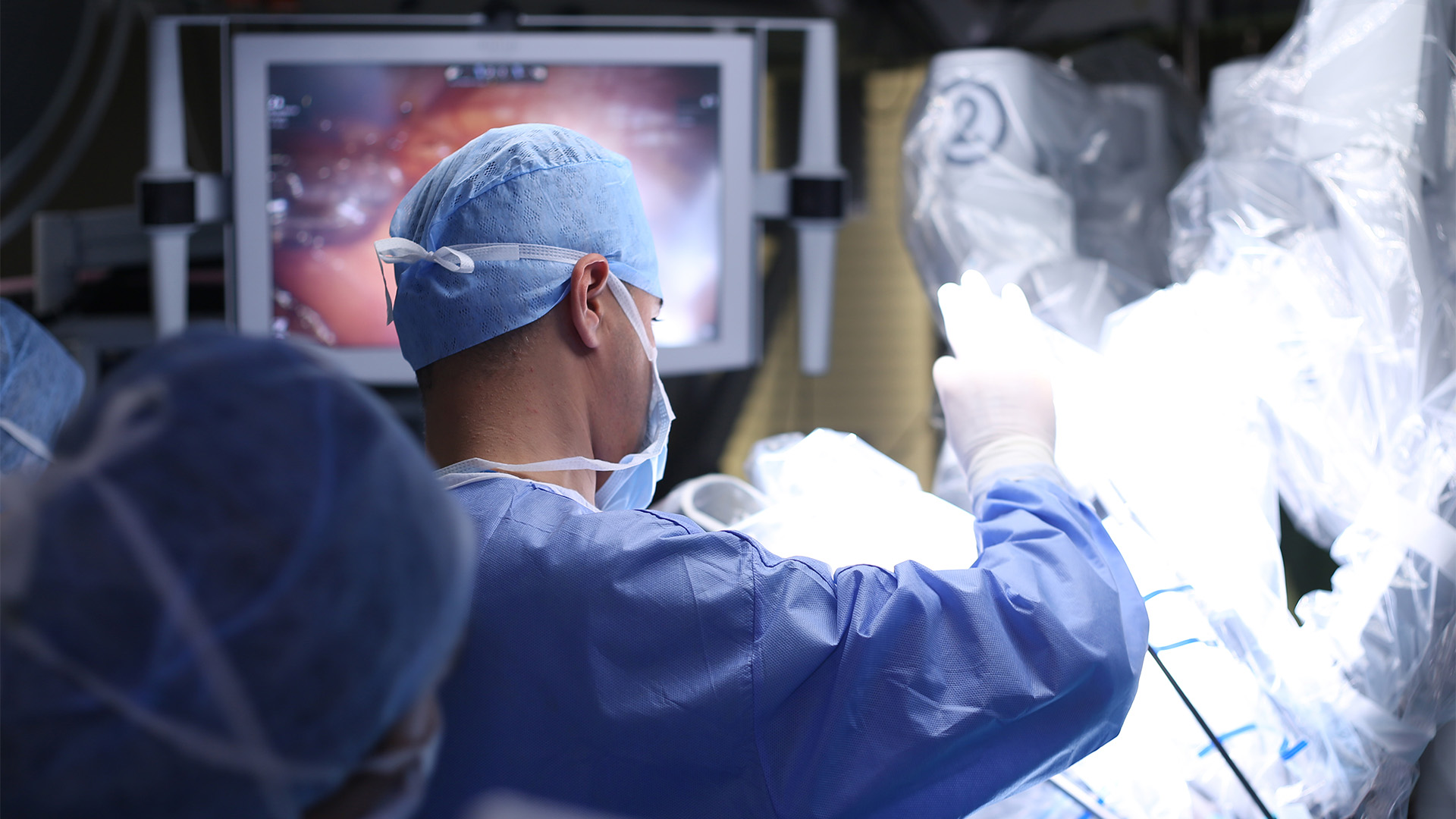
The strategies and approaches to cardiopulmonary bypass (CPB) access have evolved as surgeons gain experience in minimally invasive cardiac surgery (MICS) procedures. Femoral artery cannulation is convenient but carries risks of retrograde dissection, embolization, stroke, and ipsilateral limb ischemia. In contrast, central aortic cannulation has the advantage of antegrade flow.
An incision was made 1 to 2 cm inferior to the nipple in men and about 1 cm above the breast crease in women, with subsequent soft tissue dissection directed cephalad toward the chest wall to allow entry into the thoracic cavity through the fourth intercostal space. Standard chest spreaders were used to open the intercostal space, and sometimes, an additional chest spreader is used perpendicular to the first one. A pericardial patch was harvested, and the edges were pulled up with stay sutures. The authors routinely place the aortic, superior vena caval, antegrade cardioplegia, left atrial vent, inferior vena cava cannulas centrally through the primary incision.
Positioning the patient, the site of incision, and the placement of retraction sutures are crucial for cannulation. For aortic cannulation, double purse-string sutures were placed. With relative hypotension at a systolic blood pressure (SBP) of approximately 90 mmHg, the aorta was retracted down with long artery forceps. The adventitia was cut over the incision site, and the aorta was stabilized with two pickups at the incision site. The lungs were deflated during cannulation.
For venous cannulation, the superior vena cava (SVC) cannula was inserted due to its ease of access, followed by the inferior vena cava (IVC) cannula once the heart was decompressed and lungs were deflated. Sometimes, the inferior vena cava cannula or superior vena cava cannula is placed through a separate incision in the midaxillary line, one space above or below the incision. A transthoracic Chitwood clamp was then inserted through a stab wound in the third interspace in the right midaxillary line. In the pediatric age group, a straight clamp is used directly through the incision. Del Nido cardioplegia is used in all patients. Pacing wires were placed before releasing the cross-clamp.
The authors follow an extensive deairing protocol, which included positioning the patient in deep Trendelenburg during aortic unclamping, aggressive volume loading of the heart, positive pressure ventilation to clear pulmonary venous air, and alternating left-right table positioning to remove trapped air. The surgeons performed transesophageal echocardiography whenever feasible. A local nerve block was applied before the chest was closed.
The authors’ cannulation strategy for MICS has evolved to favor central aortic over femoral artery cannulation, direct bicaval cannulation over percutaneous femoral dual-stage bicaval venous drainage, percutaneous neck access, and direct transaxillary aortic clamping over endoaortic balloon occlusion of the aorta. This technique is an asset in developing countries because MICS can be performed without any additional costs. It can be applied to both adult and pediatric patient populations without any increase in morbidity and mortality.
References
- Kandakure PR, Batra M, Garre S, Banovath SN, Shaikh F, Pani K. Direct Cannulation in Minimally Invasive Cardiac Surgery with Limited Resources. Ann Thorac Surg. 2020 Feb;109(2):512-516
Disclaimer
The information and views presented on CTSNet.org represent the views of the authors and contributors of the material and not of CTSNet. Please review our full disclaimer page here.
 1166 views on Vimeo