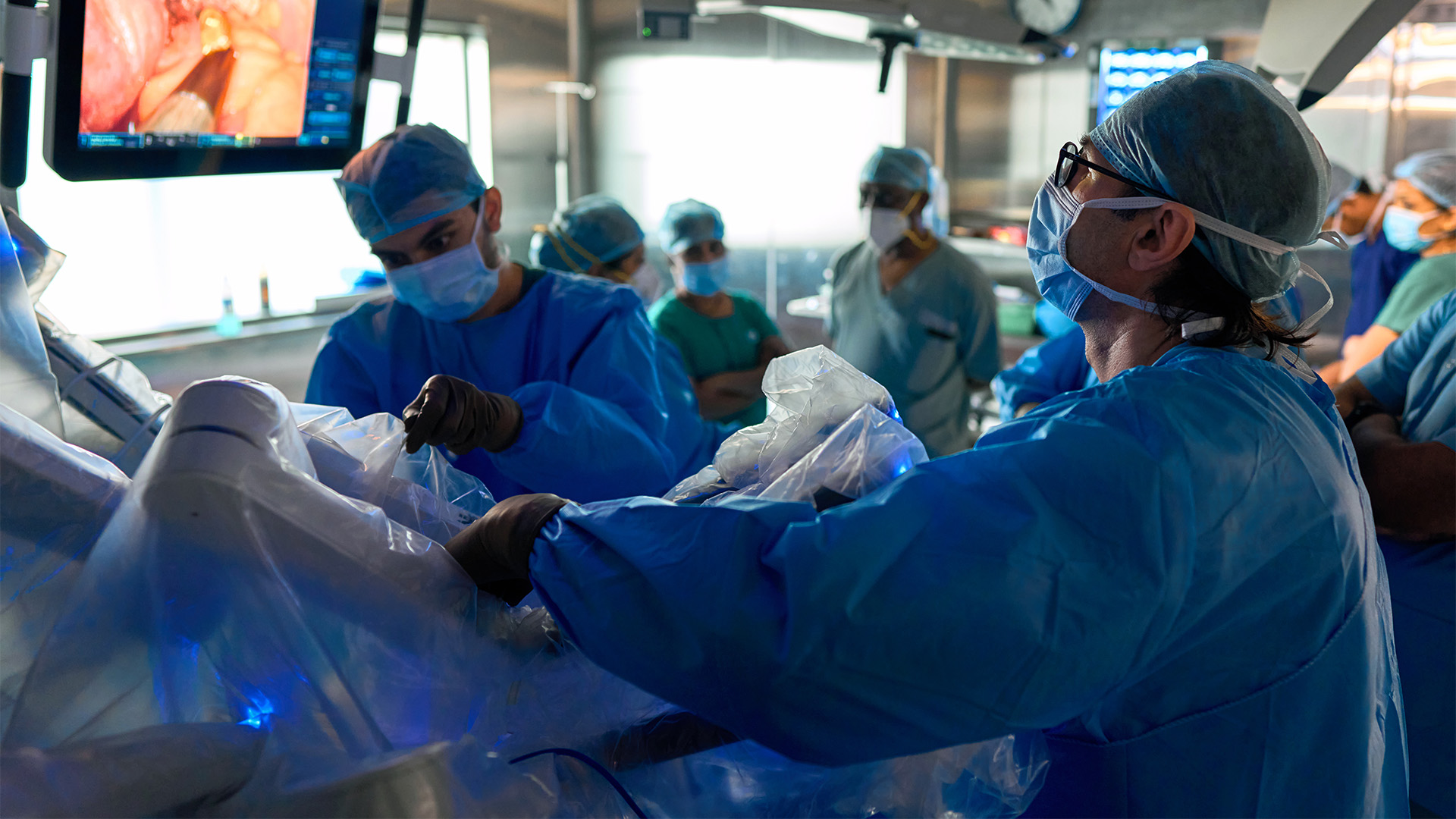
In this CTSNet series, Dr. Mario Castillo-Sang presents innovative, totally endoscopic cardiac procedures for a variety of conditions. Stay tuned for more series videos in the coming weeks.
The authors present the case of a totally endoscopic mitral annular decalcification using ultrasonic emulsification for biological prosthesis replacement.
This video demonstrates the case of a 70-year-old male who presented with NYHA class III symptoms and a heavily calcified mitral valve and mitral annulus. Preoperative workup confirmed nearly circumferential (80 percent radial involvement) dense calcification of the mitral annulus and leaflets. Transesophageal echocardiography confirmed mitral stenosis.
The patient was offered an endoscopic mitral valve replacement with a biological valve. The setup involved a 2.5-3 cm working incision in the fourth intercostal space with a 10 mm port in the third intercostal space for a 30-degree endoscope. The surgeons placed a fourth intercostal space atrial retractor holder. Cannulation was performed via femoral cutdown, and the patient was cooled to 32 degrees Celsius, with arrest obtained using antegrade del Nido cardioplegia.
A vast amount of calcium was encountered in the anterior and posterior parts of the annulus. The surgeons used the cavitronic ultrasonic surgical aspirator (CUSA) device to emulsify and disrupt this calcium in a controlled fashion. In the process, the surgeons hollowed the posterior calcium, preserving the chordal attachments to the posterior leaflet. The goal was not to remove the entire calcium bar but to circularize the annulus and reach the minimum diameter orifice needed to accept a valve that would avoid patient-prosthesis mismatch (PPM). With this approach, the surgeons found success in preventing PPM, avoiding strokes, and atrioventricular groove disruptions.
As the decalcification continued, room was created for a new valve. Meticulous irrigation is paramount to remove any loose debris that could cause a postoperative cerebrovascular event. In this case, the surgeons irrigated, removed all the tissue, and applied 2-0 polyester pledgeted stitches, imbricating the loose posterior leaflet to the annulus. A 29 mm tissue valve was then implanted and secured with titanium fasteners.
The intraoperative echocardiogram showed a well-seated valve without perivalvular leak and a low mean gradient. The patient was discharged on postoperative day four.
Endoscopic management of severe mitral annular calcification (MAC) using ultrasonic decalcification is a versatile technique that surgeons can use to approach very complex situations while still providing the patient with an expedient recovery and all the benefits of a minimally invasive platform. The strategy involves first identifying if the patient has the physiological reserve to undergo open heart surgery. The surgeons then assess the severity and anatomy of the MAC, including how circumferential, dense, or complicated it is. The initial strategy is to debulk to fit the largest size prosthesis possible (biological for those over 65 and mechanical for those under). If the appropriately sized valve does not fit in the final orifice created or if enough annular sutures cannot be placed despite a large mitral orifice, then a balloon-expandable transcatheter aortic valve replacement (TAVR) valve is placed directly in the MAC.
References
- Chehab O, Roberts-Thompson R, Bivona A, Gill H et al. Management of patients with Severe Mitral Annular calcification: JACC State-of-the-Art Review. JACC 2022;80:722-738
- Brescia AA, Rosenbloom LM, Watt TMF, Berquist CS, Williams AM, Murray SL, et al. Ultrasonic emulsification of severe mitral annular calcification during mitral valve replacement. Ann Thorac Surg. 2022;113:2092-2096
Disclaimer
The information and views presented on CTSNet.org represent the views of the authors and contributors of the material and not of CTSNet. Please review our full disclaimer page here.
 449 views on Vimeo
 634 views