Skip to content
Skip to content

AI-Powered Oral Board Training Is Available to CTSNet Users Now!

LEARN MORE
Not a member yet? Register now.
  • ABOUT
    • Leadership
    • Participation
    • Featured Sponsors
    • Submission Guidelines
    • Competitions
      • Innovation Video Competition
    • Community
      • Volunteer
      • Badges
    • Contact Us
  • EXPLORE CTSNET
    • CARDIAC
    • THORACIC
    • CONGENITAL
    • Clinical Care Professionals
    • JANS
    • Events
    • Journals
  • Videos
    • Atlas of Cardiac Surgery
    • Webinars
    • Master Class
    • Guest Interviews
    • Conference Sessions
  • Podcasts
    • The Beat With Joel Dunning
    • The Atrium
    • The Cardiac Recovery Room
    • The Lifeline
  • Profiles
    • Users Directory
    • Organizations
  • CAREERS
    • US Career Center
    • European Career Center
  • ABOUT
    • Leadership
    • Participation
    • Featured Sponsors
    • Submission Guidelines
    • Competitions
      • Innovation Video Competition
    • Community
      • Volunteer
      • Badges
    • Contact Us
  • EXPLORE CTSNET
    • CARDIAC
    • THORACIC
    • CONGENITAL
    • Clinical Care Professionals
    • JANS
    • Events
    • Journals
  • Videos
    • Atlas of Cardiac Surgery
    • Webinars
    • Master Class
    • Guest Interviews
    • Conference Sessions
  • Podcasts
    • The Beat With Joel Dunning
    • The Atrium
    • The Cardiac Recovery Room
    • The Lifeline
  • Profiles
    • Users Directory
    • Organizations
  • CAREERS
    • US Career Center
    • European Career Center
SUBMIT CONTENT
DONATE
JOIN

AI-Powered Oral Board Training Is Available to CTSNet Users Now!

READ MORE
  • ABOUT
    • Leadership
    • Participation
    • Featured Sponsors
    • Submission Guidelines
    • Competitions
      • Innovation Video Competition
    • Community
      • Volunteer
      • Badges
    • Contact Us
  • EXPLORE CTSNET
    • CARDIAC
    • THORACIC
    • CONGENITAL
    • Clinical Care Professionals
    • JANS
    • Events
    • Journals
  • Videos
    • Atlas of Cardiac Surgery
    • Webinars
    • Master Class
    • Guest Interviews
    • Conference Sessions
  • Podcasts
    • The Beat With Joel Dunning
    • The Atrium
    • The Cardiac Recovery Room
    • The Lifeline
  • Profiles
    • Users Directory
    • Organizations
  • CAREERS
    • US Career Center
    • European Career Center
Not a member yet? Register now.
  • ABOUT
    • Leadership
    • Participation
    • Featured Sponsors
    • Submission Guidelines
    • Competitions
      • Innovation Video Competition
    • Community
      • Volunteer
      • Badges
    • Contact Us
  • EXPLORE CTSNET
    • CARDIAC
    • THORACIC
    • CONGENITAL
    • Clinical Care Professionals
    • JANS
    • Events
    • Journals
  • Videos
    • Atlas of Cardiac Surgery
    • Webinars
    • Master Class
    • Guest Interviews
    • Conference Sessions
  • Podcasts
    • The Beat With Joel Dunning
    • The Atrium
    • The Cardiac Recovery Room
    • The Lifeline
  • Profiles
    • Users Directory
    • Organizations
  • CAREERS
    • US Career Center
    • European Career Center
  • ABOUT
    • Leadership
    • Participation
    • Featured Sponsors
    • Submission Guidelines
    • Competitions
      • Innovation Video Competition
    • Community
      • Volunteer
      • Badges
    • Contact Us
  • EXPLORE CTSNET
    • CARDIAC
    • THORACIC
    • CONGENITAL
    • Clinical Care Professionals
    • JANS
    • Events
    • Journals
  • Videos
    • Atlas of Cardiac Surgery
    • Webinars
    • Master Class
    • Guest Interviews
    • Conference Sessions
  • Podcasts
    • The Beat With Joel Dunning
    • The Atrium
    • The Cardiac Recovery Room
    • The Lifeline
  • Profiles
    • Users Directory
    • Organizations
  • CAREERS
    • US Career Center
    • European Career Center
SUBMIT CONTENT
DONATE
JOIN
You are here:
  1. Cardiac

Left Internal Mammary Artery Harvesting: The Skeletonization Technique

  • February 13, 2019

By: Anh Vo, Dinh Nguyen

Keywords:

  • Coronary Artery

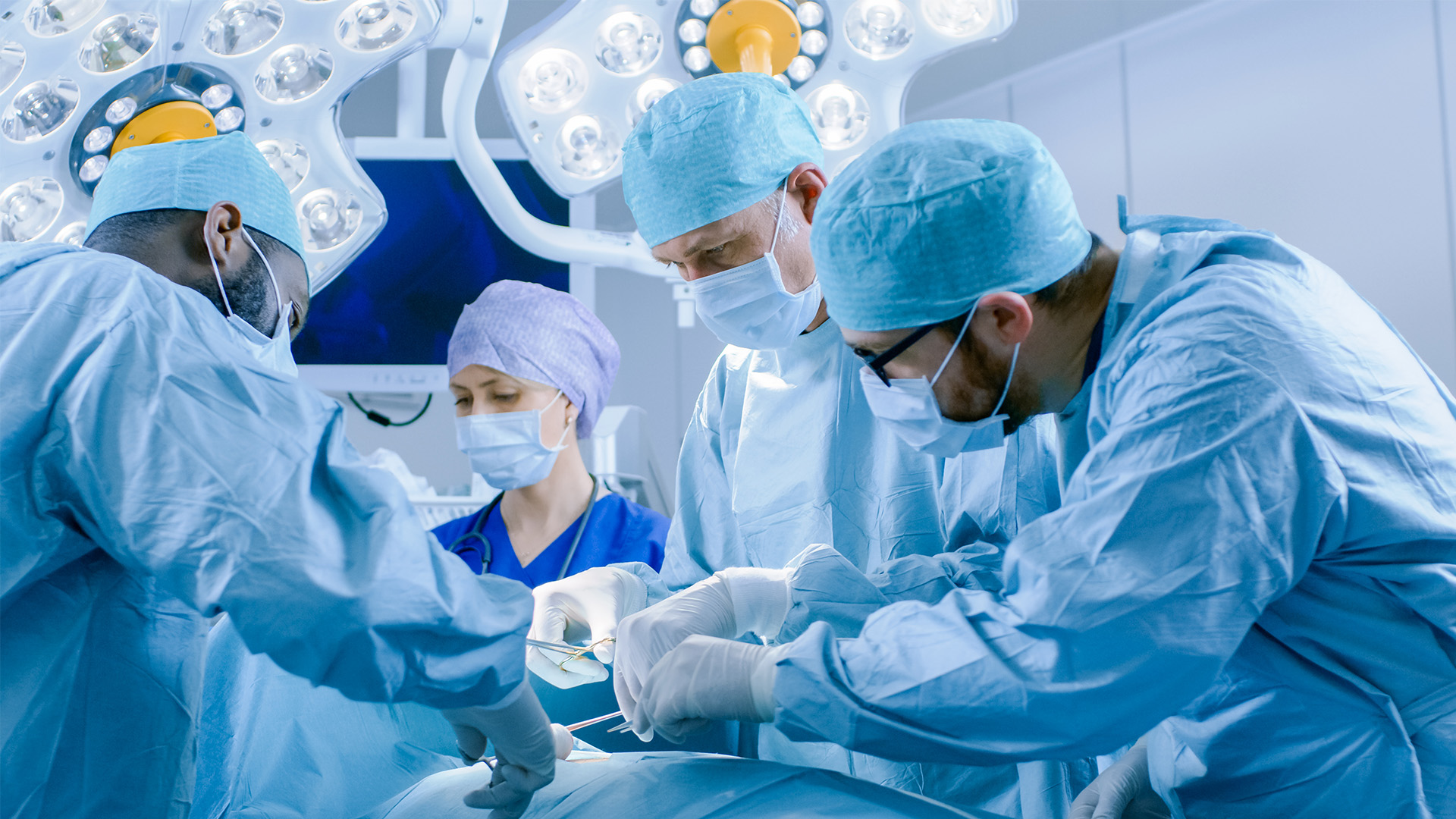
This video shows the basic technique of skeletonized left internal mammary artery (LIMA) harvesting. Skeletonization is an advanced technique of graft harvesting for coronary artery bypass grafting (CABG), and while it requires meticulous attention, it has many advantages. For example, skeletonization of the IMA can minimize sternal ischemia and lower the risk of mediastinitis, and the graft is longer and larger than a pedicled IMA.

A conventional median sternotomy is performed in the usual manner. A Favaloro retractor is then used to provide exposure. Care should be taken when opening the retractor as the lower part is pushing on the right ventricle and this may cause hemodynamic instability in a fragile patient. The pleura is then freely dissected from the chest wall. Superiorly, the subclavian vein should be exposed clearly. The authors prefer dissecting using an electric cautery rather than sweeping the pleura with a gauze because this may damage the small branches of the mammary vessels and cause some bleeding, making it more difficult to expose the artery. With the left chest wall elevated and the parietal pleura and pericardium dissected free, the course of the internal mammary artery and vein can be identified clearly. A parallel cut is made in the inner chest wall fascia about 5 mm medial to the visualized mammary vein. This dissection plane can be started at the middle, approximately the level of the third rib, and extended superiorly until the right subclavian vein and inferiorly toward the xiphoid process.

The posterior rectus sheath is freed from the undersurface of the sternum and costal cartilages, allowing more extensive retraction with improved exposure of the IMA. As the fascia is pulled down with forceps, the vein is exposed using the electrocautery tip. When the under-surface of the vein is clearly exposed, the artery subsequently becomes visible. The cautery tip gently separates the vein and IMA. The trunk of the IMA is separated from the chest wall gradually. This allows exposure of the perforating branches to cut. The authors do not have the harmonic scalpel for LIMA harvesting yet, so electrocautery is used to cut down the collaterals. When hemoclips are used, scissors should be used to divide the vessels. If electrocautery were to be used, the heat and the electric current could conduct through the metal clip and cause a burn injury.

Because the internal mammary artery is a delicate structure, any undue stretching, clamping, or misplaced clips results in permanent vascular injury and therefore unsatisfactory short- and long-term results. Excessive traction during mobilization should be avoided as it can lead to dissection of the vessel wall. The dissection of the LIMA is then continued distally until the bifurcation is reached.

Proximally, the mammary vein may be clipped and divided, clearing the view for the artery. The IMA is then dissected free from the subclavian vein, one can go 1 cm further from the inferior border of this vein. Also at this level, care should be taken not to damage the phrenic nerve, which crosses the artery. The first intercostal branch of the internal mammary artery must be identified and divided to avoid any possible steal phenomenon from the internal mammary flow.

The dissection should be continued until the artery is completely freed from the parasternal tissues to the level of the bifurcation. After finishing the procedure, papaverine is sprayed gently over the LIMA. Only after full dose heparin is given is the LIMA clipped at the bifurcation and divided, and the adequacy of the arterial flow is then checked. The CABG procedure is then performed in a conventional manner.

The authors hope that this video is beneficial. Please do not hesitate to contact them if you have any questions about this video.


Suggested Reading

  1. Asai T, Suzuki T, Nota H, et al. Off-pump coronary artery bypass grafting using skeletonized in situ arterial grafts. Ann Cardiothorac Surg. 2013;2(4):552-556.

This video is part of the Cardiac Surgery Essentials Series, brought together by CTSNet Guest Editor Dr Tsuyoshi Kaneko. Find the whole series here.

5 Comments

  1. Chaim Locker says:
    February 13, 2019 at 10:01 pm

    This is not the skeletonized IMA harvest technique.
    This is the Suma technique, which had the same infection rate like the pedicled harvest technique.

     Log in to Reply
    • Shweta Sharma says:
      October 15, 2023 at 1:22 pm

      whats Suma technique sir,pls elaborate?

       Log in to Reply
  2. Michael Sanford says:
    February 19, 2019 at 9:31 pm

    I have seen pedicle mammaries for 40 years in five different hospitals in my perfusion practice and did not see an increase in mediastinitis except in patients who were already compromised, emergent mediastinotomy or patients who had Type I or II diabetes. I was always under the impression that a mammary that had a good vascular pedicle provided long-term patency for the vessel it was placed. Skeletonized mammaries have a higher incidence of injury to the intima by accidentally incising of the vessel and by excess handling of it.

     Log in to Reply
  3. Kazi Jamil says:
    February 20, 2019 at 3:50 pm

    Nice video..

     Log in to Reply
  4. Mukesh Karuppannan says:
    March 23, 2019 at 8:37 am

    Good demonstration Dr.Vo and team…I find retaining the medial vein along with the mammary artery allows less handling of the mammary artery during anastamosis especially when mammary is used during sequential anastamosis…it gives the same advantages of a fully skeletonized mammary …

     Log in to Reply

Add Comments Cancel reply

You must be logged in to post a comment.

Not a member yet? Register now.
Vimeo 2785 views on Vimeo

CITATION

Vo A, Nguyen T, Nguyen D. Left Internal Mammary Artery Harvesting: The Skeletonization Technique. February 2019. doi:10.25373/ctsnet.7611560.
DOI https://doi.org/10.25373/ctsnet.7611560
TAGS
  • Coronary Disease - Surgery

Related Content

Video

Endoscopic Septal Tumor Resection With Biatrial Reconstruction

By: Oscar Flores Flores

Video

Thinking Outside the Box: Mitral Valve De-Repair

By: Sameh SaidGold ContributorSilver Commentor

Video

ISMICS 2026 | Innovations in Cardiac Surgery: Imaging, Robotics, and Autonomy

By: Feras Khaliel

Podcast

The Beat With Joel Dunning Ep. 171: Online Quiz League for Residents

By: Joel DunningGold ContributorSilver Commentor

JANS Article

Single-Stage Repair of Ruptured Aortic Arch With Coarctation Using Dual Perfusion Strategy

Author(s): Ziad Mansour

JANS Article

Performance Under Pressure: The Role of Self-Regulation and Leadership in Dealing With Pressures in the OR

Author(s): Vincent SierSilver Contributor

Video

Pulmonary Valve Replacement via Redo Ministernotomy

By: Jerome Soquet

Podcast

The Atrium: Oral Board AI Simulator

By: Alice CopperwheatBronze Contributor

Video

Transaortic Alfieri Stitch for Mitral Valve Repair, Modified Bentall, and Hemiarch Repair

By: Komal khania

Article

AI-Powered Oral Board Training Is Available to CTSNet Users Now

233 S. Wacker Drive | Suite 4400
Chicago, Illinois 60606, USA

Linkedin X-twitter Facebook-f Youtube
  • Join CTSNet
  • Donate
  • Submit Content
  • Volunteer
  • Join CTSNet
  • Donate
  • Submit Content
  • Volunteer
  • Featured Partners
  • Careers
  • Press
  • Advertise on CTSNet
  • Featured Partners
  • Careers
  • Press
  • Advertise on CTSNet
  • CTSNet Policies
  • Privacy Policy
  • Disclaimer
  • Contact CTSNet
  • CTSNet Policies
  • Privacy Policy
  • Disclaimer
  • Contact CTSNet

233 S. Wacker Drive | Suite 4400
Chicago, Illinois 60606, USA

Instagram Linkedin X-twitter Facebook-f Youtube
  • Join CTSNet
  • Donate
  • Submit Content
  • Volunteer
  • Join CTSNet
  • Donate
  • Submit Content
  • Volunteer
  • Featured Partners
  • Careers
  • Press
  • Advertise on CTSNet
  • Featured Partners
  • Careers
  • Press
  • Advertise on CTSNet
  • CTSNet Policies
  • Privacy Policy
  • Disclaimer
  • Contact CTSNet
  • CTSNet Policies
  • Privacy Policy
  • Disclaimer
  • Contact CTSNet

233 S. Wacker Drive | Suite 4400
Chicago, Illinois 60606, USA

Instagram Linkedin X-twitter Facebook-f Youtube
  • Join CTSNet
  • Donate
  • Submit Content
  • Volunteer
  • CTSNet Policies
  • Privacy Policy
  • Join CTSNet
  • Donate
  • Submit Content
  • Volunteer
  • CTSNet Policies
  • Privacy Policy
  • Featured Partners
  • Careers
  • Press
  • Advertise on CTSNet
  • Disclaimer
  • Contact CTSNet
  • Featured Partners
  • Careers
  • Press
  • Advertise on CTSNet
  • Disclaimer
  • Contact CTSNet
  • Join CTSNet
  • Donate
  • Submit Content
  • Volunteer
  • Join CTSNet
  • Donate
  • Submit Content
  • Volunteer
  • Featured Partners
  • Careers
  • Press
  • Advertise on CTSNet
  • Featured Partners
  • Careers
  • Press
  • Advertise on CTSNet
  • CTSNet Policies
  • Privacy Policy
  • Disclaimer
  • Contact CTSNet
  • CTSNet Policies
  • Privacy Policy
  • Disclaimer
  • Contact CTSNet
© 2026 CTSNet Inc. All right reserved.
Go to Top