Content from the Journal of the American Neurological Surgeons.
Abstract The sternum is an important component of the axial skeleton. Its intactness and stability are important not only for respiratory or chest mechanics, but also for mediastinal and hemodynamic stability. Sternal reconstruction may be difficult with extensive tumor and resection of the sternum with a risk of morbidity after surgery. This article presents the…
Dextrocardia is a congenital cardiac anomaly in which the base-apex cardiac axis points to the right and may be associated to situs solitus, situs inversus, or situs ambiguous. In cases of dextrocardia with situs inversus totalis, the heart and all the other organs are in a mirror image position compared to the normal situation. Case…
The Ivor Lewis esophagectomy has remained the procedure of choice for localized middle or lower esophageal cancer since it was first introduced in 1946 (1,2). Despite its widespread use, the rate of complications remains high. Anastomotic leak is still reported as high as 25 percent, and esophageal strictures can be up to 40 percent. It…
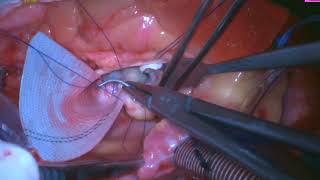
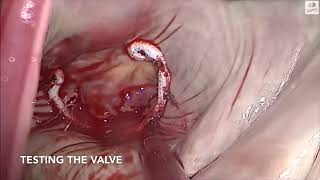
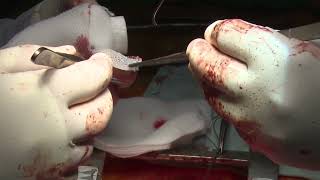
In a previous video on CTSNet, published last year, the authors detailed how to use a “Y” incision and rectangular patch to enlarge the aortic annulus by three to four valve sizes for aortic valve replacement (AVR) with bioprosthesis (1). The video below demonstrates the same technique but for mechanical AVR. In the case…
Iatrogenic aortic dissection is a rare but catastrophic complication of cardiac surgery. This video shows two cases of extensive type A aortic dissection occurring during elective cardiac surgery. The first case occurred during a totally endoscopic mitral valve repair through a right mini-thoracotomy approach in a fifty-seven-year-old woman. A large sheared-off intimal flap was noted…
A sixty-three-year-old man recently developed progressive exercise intolerance, lower extremity edema, and orthostatic hypotension. He had a history of syncope secondary to sick-sinus-syndrome status post permanent pacemaker placement in 2001. A workup included an echocardiogram, which demonstrated normal left ventricular function, severe tricuspid stenosis with a mean gradient of 9mmHg, severe right atrial dilation, and…
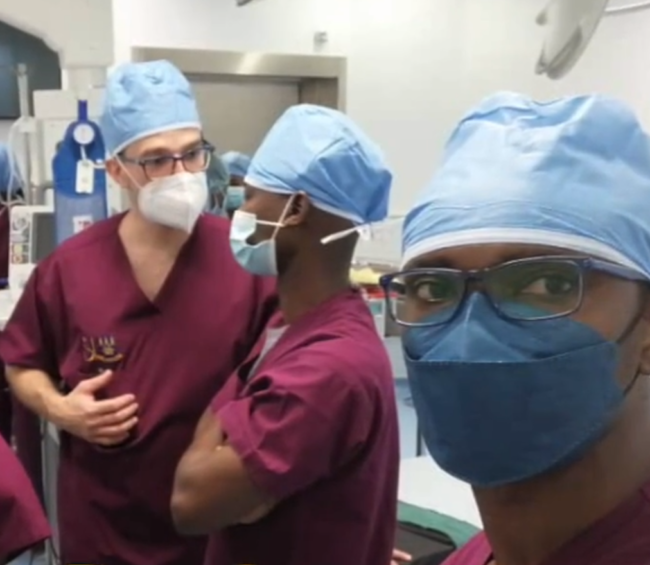
Introduction The Arrhythmia Alliance Hearts of Ghana Mission recently completed another successful mission in Ghana. While in Ghana, they perform Heart Surgery and support Pacing and Angiography. This year, they had two main aims. Firstly, to assist Mr. Baffour Gian perform the first heart operations at the new heart surgery program at the University of…
This video demonstrates the authors’ technique for the recovery of organs from donation after circulatory death (DCD) donors using normothermic regional perfusion (NRP). Withdrawal of Care To start, heparin is given to the donor before withdrawal of care. The donor is then extubated. Ideally, the donor is prepped and draped prior to extubation, though this…
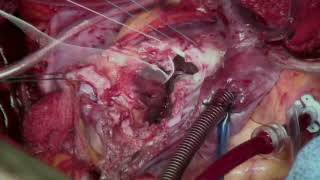
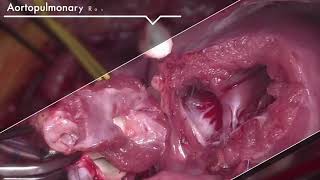
This video depicts a redo commando operation on a patient on hemodialysis who had aorto-left atrial fistula and presented with heart failure symptoms. The patient underwent redo sternotomy and bicaval cannulation with exposure of the aortic and mitral valve prostheses. Exposure was achieved through an incision of the non and left commissure of the aortic…
This video describes one of the authors’ initial series of combined mitral and aortic valve surgery and highlights the steps involved for an endoscopic approach. The authors hypothesize that this technique could result in lower ventilation times, less blood loss, less postoperative pain, and fewer ICU and hospital stays, as seen with endoscopic single valve…
The patient was a six-month-old, 7.6 kg male with an antenatal diagnosis of dexto-transposition of the great arteries (d-TGA), large perimembranous ventricular septal defect (VSD) with outlet extension, a bicuspid and severely stenotic pulmonary valve (PS) with a peak gradient of 92 mmHg, and a posteriorly-deviated conal septum causing left ventricular outflow tract obstruction (LVOTO). …
The patient is a twenty-one-year-old man with Marfan syndrome and a strong family history of type A aortic dissection. This personalized external aortic root support (PEARS) operation is approached through a sternotomy but can also be approached through minimally invasive incisions. To start, the pericardium is opened, and the aorta is fully exposed to the…
On April 22, 2022, ERAS and CTSNet collaborated to bring you this is a dynamic, one-hour interactive session with leading ERAS experts who discussed three current controversies in enhanced recovery practices after cardiac surgery. Each controversy had one speaker addressing the pros and another adressing the cons. Each speaker was given five minutes followed by…
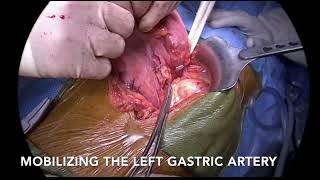
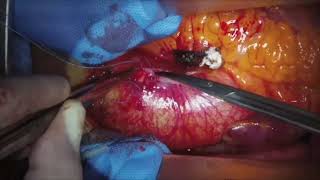
In October of 1994, the authors started using the right gastroepiploic artery (GEA) in redo coronary artery bypass grafting (CABG) without the use of the extracorporeal circulation. This was, to the best of the authors’ knowledge, the first ever case worldwide (1). The first part of this video shows this historical operation using a resternotomy. …
This video features a one-day-old, 3kg neonate with a prenatal diagnosis of a cardiac mass. The postnatal transthoracic echocardiogram shows a large left ventricular mass occupying the majority of the left ventricular cavity and extending into the left ventricular outflow tract (LVOT). Other small masses also appear to be in the interventricular septum and on…
Bridging the bronchus and tracheal stenosis can be associated with congenital heart defects like atrial septal defects, ventricular septal defects, tetralogy of Fallot, and aortic coarctation. This video features a case of bridging the bronchus and severe tracheal stenosis associated with left pulmonary artery sling, ventricular septal defect, and aortic coarctation. This case was successfully…


 welcomes you to the new, improved website!