Content from the Journal of the American Neurological Surgeons.
This video demonstrates a robotic diaphragm plication with a focus on technique and technical pearls. The patient is a seventy-two-year-old woman with a history of phrenic nerve paralysis secondary to surgical division during a mediastinal mass resection in 1999. Following this operation, she had persistent dyspnea on exertion and worsened when supine. In 2020, she…
This video illustrates surgical repair of double aortic arch through a sternotomy. Double aortic arch is the most common type of vascular ring malformation. It involves complete encirclement of the trachea and esophagus by the aortic arch or its branches. There are three types of double aortic arch: 80 percent are dominant right arches, 10…
Substernal goiter is a challenging disease. Surgical treatment is the standard based on symptoms, or for the risk of occult malignancy and the natural history of progressive enlargement (1). Resection can be managed through a cervical incision in the majority of cases; however, middle or posterior substernal extension may require a hybrid approach with a…
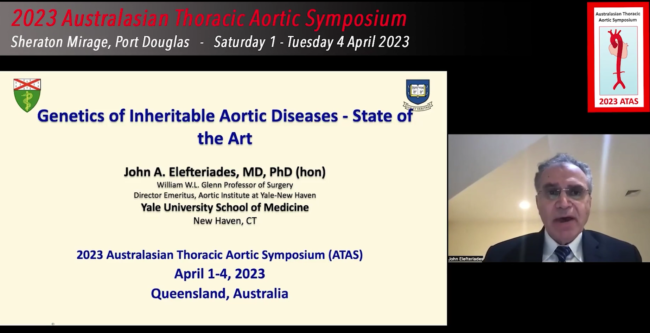
As a part of the 2023 Australian Thoracic Aortic Symposium, Dr. John Elefteriades presented on his state-of-the-art research on the genetics of inheritable aortic diseases. Dr. Elefteriades is a cardiothoracic surgeon at the Yale University School of Medicine in New Haven, United States. View Dr. Elefteriades’ CTSNet profile for more of his articles and videos…
At the 2023 EACTS Annual Meeting, CTSNet Editor in Chief Joel Dunning and CTSNet senior editors set out to interview the most knowledgeable CT surgeons from around the world. Stay tuned for more interviews from the meeting. In anticipation of the 2023 World Congress on Rheumatic Heart Disease, Senior Editor Dr. Emily Farkas spoke with…
An isolated left atrial (LA) aneurysm is a rare congenital abnormality. It can involve the left atrium or very rarely, the entire left atrium (1). The main concerns about the LA aneurysm are the possible complications such as atrial arrhythmias, thromboembolic events, and CHF symptoms caused by pressure effect malfunction of cardiac structures, mainly the…
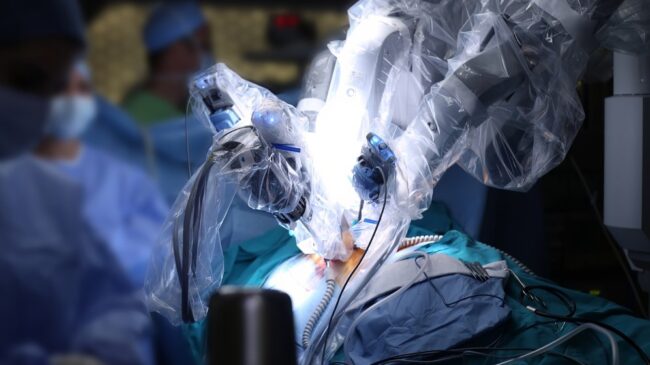
This video demonstrates the first anatomical lung resection performed by the team at Southampton Hospital with the new Versius robotic system from CMR Surgical. The team has previous experience with the Intuitive system and now have a second robotic platform to address their large volume of operations. In this video, surgeons used the three-arm bedside…
October was a superstar month for surgical content, including versatile congenital techniques, a minimally invasive mitral valve repair, and hybrid aortic arch treatment. Articles published this month also included interviews with technique experts and important CT surgery news items. 1. Nikaidoh Procedure for TGA, VSD, and PS in a ChildBy Shyamadeep Borgohain The most popular…
Radial artery use as a second conduit in coronary artery surgery has amassed more than fifty years of experience with waxing and waning levels of enthusiasm. Initial use in the Carpentier case series found a high rate of graft occlusion, but subsequent improvements in technique and understanding of graft failure led to its establishment as…
ERAS Cardiac Society conducted a joint webinar with CTSNet on October 26, 2023, bringing about pivotal insights and questions on the topic, “Enhancing Recovery in Minimally Invasive Cardiac Surgery.” The session premiered individual presentations from anesthesia and critical care consultant Dr. Jeroen Vandenbrande and chief of cardiothoracic surgery Dr. Marc Gerdisch. In addition, Dr. V.…
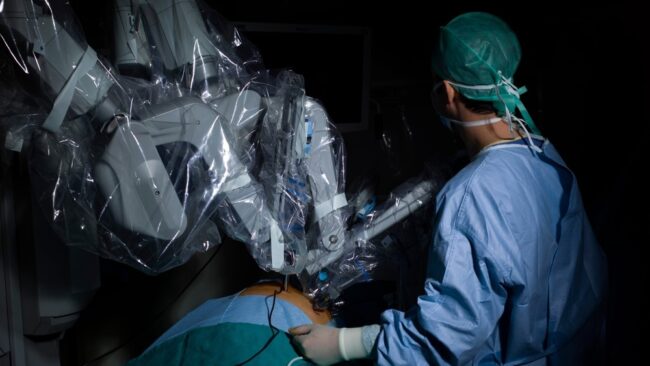
Robotic surgery has gained popularity among thoracic surgeons worldwide because of to its lower morbidity and shorter hospital stay compared to open thoracotomy, and similar outcomes when compared with traditional video assisted thoracic surgery (VATS) (1-5). Both robotic-assisted thoracic surgery (RATS) and VATS can be used for the resection of posterior mediastinal lesions. However, the…
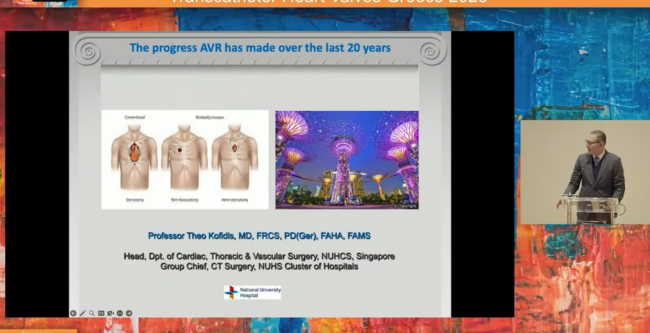
In this recording from the 2023 Transcatheter Heart Valves Greece conference, Dr. Theo Kofidis, the head of cardiac, thoracic, and vascular surgery at National University of Singapore, discusses the progress that aortic valve replacement techniques have made over the past twenty years. Disclaimer The information and views presented on CTSNet.org represent the views of the…
The current treatment strategy for non-small cell lung cancer depends on clinical staging. Surgical resection is generally considered the treatment of choice in patients with stage I or II disease (1). Minimally invasive techniques are the standard of care today. Video assisted thoracoscopic surgery (VATS) has been established as a safe and favorable approach for…
Prof. Sameh Said wrapped up his congenital heart surgery Guest Editor Series, “Right Axillary Thoracotomy for Repair of a Wide Variety of Congenital Heart Defects in Infants and Children—Should This Be the New Standard?” by moderating a live webinar. Series contributors Dr. Paul Philipp Heinisch, Prof. Ali Dodge-Khatami, and Dr. Oleksandr Babliak discussed tips and pitfalls of completing various…
Malignant pleural mesothelioma is an aggressive tumor of the pleura. Extended pleurectomy and decortication is a lung sparing cytoreductive procedure used in the management of this disease for curative intent. In 2011, the International Association of Society of Lung Cancer (IASLC) and International of Mesothelioma Interest Group (IMIG) described the consensus report of the definition…
At the 2023 EACTS Annual Meeting, CTSNet Editor in Chief Joel Dunning and CTSNet senior editors set out to interview the most knowledgeable CT surgeons from around the world. Stay tuned for more interviews from the meeting. With the release of the European Guidelines for the Surgical Management of Pure Ground-Glass Opacities and Part-Solid Nodules…