Content from the Journal of the American Neurological Surgeons.
In this remarkable interview, CTSNet Editor-in-Chief Joel Dunning spoke with Dr. John Forrest, a cardiologist and Director of both Interventional Cardiology and the Structural Heart Disease Program at Yale Medicine, New Haven, CT, USA, about a paper he authored titled “Six-Year Outcomes After Transcatheter vs Surgical Aortic Valve Replacement in Low-Risk Patients With Aortic Stenosis,”…
This video is part of CTSNet’s 2025 Resident Video Competition. Watch all entries into the competition, including the winning videos. Recent trials, including CALGB and JCOG0802, have established the noninferiority of sublobar resection compared to lobectomy for early-stage non-small cell lung cancer (NSCLC) patients with tumors less than two centimeters (1, 2). As such, segmentectomy procedures are becoming more…
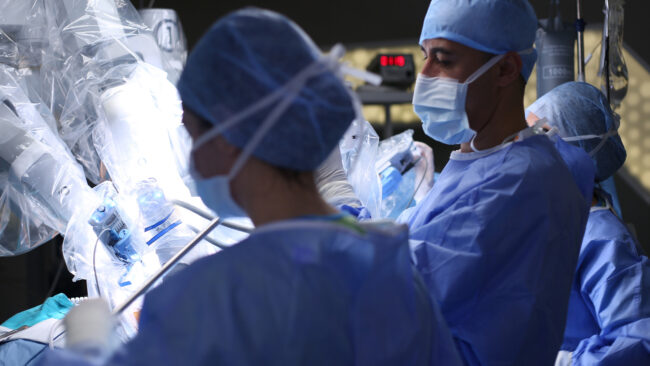
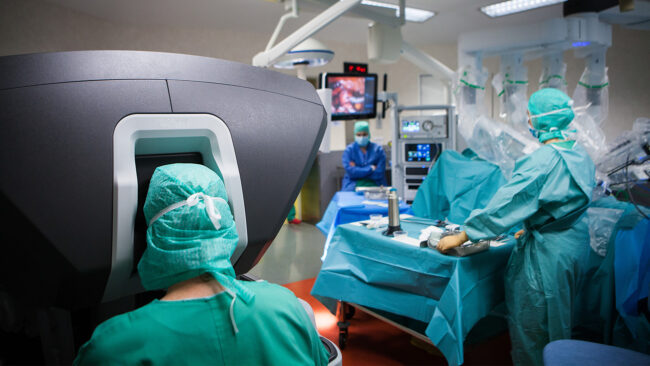
This video is part of CTSNet’s 2025 Resident Video Competition. Watch all entries into the competition, including the winning videos. In this video, the authors demonstrate a robotic right upper sleeve lobectomy with a rotational azygos vein flap. The patient was a 68-year-old female presenting with a right supra-hilar non-small cell lung cancer, which caused obstructive atelectasis of the…
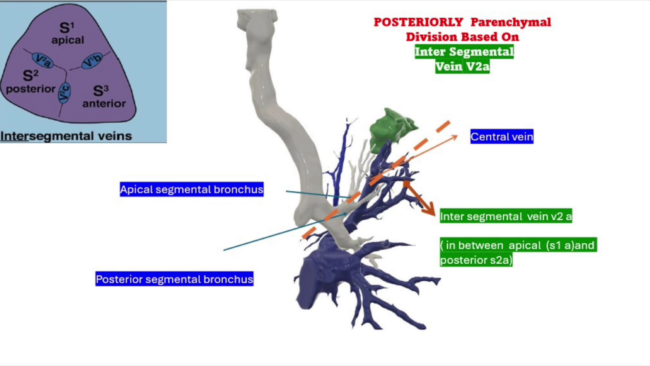
This video is part of CTSNet’s 2025 Resident Video Competition. Watch all entries into the competition, including the winning videos. This video demonstrates a video-assisted thoracoscopic surgery (VATS) right S1 segmentectomy with 3D reconstruction planning, detailing the anatomy of the bronchus, artery, and vein, followed by lines of division depicted in 3D. Further position of the patient, the apical…
An 8-month-old boy with a functional single ventricle secondary to double outlet right ventricle with severe pulmonary stenosis and hypoplastic left ventricle was deemed unsuitable for biventricular repair at this stage. Due to progressive cyanosis, he was offered a bidirectional cavopulmonary anastomosis (bidirectional Glenn), and because of the lack of previous surgical interventions, it was…
A 3-week-old, 2.6-kg infant with d-transposition of the great arteries and an intact ventricular septum had an abnormal left coronary artery (LCA) originating from the left-facing sinus with ostial stenosis and an intramural retro-commissural course. The patient presented with profound cyanosis and persistent pulmonary hypertension, which required 3.5 days of veno-arterial extracorporeal membrane oxygenation, followed…
This video documents the investigation and treatment of a male patient who was referred with severe aortic valve stenosis. He was initially referred for consideration of transcatheter aortic valve replacement (TAVR). However, when the interventional cardiologist analyzed the aortic valve using 3mensio software, which is one of the most common ways to assess patients prior…
This video is part of CTSNet’s 2025 Resident Video Competition. Watch all entries into the competition, including the winning videos. This video demonstrates a tailored reparative strategy for a 58-year-old male who presented with severe symptomatic mitral regurgitation due to a flail posterior leaflet with marked myxomatous degeneration. Preoperative transesophageal echocardiogram (TOE) revealed excessive posterior leaflet height (>24 mm)…
Background In isolated pulmonary artery of ductal origin (IPADO), one or both pulmonary arteries arise from a ductus arteriosus, and it is observed in approximately 1.5 percent of patients with discontinuous pulmonary arteries (1,2). Embryologically, the condition is thought to result from involution of the proximal sixth aortic arch, resulting in the absence of the…
This video is part of CTSNet’s 2025 Resident Video Competition. Watch all entries into the competition, including the winning videos. The authors present a case of subaortic stenosis repair in a 47-year-old woman using a minimally invasive approach through the right anterior thoracotomy in the second intercostal space. The patient presented with progressive shortness of breath on minimal exertion.…
In this outstanding interview, CTSNet Editor-in-Chief Joel Dunning speaks with Drs. Mateo Marin-Cuartas, CTSNet JANS Editor and cardiac surgeon at the University Department of Cardiac Surgery at Leipzig Heart Centre University Hospital in Leipzig, SN, Germany; and Samuel Heuts, a cardiothoracic surgeon in the Department of Cardiothoracic Surgery at Maastricht University Medical Center in Maastricht, LI, about a paper they authored…
This video is part of CTSNet’s 2025 Resident Video Competition. Watch all entries into the competition, including the winning videos. This video features a left uniportal video-assisted thoracoscopic surgery (VATS) left upper lobe trisegmentectomy, also known as a lingular-sparing S1–3 segmentectomy, performed for a metastatic lung nodule. This case is notable for two reasons: First, a complex anatomical…
This video is part of CTSNet’s 2025 Resident Video Competition. Watch all entries into the competition, including the winning videos. Robotic-assisted mammary dissection is routinely performed using either monopolar or bipolar electrocautery, which confers the risk of thermal injury to the mammary artery and often necessitates frequent instrument changes to allow clip application. In pursuit of an optimal harvest…
The authors present a case of mitral valve repair for acute iatrogenic papillary muscle rupture leading to a flail anterior leaflet. What makes this case unique is the type of pathology, the challenge in exposure of the valve as well as the subvalvular apparatus given the small left atrial size, and the ability to preserve…
This video is part of CTSNet’s 2025 Resident Video Competition. Watch all entries into the competition, including the winning videos. This video demonstrates the many variations of the Konno–Rastan aortoventriculoplasty. Konno and Rastan independently described this anterior aortic annular enlargement technique—Konno in 1975 and Rastan in 1976—in which the enlargement is performed to the left of the…
This video shows an 85-year-old woman who presented to the emergency room with chest pain and a 6.5 cm ascending aorta containing an intramural hematoma and a pericardial effusion. The innominate artery was cannulated to perfuse and cool the brain before any further intervention. The left carotid artery was clamped, allowing the brain to be cooled…