Content from the Journal of the American Neurological Surgeons.
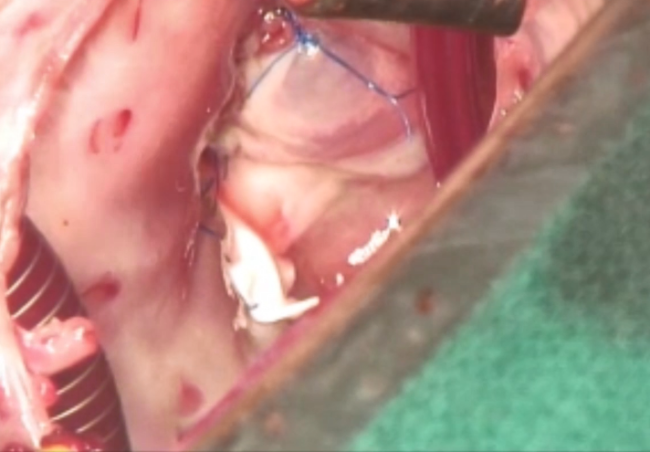
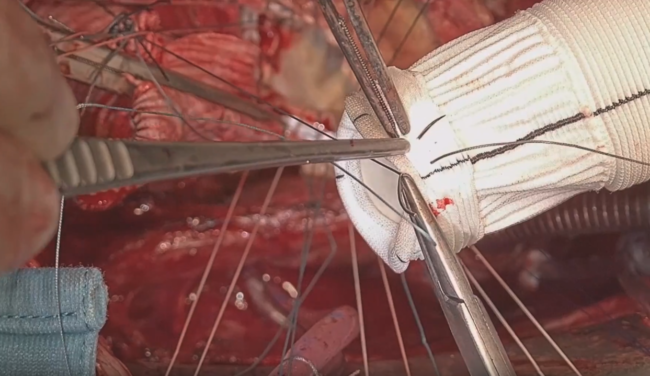
This video highlights the use of the Konno procedure to safely expose the root of the aorta in a patient with an aortic root abscess and a history of multiple cardiac surgeries. The patient was a 28-year-old man with endocarditis, complicated by four prior cardiac surgeries. The original pathology was Shone’s syndrome with an aberrant…
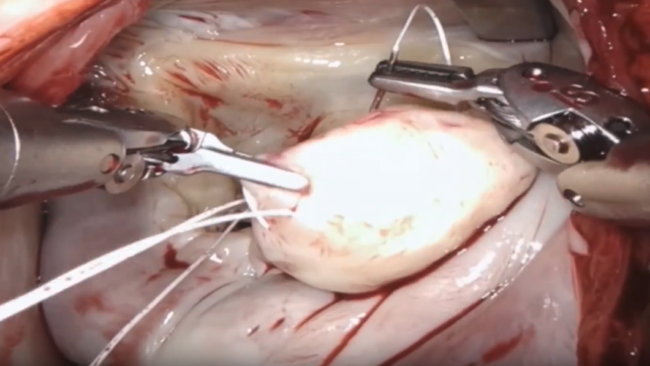
This video demonstrates the minimally invasive Ozaki technique for aortic valve reconstruction, including thoracoscopic harvesting of the pericardium and Ozaki aortic valve repair technique via an upper ministernotomy. The Ozaki technique basically replaces all three aortic cusps using glutaraldehyde-treated autologous pericardium. The advantages of this method are that there is no foreign material implanted and…
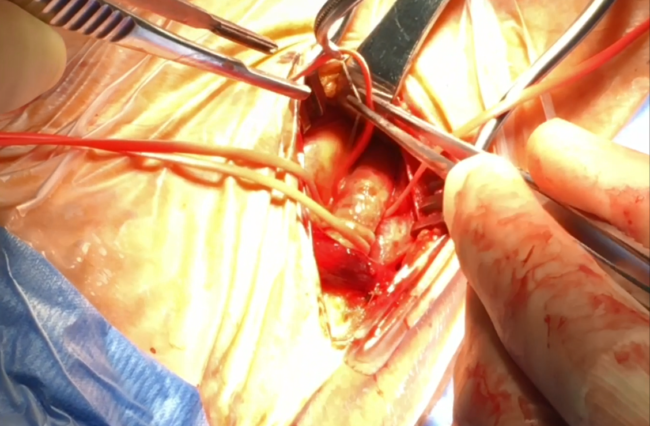
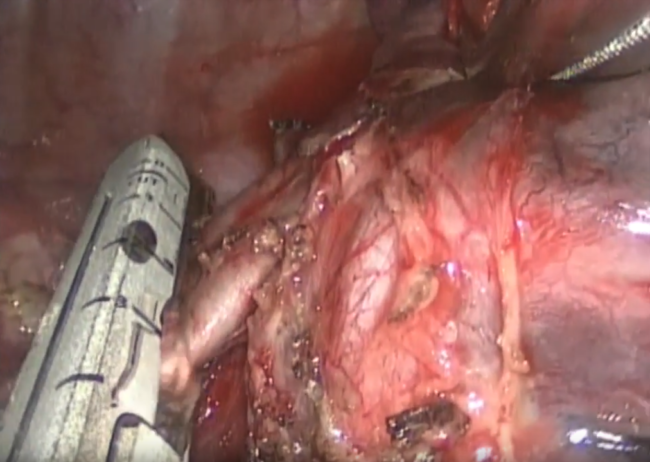
A 41-year-old woman developed high output (2 L/day) left chylothorax following the resection of a bronchogenic cyst. Treatment with octreotide (100 mcg SC bid) and nothing by mouth status with total parenteral nutrition was unsuccessful after seven days. The patient underwent a right robotic thoracic duct ligation using the da Vinci Xi robot. In the…
Filmed at the 2018 STS Annual Meeting in Fort Lauderdale, Florida, Juan P. Umana of the Fundacion Cardioinfantil in Bogota, Colombia, interviews Jose Navia of the Cleveland Clinic in Ohio, USA, about the “hemi-commando” procedure for double-valve endocarditis. They discuss the history of the commando operation, the development of this complex variation, and Dr Navia’s…
This lecture by Alan Sihoe of the University of Hong Kong was given during the Fourth Assiut VATS Workshop in Assiut, Egypt, in February 2018. In this lecture, Professor Sihoe gives an overview of trends in thoracic surgery literature and what editors and reviewers are looking for in submitted manuscripts. This lecture focuses primarily on…
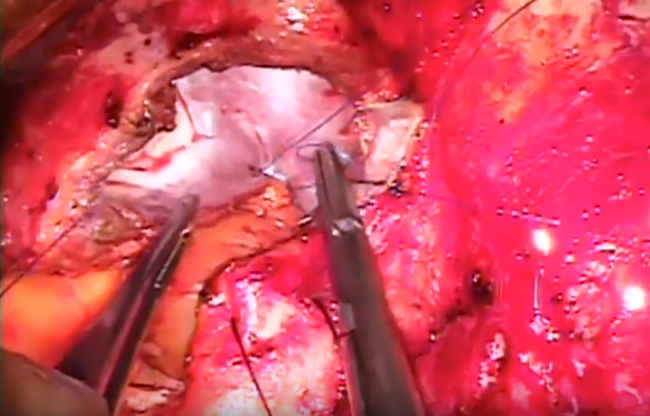
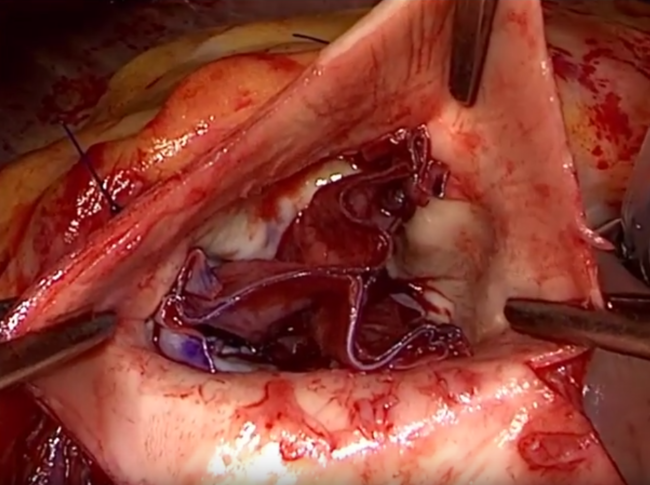
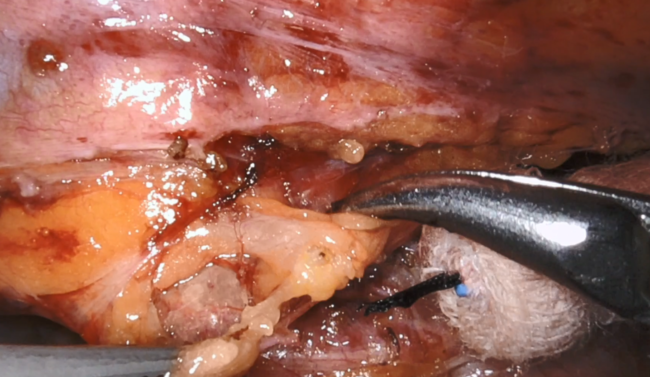
This video demonstrates a central cannulation in a step-by-step fashion, using diagrams and surgical video to illustrate key technical elements. Step 1 Aortic cannulation is always done prior to atrial cannulation. At this step in the video, you can see partial thickness purse string sutures being placed into the aorta, which are then snared. Next,…
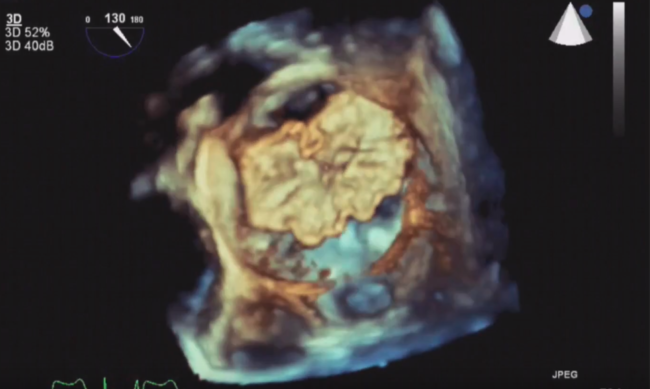
Direct Gerbode defects (GD) are rare, especially those secondary to endocarditis. Only 10.7% involve both the aortic and tricuspid valves. The authors present a direct GD secondary to aortic and tricuspid valve endocarditis and discuss the surgical management of the defect with sliding tricuspid valve annuloplasty. The preoperative echocardiogram shows what was thought to be…
Mohammed Munavvar of Lancashire Teaching Hospitals in Preston, UK, discusses endobronchial therapies for emphysema treatment. He reviews reversible and irreversible techniques, and he emphasizes the importance of multidisciplinary discussion prior to recommending an endobronchial or surgical treatment for a patient. This presentation was originally given during the SCTS Ionescu University program at the 2017 Annual…
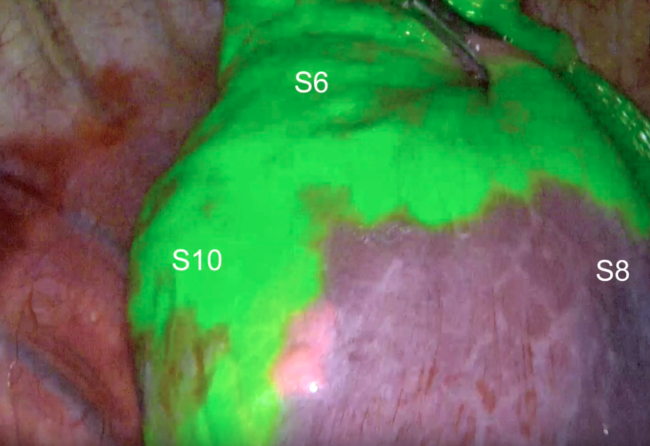
The use of near-infrared imaging after systemic injection of indocyanine green (ICG) is becoming the method of choice for marking the intersegmental plane during video-assisted segmentectomies. The authors present a short video showing a suspected failure of ICG during a thoracoscopic basilar segmentectomy. A thorough examination of the three-dimensional modelization demonstrated that this was not…
In the United States, transcatheter aortic valve replacement (TAVR) has become a common treatment strategy in patients with aortic stenosis who have an estimated moderate-to-high STS risk of mortality if undergoing surgical aortic valve replacement. With advanced age and multiple comorbidities, only around 80% to 90% of these patients are candidates for a transfemoral access…
Aortic root reoperation represents a great challenge for the cardiovascular surgeon, with a hospital mortality that ranges between 8% and 15% in the literature [1-4]. Arch repair interventions with zone 0 (or zone 1) distal anastomosis and arch vessel reimplantation with separate branches are increasingly performed. On the one hand, this technique both simplifies distal…
Neil Moat of the Royal Brompton Hospital in London, UK, discusses current devices for transcatheter mitral valve repair and replacement. This presentation was originally given during the SCTS Ionescu University program at the 2017 Annual Meeting of the Society for Cardiothoracic Surgery in Great Britain and Ireland. This content is published with the permission of SCTS.…
This video shows one of the first totally endoscopic mitral valve repairs using the lateral endoscopic approach with robotics (LEAR) technique performed in the UK, and it follows a patient’s remarkable recovery from this procedure. It has been known for many years now in a variety of surgical specialties that as the degree of surgical…
Introduction Since the early 1990s, minimally invasive cardiac surgery (MICS) has evolved worldwide. It started with mitral valve procedures and then gradually expanded toward other valve procedures, coronary artery bypass grafting, and various types of simple congenital heart operations. There has been a growing interest for MICS, given the association of this technique with decreased…
Objective The authors’ uniportal video-assisted thoracoscopic pneumonectomy approach focuses on controlling the main pulmonary artery (MPA) first, to decrease lung congestion. Performing the most difficult step first ultimately decreases the chance of vascular accidents. Method Patients must undergo proper evaluation of resectability and operability according to international guidelines. The authors routinely perform a radical lymphadenectomy.…
Filmed at the 2018 STS Annual Meeting in Ft Lauderdale, FL, Joel Dunning of the James Cook University Hospital in London, UK, interviews Raja Flores of the Mount Sinai School of Medicine in New York, USA. They discuss the importance of mesothelioma prevention and the persisting risk from asbestos exposure, as well as which surgical…