Content from the Journal of the American Neurological Surgeons.
The patient is a 42-year-old male who presented to the emergency department with stridor. CT revealed a broad-based tumor 4 cm distal to the vocal cords and 7 cm proximal to the carina (Figure 1). The tumor was biopsied by bronchoscopy and pathology was suggestive of a schwannoma. A cervical approach was planned for the…
The main cause of pectus deformities is thought to be abnormal elongation and/or distorsion of the rib cartilages. In this video, a simplified open repair of both pectus excavatum and protruding deformities is described, based on the subperichondrial resection of the abnormal cartilages. The procedure is performed through a limited transversal or submammary incision in…
By Theodore Kofidis, MD, PD, Duc Thang Vu, MD, Lian-Kah Ti, MD, Edgar Tay, MBBS, Lee Chuen Neng, MD Background Minimally invasive cardiac surgery (MICS) is on the march and is becoming state of the art for a series of cardiac procedures [1]. With the advent of hybrid therapies, it even promises to play a…
This article is republished with the permission of the Asian Cardiovascular & Thoracic Annals. The narrative below on how the Asian Annals finally became indexed has not been previously published. The recent passing of Dr. Ferguson compelled me to pay tribute to the man who was instrumental in helping the Asian Annals achieve its most prized goals…
By Ikenna Omeje, MD, Georgi Christov, MD, Orsolya Friedrich, MD, and Martin Kostolny, MD Tricuspid valve regurgitation is not uncommon in patients with hypoplastic left heart syndrome and has been shown to be a significant factor affecting the success of staged surgical palliation in these patients. We present a video showing tricuspid valve repair in an…
By Diego Gonzalez Rivas, MD, Ricardo Fernandez, MD, Mercedes De La Torre, MD, and Lara Fontan, MD Totalis Situs inversus (SIT) is an extremely rare condition. There are few reports in literature describing thoracic surgery in patients with this unusual anomaly. This video is the first report of a thoracoscopic lung resection of a pulmonary…
This video demonstrates the subtotal resection of a large intramyocardial cardiac fibroma in the free wall of the right ventricle. The fibroma was intimately associated with the light coronary artery. Therefore, an endocardial approach was used. The removal of the fibroma, as well as preoperative and postoperative imaging is shown. This method of surgical debulking…
Dr. Todd Demmy, Clinical Chair of the Department of Thoracic Surgery and Professor of Oncology at Roswell Park Cancer Institute in Buffalo, NY, has put together an impressive Video Atlas of Thorascopic Lobectomy. The Video Atlas demonstrates the basic tools, concepts, and other technology that enable the VATS lobectomy procedure. Click Here to view the…
Led by Dr. Raphael Bueno (Program Director and Associate Division Chief of Thoracic Surgery), Dr. R. Morton Bolman, III (Chief of Cardiac Surgery), Dr. Pedro Del Nido (Chair of Cardiac Surgery at Children’s Hospital), and Dr. David J. Sugarbaker (Chief of Thoracic Surgery), the Thoracic residency program at Brigham and Women’s Hospital (BWH)/Children’s Hospital Medical…
Thoracoscopic segmentectomy may be an excellent, minimally-invasive option for patients with small lung cancers or limited cardiopulmonary reserve.
CTSNet hosted a very lively Video Roundtable discussion at the recent 2013 STS Annual Meeting in Los Angeles, CA, on issues surrounding the two major minimally invasive techniques for removing parts of the lung. Scott Swanson, MD of Boston, MA, moderated the Roundtable, and Robert Cerfolio, MD of Birmingham, AL, Daniel Miller, MD of Atlanta,…
Presented at the STS 2011 Annual Meeting Surgical techniques for repair of insufficient bicuspid aortic valves are now quite reproducible. Outcome analyses have shown low late valve-related complication and failure rates. This video illustrates bicuspid repair techniques emphasizing inter-patient variability and operative decision-making. Videos and operative echocardiograms from 4 patients are shown to illustrate the…
The CardioWest™ Total Artificial Heart (TAH) is a biventricular orthotopic pneumatic pulsatile pump that totally replaces the native ventricles and valves and is currently approved as a bridge to heart transplatation in selected patients. The system consists of two artificial ventricles connected by two drivelines tunnelled under the skin, to an external air driver responsible…
Please click here to visit learncabg.ctsnet.org.
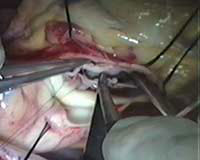
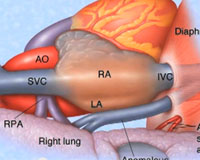
Scimitar Syndrome is a rare congenital anomaly with a bimodal presentation that requires surgical intervention. This video illustrates a safe and minimally invasive approach to surgical correction for this anomaly performed on an adult patient. Scimitar Syndrome is a rare congenital anomaly with a bimodal presentation (1-3). The infantile manifestation is severe with significant mortality,…
Thomas Bruce Ferguson, MD was born on May 6th, 1923 in Oklahoma City, OK. He was the grandson of Thompson Benton Ferguson and Elva Shartell Ferguson, pioneer Oklahomans, founders and publishers of the Watonga Republican newspaper, and the sixth territorial governor of Oklahoma. He was the third child of Walter Scott Ferguson and Lucia Loomis…