Content from the Journal of the American Neurological Surgeons.
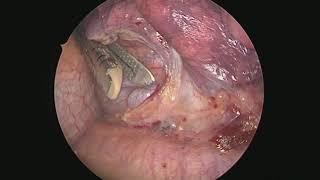
The authors present the case of a 65-year-old man with a previous medical history of tuberculosis 35 years ago, a nephrectomy due to papillary cell renal carcinoma in March 2019, and COPD. During the follow-up, two nodules, measuring 11 and 12 mm on the RUL, were observed on a computed tomography (CT) scan in June…
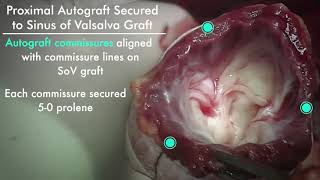
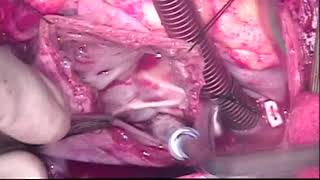
The advantage of the Ross procedure over bioprosthetic or mechanical valve options are the superior hemodynamics, resistance to infection, durability, and lack of thrombogenicity. External support of the thin-walled pulmonary autograft aims to mitigate the rate of dilatation due to exposure to arterial pressures. The Sinus of Valsalva graft is used in particular to more…
Percutaneous dilatational tracheostomy (PDT) has greatly replaced conventional surgery in modern intensive care units (ICU). However, complication still occurs with PDT. The authors hypothesize that retrograde puncturing of the trachea could notably reduce complications such as posterior wall or esophageal perforation, false track, puncturing endotracheal tube, and bronchoscope. Difficult anatomy is another consideration that can…
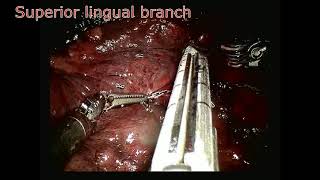
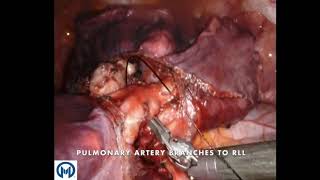
In this video, a technique of complex robotic-assisted left upper lobectomy with difficult anterior pulmonary artery branch is demonstrated to advance the knowledge among practicing surgeons on technical nuances of complex pulmonary surgery. A 61-year-old man with newly diagnosed left upper lobe squamous cell carcinoma T1cN0M0 clinical stage IA was presented for surgical treatment. Intraoperatively,…
CTSNet hosted the live webinar “Nursing Giants in Mechanical Circulatory Support” on Friday, January 15, 2021. Jill Ley, MS, clinical nurse specialist at California Pacific Medical Center and clinical professor at UCSF, moderated a discussion on lessons learned with a panel of nursing giants, including Jane (Reedy) Gruendl of CH Biomedical, Mary Lou O’Hara, MSN,…
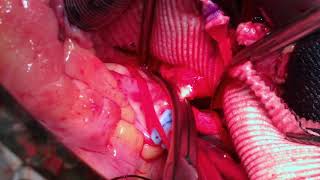
This video demonstrates a very rare case of the repair of an aortic graft aneurysm for a patient postaorto-aortic bypass for an interrupted aortic arch. The patient was a 36-year-old woman with a known case of interrupted aortic arch. She had an aorto-aortic bypass graft when she was 16 years old through a right thoracotomy.…
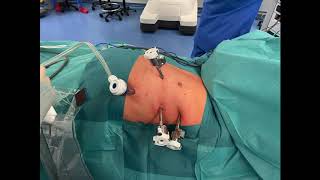
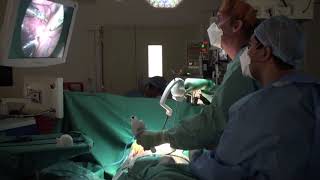
This is a video of a patient who had a large tumor which was invading the parenchyma of all three lobes and therefore clearly not suitable for a sleeve resection. The authors used the microlobectomy approach with a subxiphoid port and used that subxiphoid port to remove the lung at the end of the operation.…
Background The success of transcatheter aortic valve replacement in high-risk patient populations led to subsequent clinical trials that demonstrated noninferiority or superiority to SAVR in low and intermediate-risk populations. An uncommon but devastating complication of TAVR is acute type A aortic dissection, with a reported incidence of approximately 1.9% (1). Open repair remains the gold…
Dr. Isabelle Opitz is the director of the department of thoracic surgery at University Hospital Zurich, Switzerland, and an associate professor for thoracic surgery at the University of Zurich, as well as the chair of the Lung Cancer Center in Zurich. Dr Opitz earned her MD from the Medical School University of Cologne, Germany, after…
Welcome to the fifth of twelve videos that compose the series “Thoracic Surgical Oncology – Technical Approaches,” by Professor Tristan D. Yan. To learn more about the series and see the complete list of videos, click here. This series of video tutorials demonstrate how to perform a VATS lobectomy in a safe and simple way, using…
The authors describe the Moffitt technique of robotic lobectomy, which includes an aggressive mediastinal lymph node dissection and the ability to handle any hostile fissure using the technique described. The video demonstrates a huge calcified lymph node at station 11R, which for the inexperienced robotic surgeon, can be a challenge to create a fissure. The…
In this Giants of Cardiothoracic Surgery interview, Jessica Luc of the University of British Columbia in Canada speaks with Lars G. Svensson of the Cleveland Clinic about his career in cardiac surgery. They discuss the elephant trunk procedure, the modified David reimplantation procedure, and the “J” incision, as well as Dr Svensson’s tips for mentorship…
The authors present a case of near–total anomalous pulmonary venous connection repair using left atrial appendage to vertical vein anastomosis. This was a 27-year-old woman who presented with exertional intolerance, mild cyanosis, and no comorbidities. Her transthoracic echocardiography revealed enlarged cardiac chambers on her right side, diminution of the left atrium, and a single pulmonary…
The authors present a case of uniportal VATS for repair of an iatrogenic tracheal injury. The patient was a 90-year-old woman who developed progressive subcutaneous emphysema after laparoscopic cholecystectomy. A double-lumen tube was immediately inserted to control subcutaneous emphysema. Then she was transferred to the authors’ unit for further evaluation and treatment. A bronchoscopy was…
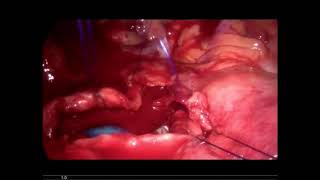
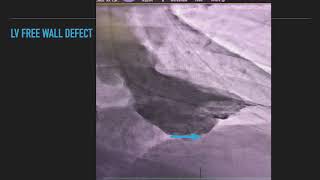
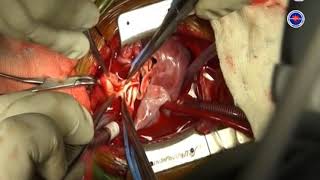
This video demonstrates a case of subacute left and right ventricular free wall rupture. A 69-year-old man with delayed presentation of inferior ST-elevation myocardial infarction presented to a regional hospital 50 km away with recurrent persistent chest pain. His troponin-T was 1051 ng/L, NT-proBNP was 6230 ng/L, lactate was 6.4 mmol/L, ALT was 314 U/L,…
Transposition of the great arteries with aortopulmonary window is a rare congenital cardiac anomaly. An arterial switch operation with repair of the aortopulmonary window is the preferred operation in this subset. As the tissue between the great arteries is missing, it is considered a complex operation. The purpose of this video is to present the…