Content from the Journal of the American Neurological Surgeons.
Introduction Necrotizing esophagitis is a rare, potentially lethal clinical entity with an unclear etiology. We present a case of necrotizing esophagitis with a right-sided perforation of the distal esophagus in a 79 year-old female without significant precipitating events. The patient underwent resection of the distal two-thirds of the esophagus, followed by creation of a cervical…
Aortic translocation for the treatment of patients with transposition of the great arteries, ventricular septal defect and pulmonary stenosis appears to be an operation whose time has come. This operation was first reported by Hisashi Nikaidoh nearly 20 years ago, in 1984 [1]. At that time Dr. Nikaidoh published a single-author paper in the Journal…
I stood about six feet from the radiant warming bed, behind the nurses and residents who were crowded around, each playing a role in the drama reenacted from time to time in this intensive care unit. They were resuscitating a neonate in cardiopulmonary arrest. An anesthesiology resident was at the head of the bed, manually…
Live telecasts of surgery are on a dramatic rise. We are spammed daily with invitations to peer over the shoulders of master technicians, to learn nuances of operative technique and, in some, to even ask questions during the procedure. Empowered by the prowess of the internet and the falling cost of transmitting video images around…
As a young kid, my grandfather took me to see a wonderful respected golf pro in Austin with the purpose of teaching me to be a better golfer. His name was Harvey Penick, he was famous then and only became more so with time. For those of you deprived of knowledge of this great game,…
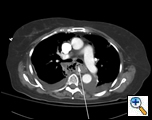
A 72 year old white male presented with a complaint of recent onset of upper mid-back pain. He states that the pain starts in his chest and radiates to his upper back, and that the symptoms have been relatively constant for the last several weeks. Patient Presentation A 72 year old white male presented with…
I rarely sit down and reflect on the joys and value that a career in cardiothoracic surgery brings to my life. I seem instead to be thinking about what I’m doing. Namely, that I love going to work; that I enjoy working with my colleagues; that I still like to write first authored scientific papers;…
A 52-year-old man presented to the emergency department with complaints of hemoptysis for two days (1/2 to 1 cup of bright blood). At the time of admission, the patient reported a two-day history of fever (102o F) and chills, but denied weight loss or night sweats. Patient Presentation A 52-year-old man presented to the emergency…
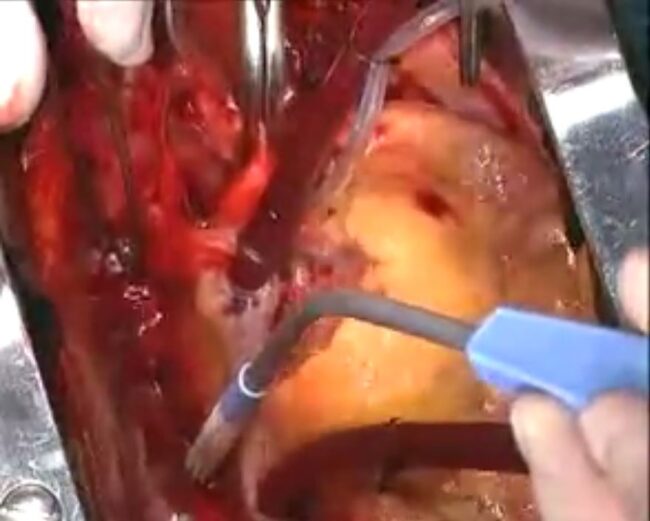
This video demonstrates an orthotopic heart transplantation.
By Sorin V. Pusca, MD, Barry C. Esrig, MD, Preet M.S. Randhawa, MD, Dusan Knezevic, MD , and Muhamed Saric, MD Patient Presentation A 65-year-old female presented to the emergency department with acute respiratory failure due to pulmonary edema. She had a history of several months of worsening dyspnea on exertion. She was admitted to the intensive…
The vast majority of medical students love their surgical rotation because they get to see inside the magical world of a living body. They finally get to walk through forbidding doors that are labelled with signs that read “Surgical Personnel Only” or “Do Not Enter – Restricted Area.” They see what lies behind this previously…
I have been asked to write an “Opinion Piece” for this section of CTSNet especially addressing my thoughts and philosophy regarding a career in cardiothoracic surgery. After cogitating over this assignment for some time, I felt that I could not improve over the thoughts that I put forth in a letter to my son as…
After Sept 11, 2001, the world rallied around the USA. A common opinion was that the act of terrorism had been defeated by giving the world a cause around which to unite. In spite of the devastation in New York, the situation worldwide looked hopeful in many respects. Today, circumstances are quite different. In only…
Introduction Many successful businesses worry about the quality of the goods and services they produce for a variety of practical and ethical reasons including competition, increased consumer awareness, and fear of government regulation or liability litigation. Industries sensitive to these issues not only expend resources to improve the quality of their output, but they also…
When a student completes medical school and reflects on his or her future, that student must make a critical decision about whether to pursue a career as a primary care physician or a specialist. This decision may not necessarily be permanent, for career changes are often made later. But an early decision may be preferable…
The medical community should be profoundly disappointed, but not surprised, that the recent cloning of a human cell for stem cell research was accomplished in South Korea. Disappointed, because the U.S. is intentionally taking a back seat in a therapeutically vital field of research. Not surprised, because that is the inevitable result of the lack…