Content from the Journal of the American Neurological Surgeons.
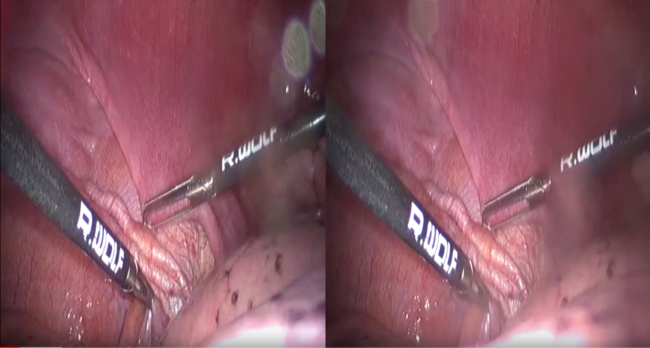
This video demonstrates a VATS diaphragm plication in the full 3D in which it was performed. To appreciate the 3-dimensional quality of the video, you will need a 3D screen. The patient had significant shortness of breath and a high and paralyzed left hemidiaphragm. The authors repaired it using one 10 mm port and a…
This video demonstrates a midline sternotomy. The authors detail the procedure in a step-by-step fashion, using diagrams and surgical video to illustrate key technical elements.
Rene Petersen of Copenhagen University Hospital in Denmark describes his approach to difficult resections using a VATS approach. He uses several video clips to demonstrate his techniques. This presentation was originally given during the SCTS Ionescu University program at the 2016 Annual Meeting of the Society for Cardiothoracic Surgery in Great Britain and Ireland. This…
Research recently published in The Annals of Thoracic Surgery retrospectively compares outcomes of treatments for dissection of the descending thoracic or thoracoabdominal aorta. Current standard of care for type B aortic dissection (TBAD) depends on whether or not a patient presents with complications such as malperfusion or rupture. While acute repair is indicated for individuals…
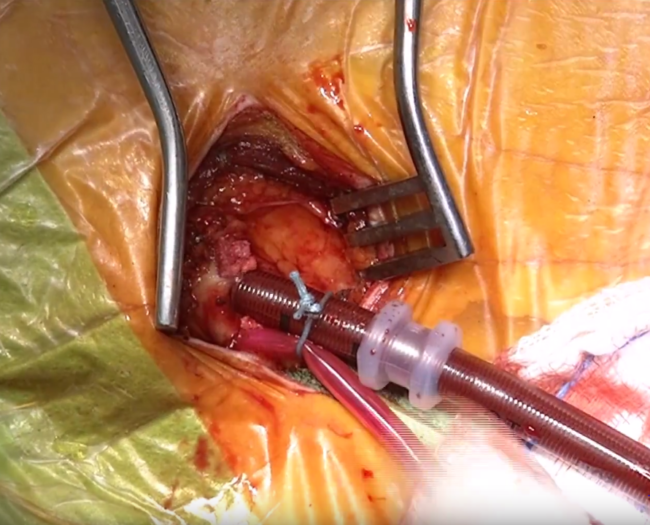
The authors present a right axillary artery cannulation in an elderly patient using the Seldinger technique. During axillary artery cannulation, the portion of the axillary artery between the first rib and the medial border of the pectoralis minor muscle is accessed. There are two ways to cannulate the axillary artery: The direct approach: the artery…
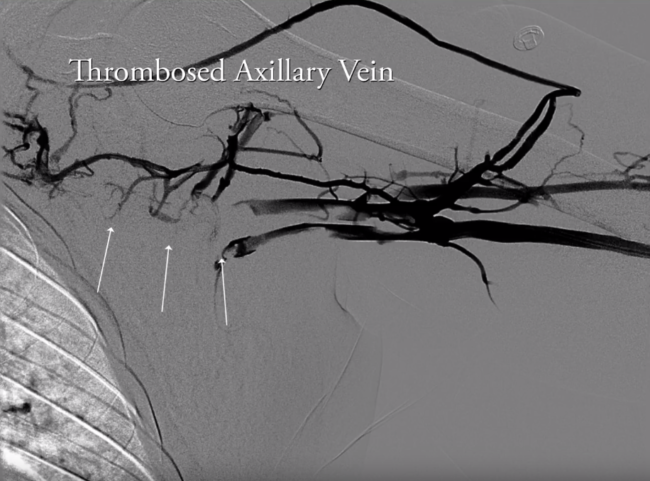
This video demonstrates an infraclavicular approach for the surgical and endovascular management of Paget-Schroetter Syndrome. Also known as effort thrombosis of the axillosubclavian vein, Paget-Schroetter Syndrome is a form of thoracic outlet obstruction that accounts for approximately 1-2% of all venous thromboses. Management includes thrombolysis and surgical decompression. Best practice results are seen with catheter-directed…
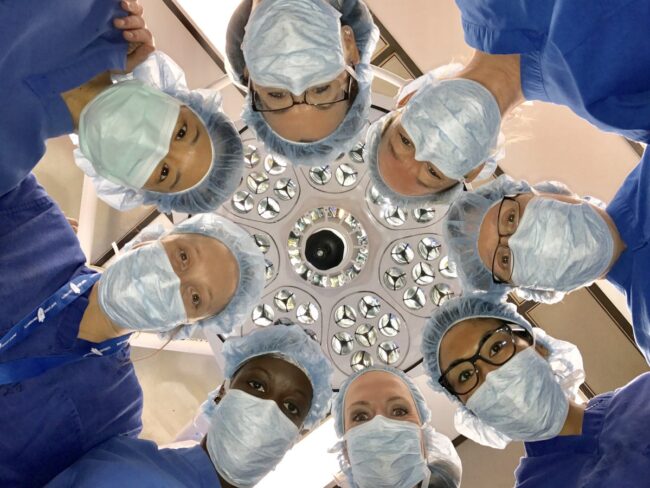
The Health, Medicine & the Body Issue of The New Yorker depicting four women surgeons at the operating table has inspired women surgeons around the world to recreate the cover and share their photos as part of the #NYerORCoverChallenge. Women cardiothoracic surgeons took on the challenge, and CTSNet is excited to share the completed photo…
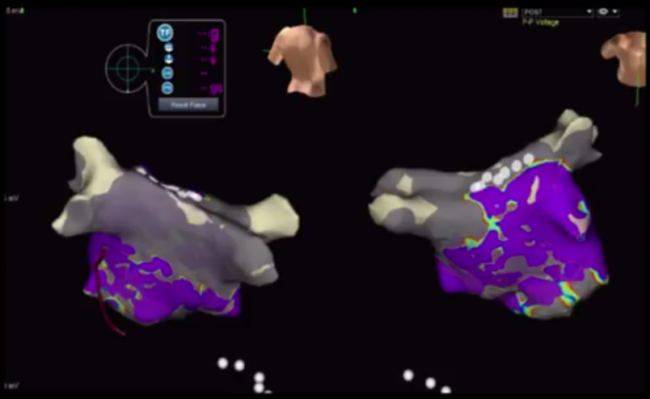
Guy Haywood of Plymouth Hospitals NHS Trust in Plymouth, UK, describes a hybrid surgical and catheter approach to the treatment of lone atrial fibrillation. Dr Haywood presents the outcomes of this approach at one year. This presentation was originally given during the SCTS Ionescu University program at the 2016 Annual Meeting of the Society for…
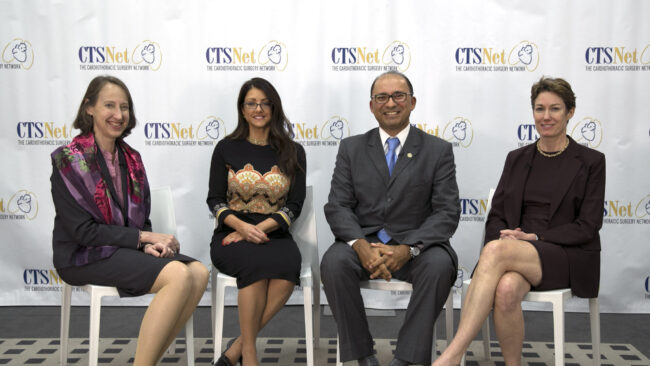
Filmed at the 2017 STS Annual Meeting in Houston, Texas, four cardiothoracic surgeons share why and how they have made humanitarian cardiothoracic surgery a part of their careers. Emily Farkas of the ThedaCare Appleton Heart Institute in Wisconsin, is joined by Kathleen Fenton of the William Novick Global Cardiac Alliance, Vinicius Nina of the Federal…
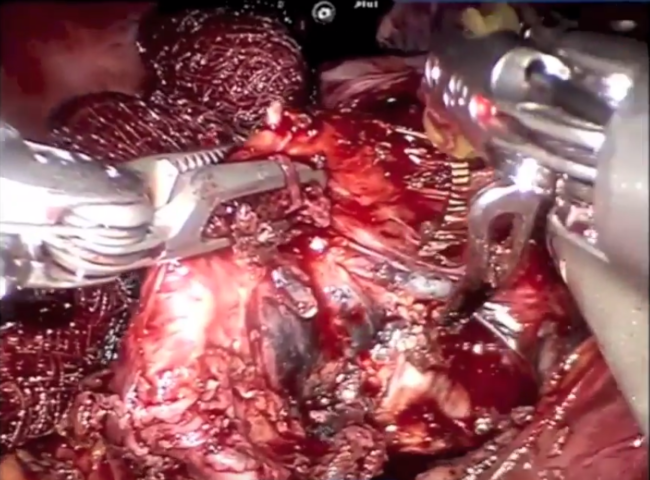
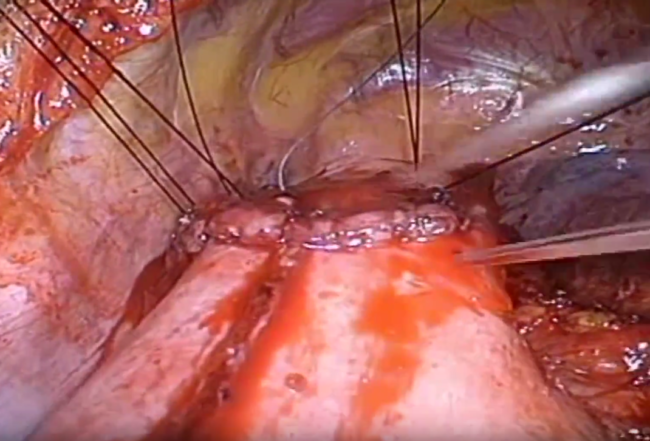
The authors present a case of a 45-year-old woman who received a pericardial patch repair of the right main bronchus intermedius following removal of a bronchogenic cyst, located in the subcarinal area of the airway. To the authors’ knowledge, the da Vinci system and robotic surgery have not previously been applied in bronchial patch repairs…
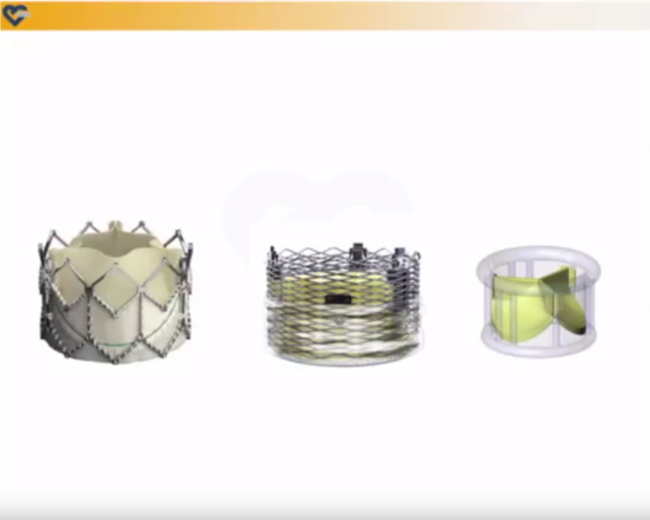
Neil Moat of The Royal Brompton Hospital in London, United Kingdom, reviews the technologies currently being developed for transcatheter mitral valve repair and replacement. This presentation was originally given during the SCTS Ionescu University program at the 2016 Annual Meeting of the Society for Cardiothoracic Surgery in Great Britain and Ireland. This content is published…
Anastomotic complications represent a significant source of morbidity after esophagectomy. In this video, the authors demonstrate a novel “side-to-side, staple line on staple line” technique for intrathoracic esophagogastric anastomoses. This technique is designed to create a wide diameter esophagogastric anastomosis, while preserving stomach conduit blood supply.
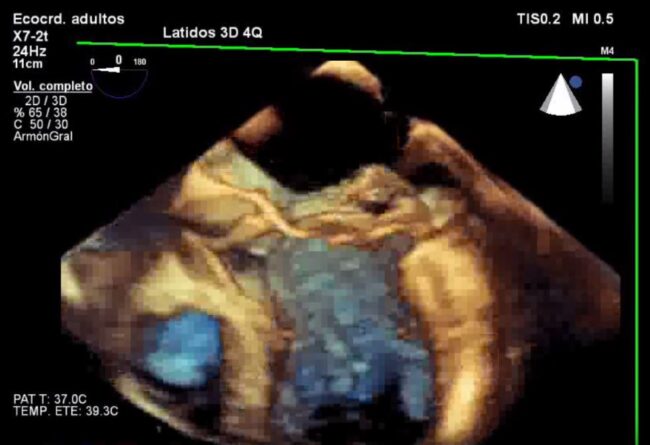
This the case of a 55-year-old male with no record of previous disease or cardiovascular risk factors. At the time of surgery the patient was asymptomatic. TEE showed severe mitral regurgitation (MR) secondary to prolapse of the posterior mitral leaflet. The prolapse of the P2 segment with broken chordae was visible without doppler. A severe…
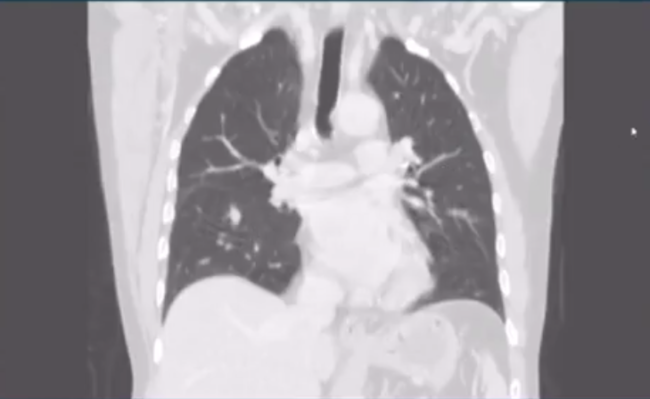
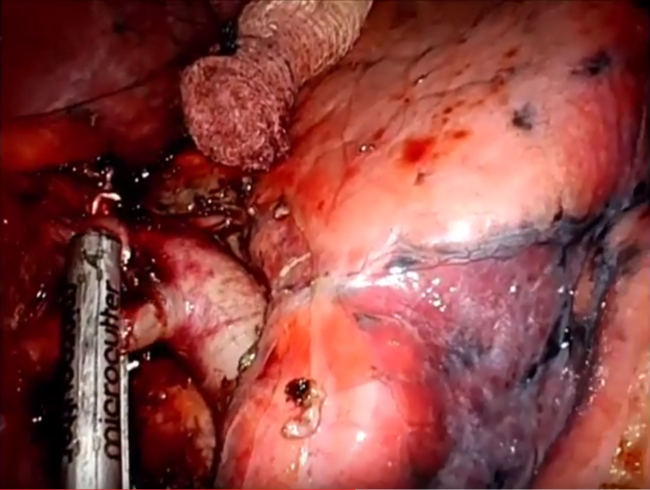
This video shows a redo left upper lobe microlobectomy performed with an additional subxiphoid port for a 9 mm nodule detected on PET-CT. One year prior, the patient had undergone a robotic left upper lobe wedge resection for a primary squamous cell carcinoma and a right lower lobectomy for colorectal metastasis. The video details the…
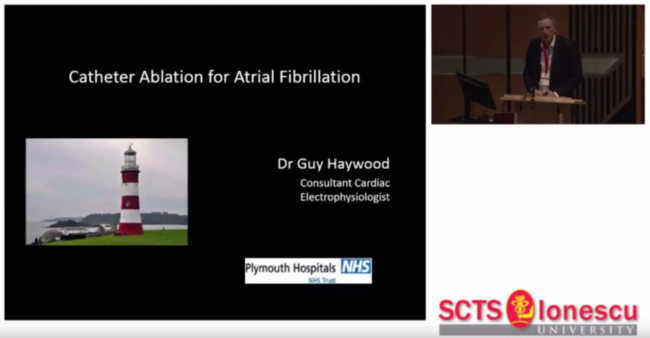
Guy Haywood of Plymouth Hospitals NHS Trust in Plymouth, United Kingdom, discusses the prevalence of atrial fibrillation and its complications. Dr Haywood also examines the outcomes of catheter-based ablation. This presentation was originally given during the SCTS Ionescu University program at the 2016 Annual Meeting of the Society for Cardiothoracic Surgery in Great Britain and…
A 61-year-old man was treated for laryngeal squamous cell cancer with radiation in 2004. He presented again in 2012, with squamous cell cancer on the floor of his mouth. He underwent a right mandibulectomy with a free forearm flap, followed by radiation. A year later, he was found to have recurrent laryngeal cancer and underwent…