Content from the Journal of the American Neurological Surgeons.
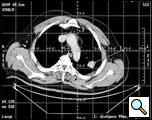
Obstruction of the central airways may develop in 30-40% of all patients with lung cancer and is being increasingly diagnosed in patients with benign disorders such as post intubation tracheal stenosis and connective tissue diseases. Introduction Obstruction of the central airways may develop in 30-40% of all patients with lung cancer and is being increasingly…
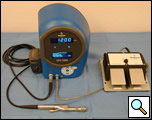
Radio frequency ablation (RFA) of lung tumors is a relatively new procedure allowing local treatment with minimal parenchymal damage. In fact, this technique is able to induce coagulative necrosis in a limited pulmonary area. Radio frequency ablation (RFA) of lung tumors is a relatively new procedure allowing local treatment with minimal parenchymal damage. In fact,…
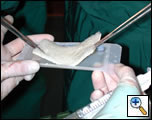
Tissue sealing remains a requirement for advanced general thoracic procedures with the aims of improving hemostasis, diminishing lymphatic fluid production, and prevention of postoperative air leaks. Different products have become available in recent years that include commercial biological glues, autologous glues made on-site, and biological fibrin-based products. Introduction Tissue sealing remains a requirement for advanced…
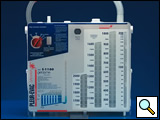
Introduction Figure 1: The Sahara S-1100 Deknatel drainage system with the 7 chamber air leak meter. Although air leaks remain the most common complication after pulmonary resection, they have received little scientific study until recently. Despite the development and adoption of a classification system for air leaks [1, 2] and several recent prospective randomized studies…
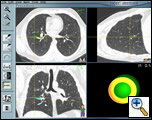
The impetus for intrabronchial treatment of emphysema came from the experiences with lung volume reduction surgery (LVRS). Introduction The impetus for intrabronchial treatment of emphysema came from the experiences with lung volume reduction surgery (LVRS). LVRS improves survival, function, exercise capacity, and quality of life in selected patients with severe chronic obstructive pulmonary disease (COPD)…
The desire for an objective method to record, quantify, and store lung sound information was the impetus for development of the field of computer-assisted mapping of lung sounds. Techniques are constantly evolving, with many different types of sensors, sensor coupling methods, and digital signal processing techniques in existence. Introduction The desire for an objective method…
IntroductionAir leaks continue to be the most common complication after lung surgery, as well as an accepted morbidity. Minor leaks are generally innocuous and can be managed conservatively by chest tube drainage; but prolonged leaks, defined as those lasting more than 7 days, may require further interventions resulting in a delay of discharge and thus…
Introduction Figure 1: The Sahara S-1100 Deknatel drainage system with the 7 chamber air leak meter. Although air leaks remain the most common complication after pulmonary resection, they have received little scientific study until recently. Despite the development and adoption of a classification system for air leaks [1, 2] and several recent prospective randomized studies…
Approaches to lung resection for early stage cancer. This survey was posted during November 2006. A total of 41 responses were received; most were from North American surgeons. Most surgeons preferred a VATS wedge resection for diagnosis. There was a considerable range of approaches for resection, including muscle sparing thoracotomy, muscle dividing thoracotomy, and VATS…
Practice patterns of surgical therapy for esophageal cancer This esophageal cancer management survey was posted during the months of August and September 2006. A total of 145 responses were received, the majority of which were from North American participants. Most surgeons recommend induction therapy prior to resection for regionally advanced esophageal cancer. It is interesting…
It was now 4 AM, the bronchial and pulmonary artery anastomoses were complete and the last stitch in the atrial cuff was just being finished. “Inflate the lung,” and the lifeless pale lung slowly began to move and grow ever so slightly with each new breath. After a while the vascular clamps were released and…
STSA 2006 Editor’s Note Dr. Gilbert has presented a spectacular case of ascending and transverse aortic arch replacement in a patient with a recurrent mycotic aneurysm. The approach with percutaneous venous cannulation and axillary artery cannulation with initiation of cardiopulmonary bypass prior to sternotomy is a very innovative technique that was obviously quite successful in…
By Daniel J. Beckman, MD Editor’s Note This is an elegant video clearly portraying the feasibility of pulmonary vein isolation through a thoracoscopic approach. Given the ease with which the authors have performed this procedure – obviously assuming that they went through a learning curve prior to mastering the technique – the first question that…
Gloom pervades about medicine as a profession and about cardiothoracic surgery. Trainees and young surgeons are often tainted for not having the same work ethic as older folks. There is concern that we are neither attracting “the best and the brightest,” nor is cardiothoracic surgery an attractive career. The evidence includes the fact that the…
At the spring 2006 AATS meeting in Philadelphia I had a chance to catch up with my former colleague, Dr. Leslie Kohman. We spoke for an hour, mostly catching up on mutual friends, until our conversation drifted to the future. Leslie had just made the decision to close the thoracic residency at Syracuse due to…