Content from the Journal of the American Neurological Surgeons.
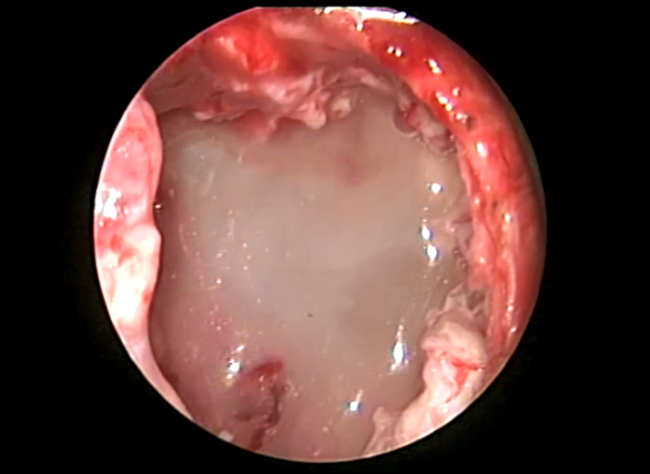
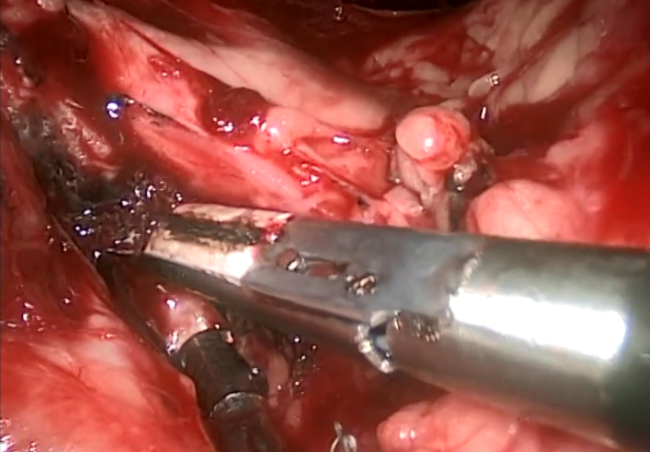
This video demonstrates the drainage of a subcarinal collection via mediastinoscopy in a patient who had recently undergone esophagectomy. The chyle leak was localized over the gastric conduit and unsuccessfully drained percutaneously. However, computed tomography imaging showed a 4.9 mm margin inferior to the carina whereby drainage could be accomplished via mediastinoscopy. Postoperative chylous leakage…
Filmed at the 2019 STS Annual Meeting in San Diego, California, Mara Antonoff of the University of Texas MD Anderson Cancer Center in Houston, USA, moderates a discussion on how immunotherapy is changing the landscape of surgical lung cancer care. Dr Antonoff is joined by Boris Sepesi of the University of Texas MD Anderson Cancer…
In times of expanding indications for transcatheter aortic valve replacement—justified or not—consistent implementation of minimally invasive strategies is needed to meet patients’ growing demands for improved quality of life and quicker postprocedural recovery. The main access routes for minimally invasive aortic valve surgeries do have their particular limitations, eg, sternal instability, lung herniation, rib luxation,…
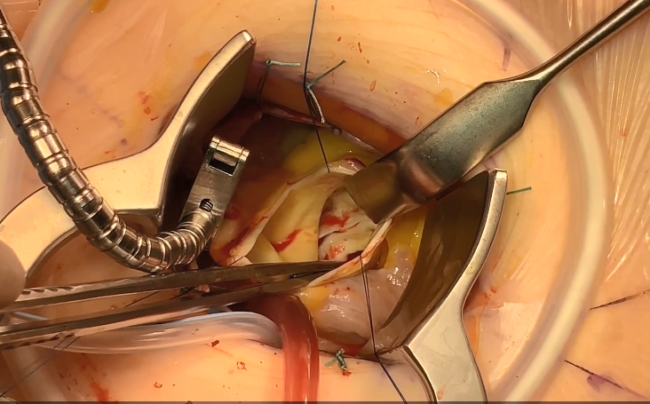
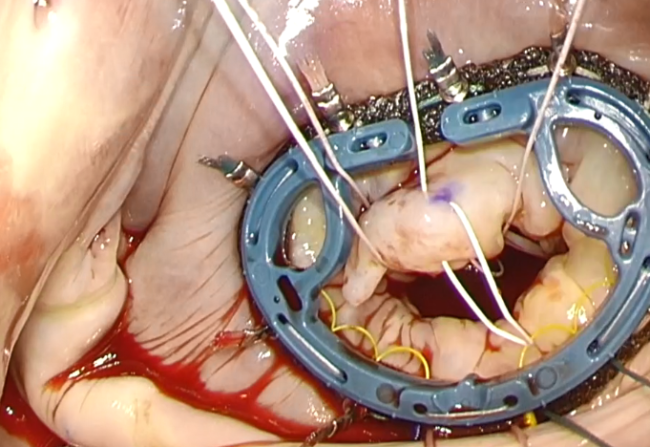
This video provides a step-by-step guide for performing a minimally invasive mitral valve repair using adjustable Gore-tex neochords via a right minithoracotomy, with emphasis on technical pearls and pitfalls. The authors address critical steps during patient positioning, cannulation, valve exposure, neochord height determination, and testing the repair.
The authors present the care provided to a 40-year-old man, a smoker, with a nonrelevant past history, experiencing chronic irritative cough and bloody sputum since one month before consultation. During the medical examination, stridor was noticed. Flexible bronchoscopy was performed and found an exophytic lesion in the upper trachea. Biopsy demonstrated an adenoid cystic carcinoma.…
In this Giants of Cardiothoracic Surgery interview, Vaibhav Gupta of the University of Toronto in Ontario, Canada, speaks with Gail Darling, Professor of Surgery and the Crest Family Chair in Esophageal Cancer Research at the University of Toronto. Dr Darling shares her path to thoracic surgery, and to esophageal surgery in particular. They discuss her…
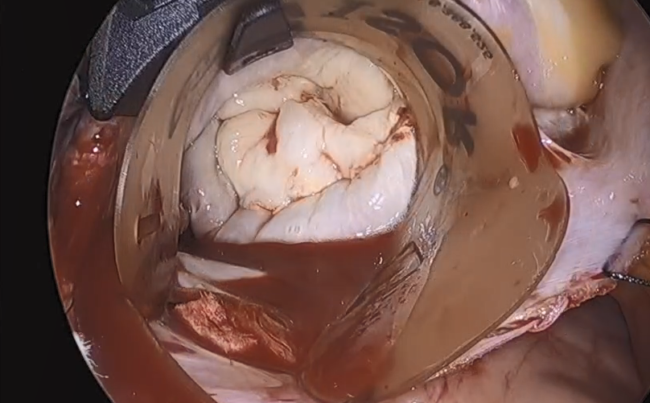
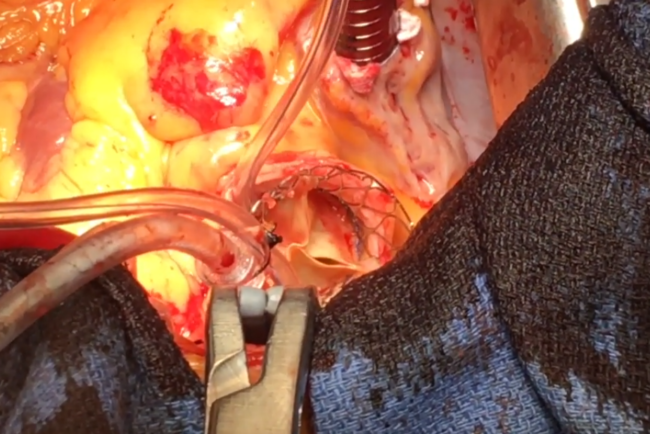
Objectives Transcatheter aortic valve replacement (TAVR) has become the standard of care for high-risk patients and is growing in popularity for lower risk patients. The authors report a case of early migration of a self-expanding transcatheter aortic valve prosthesis causing coronary obstruction and myocardial infarction. Methods A 76-year-old woman with renal failure underwent an uncomplicated…
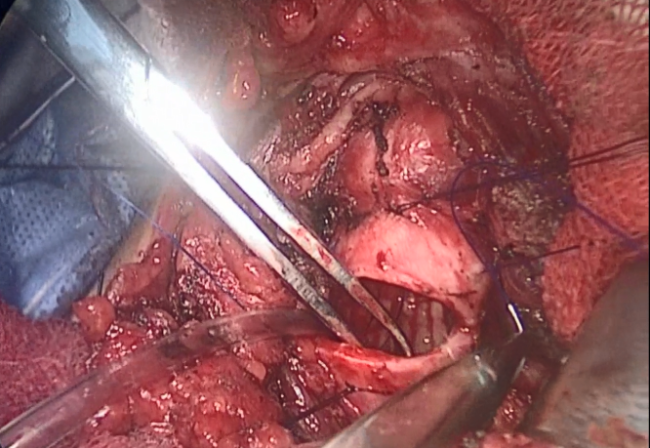
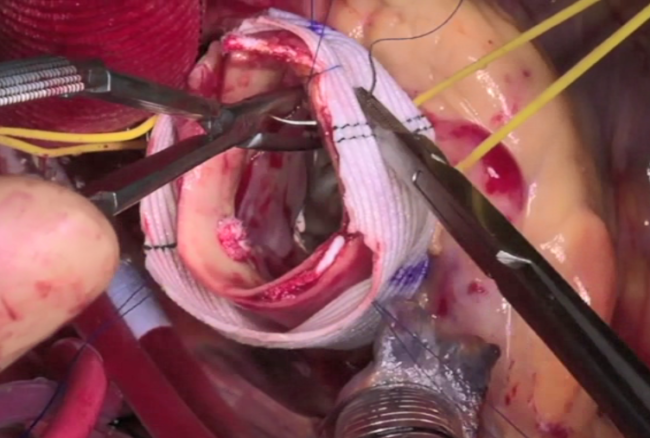
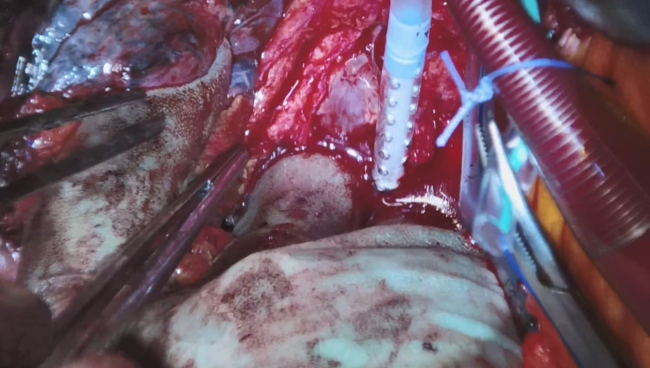
IntroductionA 56-year-old man status post repair of a descending thoracic aortic aneurysm after type B aortic dissection presented with acute type A dissection. The patient had a long history of drug abuse and disclosed using cocaine two days prior to presentation. MethodsA median sternotomy was performed. The right subclavian artery was cannulated using the graft…
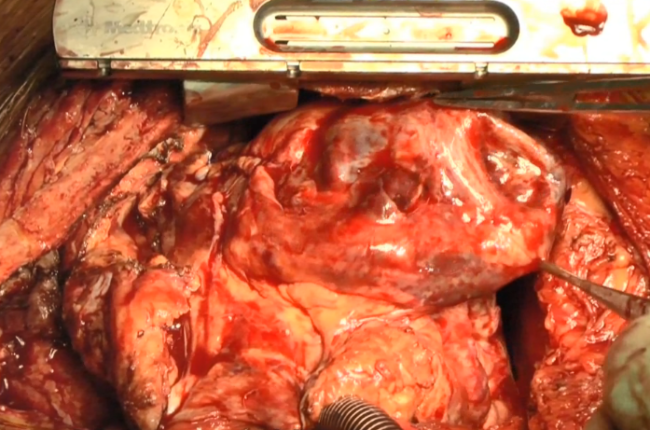
Objectives Left ventricular aneurysm repair has been performed for nearly four decades, yet no surgical approach has been identified as the most effective. The authors describe their approach to repairing anterior and inferior aneurysms. Methods Figure 1A. The surgical repair is illustrated in two patients, a 67-year-old woman and a 51-year-old man, with a beating…
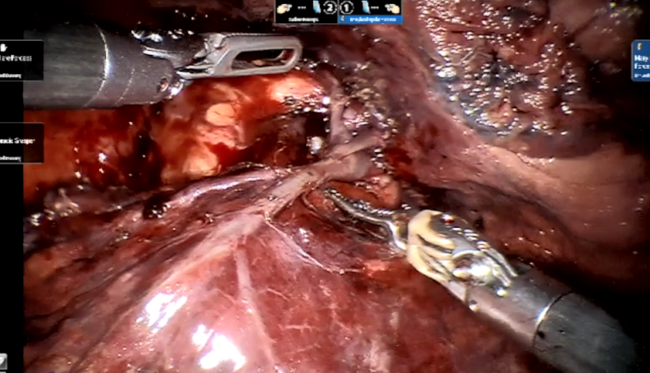
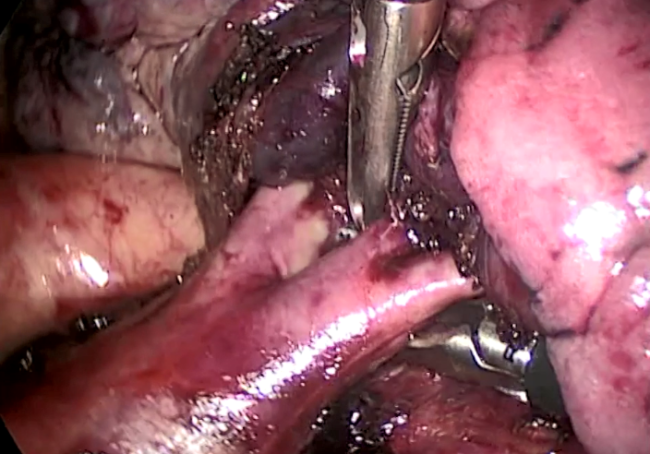
The authors present a procedure performed for a woman who had a peripheral nodule in the lower lobe of her right lung, together with a significant hilar lymphadenopathy, PET-positive, which encased the bronchus intermedius, thus requiring a lower and middle bilobectomy. The operation was performed with the Intuitive da Vinci Si robotic system. Interestingly, during…
Norman Briffa of the Sheffield Teaching Hospitals NHS Trust in the UK discusses the decision between mechanical and biological aortic valves, focusing on patients between the ages of 50 and 70 years old. He begins by reviewing the guidelines and evidence related to valve durability and bleeding risk. Concluding that the decision should be patient-specific,…
This is a video showing a procedure performed by open thoracotomy with a head camera that records audio. The patient had a large middle lobe tumor and had an ICD, an impaired left ventricular function, and previous coronary artery bypass grafting. Unfortunately, the operating surgeon got into a bleeding scenario that required the whole team…
The Memo 4D System by LivaNova is a novel semi-rigid annuloplasty ring. Ideal for the minimally invasive approach, this ring allows neochord implantation without physical measurement or further adjustments in chordal heights, simplifying the decision process of the neochords’ length. In this video, the authors present their experience using the Memo 4D ring to repair…
This video demonstrates a three-port anterior video-assisted thoracoscopic right upper lobectomy, for early stage lung cancer, performed with the aid of novel sealing and stapling devices. The LigaSure™ is used as the only dissecting instrument, for the sealing of small vessels (less than 7 mm in diameter) and for the lymphadenectomy. This can save cost…
Filmed at the 2019 STS Annual Meeting in San Diego, California, Mara Antonoff of the University of Texas MD Anderson Cancer Center in Houston, USA, moderates a discussion on the tips for building a practice in early career. Dr Antonoff is joined by Damien LaPar of Columbia University in New York, USA, and David Odell…
Microlobectomy is a surgical technique conceived by Mr Joel Dunning, in Middlesbrough, UK, in 2014 and previously described in the literature. In this video, the authors demonstrate the adoption of this technique for a sublobar resection, namely a left upper division segmentectomy. The aim is to reduce the postoperative pain and use of opioids, and…