Content from the Journal of the American Neurological Surgeons.
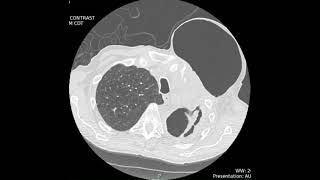
A sixty-three-year-old male patient was newly diagnosed with intralobar bronchopulmonary sequestration. It was found in the right lower lobe after a diagnosis of COVID-19 prompted a CT scan of the chest. He had reported recurrent pneumonia since he was a child growing up in eastern Europe. He had a seven-pack-a-year smoking history and last smoked…
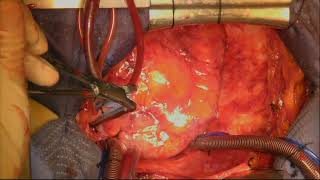
Left ventricular assist device (LVAD) implantation has two approaches. Of the two, the right mini thoracotomy is the less invasive, as it is sternal sparing. This approach assists with chest stabilization, mobility, virgin tissues for bridge to transplant, and retained pericardium for the right heart support. The preferred lie of the outflow graft is also…
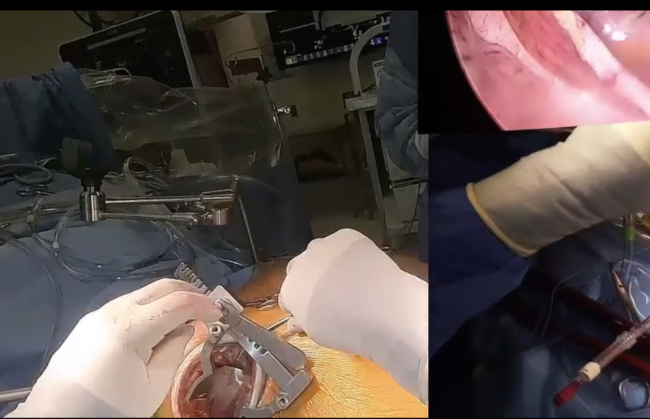
This novel 360-degree video tutorial demonstrates mitral valve repair through a right antero-lateral minithoracotomy approach. Using integrative technology, the viewer can immerse themselves into the procedure by manipulating the directional viewpoint and magnification online via their computer’s mouse or finger scrolling on a tablet or smartphone device. The Procedure To start the procedure, anesthesia is…
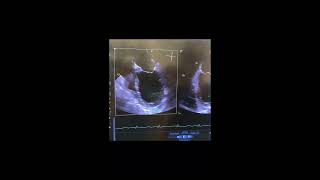
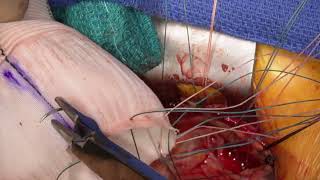
The David procedure with an upper hemisternotomy approach is feasible and provides an excellent outcome, particularly in young patients. In this case, a preoperative chest CT showed aortic root dilatation measuring 5.8cm. An echocardiogram demonstrated a bicuspid aortic valve (BAV) without significant aortic valve insufficiency (AI). A 6cm upper hemisternotomy incision extending to the right…
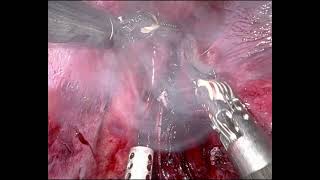
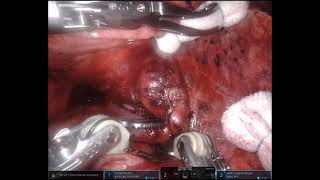
Previous reports have demonstrated the safety and efficacy of the robotic platform in minimally invasive atrial myxoma resection (1,4). This video presents possibly the least invasive reported atrial myxoma resection and the first to utilize an endoscopic robotic approach with an 8mm working port. There are various technical aspects of the procedure, including the use…
This video shows a right S3 segmentectomy completely planned and preoperatively assisted by 3D reconstruction imaging. This model can also be used intraoperatively to assist the surgery and dissection planes in order to increase patient safety and adequate resection margins. References Chaari Z, Baste J-M, Peillon C. Robotic S9-S10 Segmentectomy Assisted by Multimodal Reconstruction Imaging…
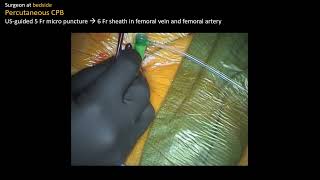
Surgical Technique Identical to the authors’ approach to robotic mitral valve surgery, robotic AVR—or RAVR—was developed utilizing a three robotic port technique accompanied by a fourth intercostal space 3 to 4cm mini lateral thoracotomy primary working incision at the level of the anterior axillary line (1,2). Peripheral cardiopulmonary bypass (CPB) with bicaval drainage is utilized…
Esophageal stents are useful for palliation of dysphagia in patients who are not candidates for other therapy modalities either because of their comorbidities or because of tumor characteristics that classify the lesion as unresectable. Stenting is also indicated in patients with recurrent disease after completion of primary treatment. Stents are also used in the treatment…
A sixty-six-year-old man underwent investigation for a recent onset of shortness of breath and was found to have a chronically occluded LAD, a severely dilated left ventricle, reduced ejection fraction, and a large anterior aneurysm. There had been a contained rupture at some stage, and a large false aneurysm had developed. Dor repair (endoventricular circular…
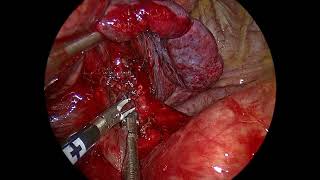
The patient is a sixty-seven-year-old man diagnosed with stage IIIA moderately differentiated squamous cell carcinoma of the left upper lobe. He completed neoadjuvant chemoradiation and underwent a left thoracotomy, left upper lobectomy, and mediastinal lymph node dissection. His course was complicated by necrotizing pneumonia and chronic empyema. He required prolonged drainage with an indwelling chest…
On February 17, 2022, CTSNet and ASAIO Journal hosted a live event on the future of durable implantable left ventricular assist devices (LVADs), featuring notable surgeons in the industry. This webinar was hosted by Mark S. Slaughter, MD, editor-in-chief for the ASAIO Journal and professor and chair of cardiovascular and thoracic surgery at the University of Louisville. We…
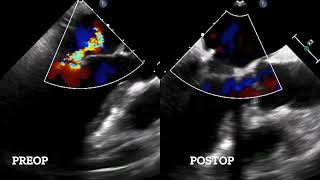
Mitral valve repair after failed percutaneous edge-to-edge repair (Mitraclip® device) can be complex and technically challenging. In this video, we show that it may be safely performed using a totally endoscopic robotically assisted approach (1, 2). Patient Details The patient was a fifty-two-year-old male with a medical history of active smoking, alcoholism, hypertension, dyslipidaemia, COPD,…
This video demonstrates a case of uniportal VATS segmentectomy with indocyanine green imaging. The patient was a sixty-five-year-old woman, nonsmoker, with a 12mm ground glass opacity in the apical segment of the right upper lobe. A lepidic adenocarcinoma of the lung was diagnosed by transbronchial biopsy. She had a patient performance status of 1, but…
The patient featured in this video is a fifty-two-year-old woman with a previous history of liposarcoma of the thigh. She underwent surgery in 2003 and was on follow-up until 2013 with no evidence of disease recurrence. In January 2021, she was admitted to the hospital for increasing dyspnea and asthenia. A transthoracic echocardiography showed pericardial…
Internal mammary artery harvesting is a skill all cardiothoracic surgery residents must perfect early in their careers. Improper technique can lead to inferior short- and long-term outcomes. Not only are the number of available resources to learn proper technique limited, but intraoperative visualization is quite difficult from an assistant’s point of view. A well-produced video…
The penetration of uniportal VATS for lung cancer surgery has pushed surgeons to perform complex sleeve resections through the same approach. This video features a fifty-two-year-old male patient in good health who was diagnosed with mucoepidermoid carcinoma of the right lower lobe with endobronchial extension with the tertiary carina free of tumor. A uniportal VATS…