Content from the Journal of the American Neurological Surgeons.
Health care disparities affect cancer screening (1). While lung cancer screening improves rates of cancer-specific mortality and is recommended for high-risk patients (2), barriers to screening still exist. First, the safety net patients may be at higher risk of harboring lung cancer. Some of the known risk factors of lung cancer such as ethnic background,…
For the CTSNet Guest Editor Series, Lung Cancer Screening – Health Care Disparities, Virginia Litle, MD, brought together video presentations and discussions to broaden our perspectives on disparities regarding the detection and treatment of lung cancer in the United States. Learn more about Dr. Litle by viewing her Featured Profile interview. There are six contributed videos…
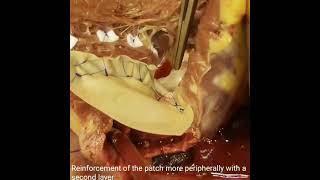
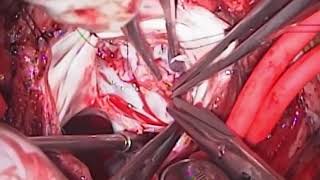
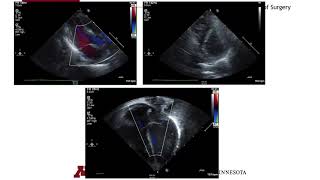
The development of ischemic ventricular septal rupture is an uncommon but frequently fatal complication. Mortality with medical treatment only is extremely high. Septal rupture results in a left-to-right shunt, with right ventricular volume overload, increased pulmonary blood flow, and secondary volume overload of the left atrium and ventricle. In some cases, this condition is accompanied…
Severe neonatal Ebstein’s Anomaly can present a surgical challenge, and the advent of the Starnes procedure has improved survival in these critically ill neonates. Importantly, however; this does not commit them to a single ventricle physiology for their entire lives, and they can be successfully converted to 1.5 or 2 ventricle physiology later in life.…
This is the case of a 3. 3 kg, male neonate who was born with a prenatal diagnosis of dextro-transposition of the great arteries (d-TGA) and an intact ventricular septum. At birth, he was deeply cyanotic and was intubated and prostaglandin infusion was initiated to maintain ductal patency. Transthoracic echocardiogram confirmed the prenatal diagnosis and…
This is a case involving a 28-year-old male patient with a history of bicuspid aortic valve and previous repair of aortic coarctation via left thoracotomy as a child, which involved the use of a left subclavian flap technique. The patient presented with moderate aortic valve stenosis and dilated ascending aorta. Follow-up cardiac MRI showed continued…
Dr. Virginia Litle is currently Chief of Thoracic Surgery and System Medical Director of Thoracic Surgery at Intermountain Healthcare. She is a member of the American Association for Thoracic Surgery, the American Foregut Society, the European Society of Thoracic Surgeons, the International Society for Minimally Invasive Cardiothoracic Surgery, the International Society for Diseases of the…
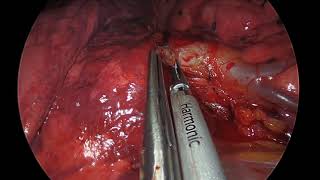
Since the late 1990s video-assisted thoracic surgery (VATS) lobectomy has been demonstrated to be safe and to provide similar oncologic results as those achieved via open lobectomy . The approach has provided advantages for patients, including shorter recovery times and less pain. In early 2011 a new form of VATS lobectomy was reported. The uniportal…
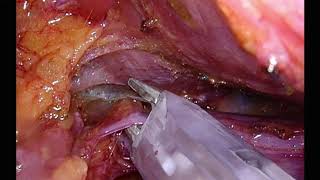
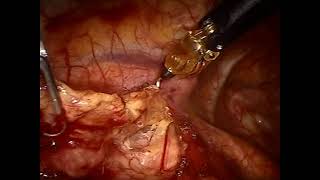
In this video, we demonstrate a left VATS thymectomy with complete dissection of the superior horns using the new wristed ArtiSential instruments by LivsMed. The patient was a 62-year-old woman. The approach was semi-supine with left arm attached; we used three ports and a 30° camera and CO2 insufflation. We used three ArtiSential instruments: the…
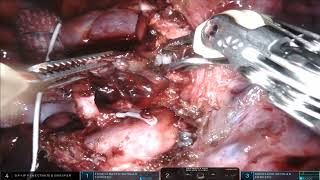
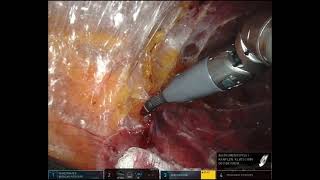
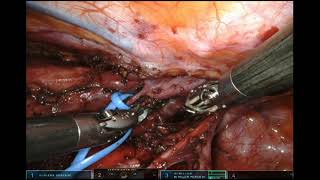
This video demonstrates the use of the robotic tool for a right upper lobectomy involving the dissection of a big lymph node. References Li C, Hu Y, Huang J, Li J, Jiang L, Lin H, Lu P, Luo Q. Comparison of robotic-assisted lobectomy with video-assisted thoracic surgery for stage IIB-IIIA non-small cell lung cancer. Transl Lung…
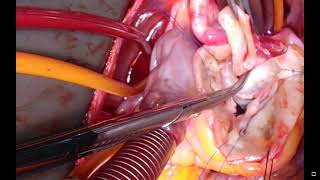
Fenestrations of the aortic valve have been described in patients with down syndrome, Marfan syndrome, in those with bicuspid or quadricuspid valves, and in patients with myxomatous valvular degeneration. While rare and an infrequent cause of valve disease, congenital fenestrations can also occur (1). When indicated, such fenestrations can be repaired using a variety of…
The 3D custom-made implant technique fills the chest hole but does not touch the ribs in the way that orthopedic techniques such as the Nuss technique or Ravitch technique do. The design of each implant is adapted to each patient’s anatomy. The intervention is simple, painless, with a rapid recovery and the results are immediate.…
Thymic carcinoma is a very rare disease in which cancer cells form on the thymus gland. Once the diagnosis is established, the surgical removal of the thymus (thymectomy), along with the excision of the mass, is the gold standard for treatment. Until recently, median sternotomy was the only approach. A few centers then introduced thoracoscopic…
The totally adherent pleura poses a challenge in mini-invasive procedures such as the RATS lobectomy. We were introduced to the SyncroSeal energy device for the DaVinci robot six months ago, and we have since performed lobectomies in three such patients. In this video we present our surgical strategy when faced with the totally adherent pleura.…
Dextrocardia is a rare congenital cardiac anomaly with the heart in the right side of the chest, which can often be associated with other complex congenital heart diseases. A 30-year-old male presented to our department with dyspnea on exertion NYHA grade IV. The 2D-ECHO showed dextrocardia, rheumatic heart disease with severe mitral stenosis, severe aortic…
There is close to a consenus regarding the surgical management of anterior mediastinal masses for the great majority of cases. However, there is continuous debate regarding the surgical approach to achieve optimal results. Therefore, we present a robotic strategy to achieve complete resection of a huge anterior mediastinal mass in a rare presentation of ectopic…