Content from the Journal of the American Neurological Surgeons.
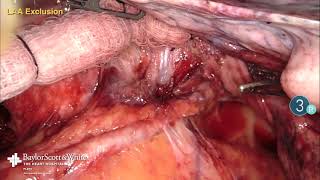
Atrial fibrillation is the most common cardiac arrhythmia, affecting more than 33 million individuals worldwide (1). Anticoagulation is frequently needed to decrease the risk of stroke, but nearly 20-40% of patients at risk of stroke do not receive anticoagulation due to contraindication, bleeding, or patient/physician preferences (2, 3). Greater than 90% of cardiac emboli in…
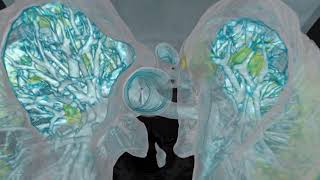
A 59-year-old man presented to a local hospital with fever, a nonproductive cough, and dyspnea. He tested positive for COVID-19. Prior to his progressive respiratory failure, computed tomography of the chest was performed. After reaching maximum ventilator support, he was transferred to the authors’ institution for ECMO. Using software from Surgical Theater, a 360-degree virtual…
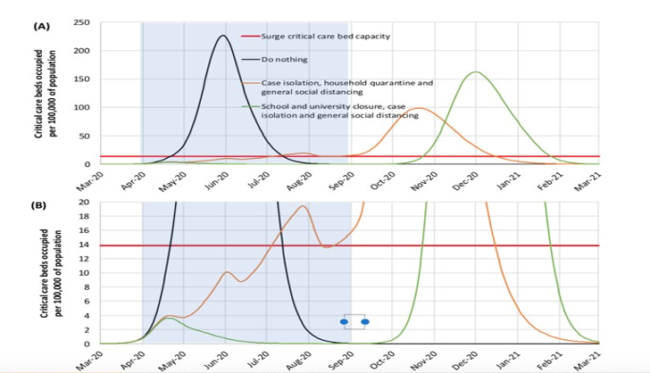
Introduction The coronavirus disease 2019 (COVID-19) pandemic has not left anyone untouched. By the end of June 2020, over 10 million people were confirmed to have been infected with COVID-19, resulting in national and regional lockdowns and other contingency measures across the globe. Since March 2020, elective surgical procedures have been postponed or cancelled in…
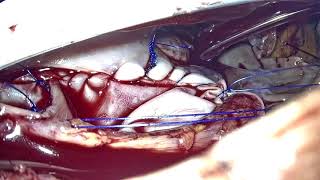
The authors show the case video of homograft aortic root replacement for prosthetic valve endocarditis. The case is a 59-year-old man on chronic oral steroid who underwent biological aortic valve replacement six months ago. He came back with heart failure symptoms and an echocardiogram showed severe aortic regurgitation with root abscess. With this finding, he…
A 34-year-old woman with type II dyspnea was diagnosed by echocardiography for partial anomalous vein connection with sinus venosus atrial septal defect, confirmed by an MRI. A two-patch repair technique through a video-assisted minimally invasive approach (MICS) was performed with excellent results. This video tutorial shows how the authors were able to repair this pathology…
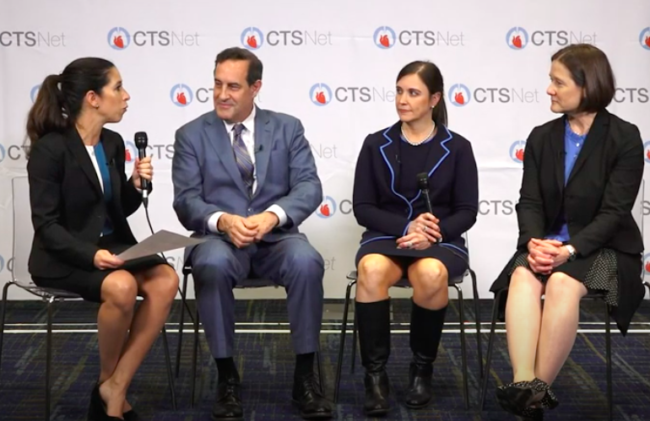
Filmed at the 2020 STS Annual Meeting in New Orleans, Louisiana, Mara Antonoff of the University of Texas MD Anderson Cancer Center in Houston, USA, moderates a discussion on maintaining physical health to prevent burnout in cardiothoracic surgery. She is joined by Robert J. Cerfolio of NYU Langone Health in New York, Lisa M. Brown…
The lungs are a common target-organ for metastases in most of cancers. Pulmonary metastasectomy can potentially be a curative surgical option as long as selection criteria of patients are rigorously met. These essential requirements include control of the primary tumor, no other distant metastatic disease, a limited number of pulmonary metastases so that a complete…
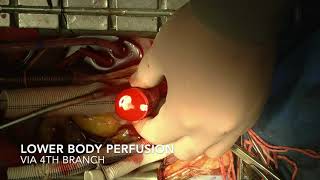
This video details the operative steps and technique of root and total arch replacement with frozen elephant trunk for aortic dissection, as described by Dr Sun (1). Right axillary cannulation with selective antegrade cerebral perfusion for brain protection and moderate hypothermic circulatory arrest at 25 °C is used. A special open-stented graft, endowed with a…
Reduced availability of the homograft makes it very important that one uses alternatives for surgical reconstruction of the right ventricular outflow tract (RVOT) while operating for trunus arteriosus. Bovine jugular venous valved conduit (Contegra) is a bioprosthesis consisting of a glutaraldehyde-preserved bovine jugular vein with a trileaflet venous valve. It is a viable choice in…
In this CTSNet Interview, Dr Mara Antonoff discusses the background, inspiration, and stepping stones to the career of the formidable Dr Yolonda Colson. Dr Colson is the chief of Thoracic Surgery at Massachusetts General Hospital and the Hermes C. Grillo Professor of Surgery at Harvard Medical School. She completed a degree in biomedical engineering prior to attending medical school at Mayo. …
BACKROUND COVID-19 is a zoonotic virus originating from the Hubei province of China. COVID-19’s typical presentation of fever and cough can rapidly escalate to acute respiratory distress syndrome (ARDS) and sepsis (1). The initial outbreak rapidly spread into what is now a global pandemic, infecting over 750,000 people and leading to over 37,000 deaths (2,…
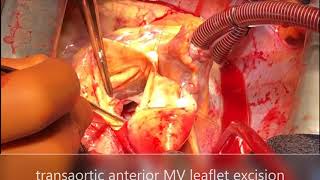
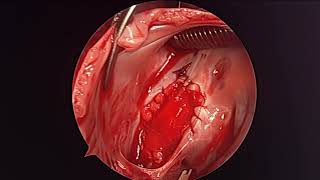
Aortomitral valve infective endocarditis (IE) is a very challenging clinical condition (1). The author presents a case of aortomitral valve IE treated with a total biological solution by combining the Aortic Valve Neocuspidalization Ozaki procedure (AVNeo™) (2) and mitral valve repair with exclusive use of autologous pericardium through a total transaortic approach. While mitral valve…
Pulmonary artery (PA) sling is a rare congenital vascular anomaly. Pathologically, the left PA originates from the posterior aspect of the right PA and it passes between the trachea and esophagus toward the left lung, compressing the lower trachea. Pulmonary artery sling could be an isolated condition or associated with intracardiac defects like atrial septal…
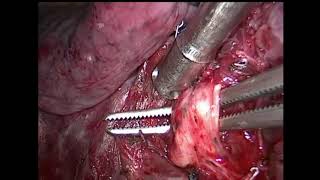
This is a case presentation including intraoperative video of a robotic-assisted laparoscopic repair of a hernia of Morgagni. Reference Wei B, Pittman BC. Robotic Morgagni hernia repair: an emerging approach to a congenital defect. J Robot Surg. 2019 Apr;13(2):309-313. Disclaimer The information and views presented on CTSNet.org represent the views of the authors and contributors…
Seven robotic left atrial myxoma resections were performed so far in the authors’ institution. The patients had no stroke or bleeding complications, and all were discharged home after a mean period of seven days. Key messages The authors’ normal preoperative workup consists of a coronography, a TEE to further delineate the anatomy of the myxoma…
This video presents an associated procedure of a coronary bypass grafting and a transapical aortic valve replacement through a left anterior minithoracotomy. The patient was an 83-year-old man with a known aortic stenosis and a hystory of persistent atrial fibrillation. He complained of a syncopal episode and was admitted to the authors’ center. A cardiac…