Content from the Journal of the American Neurological Surgeons.
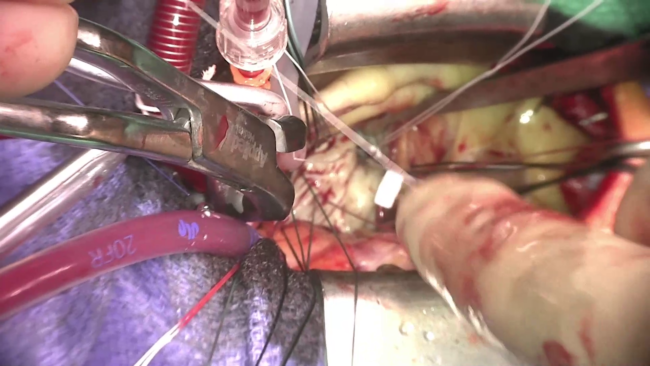
In this video, Dr. Vince Gaudiani demonstrates how to perform an Onyx Chord-X chordal repair for a P2/P3 prolapse. He began by cannulating the femoral vein, then performed an upper ministernotomy before placing a right superior pulmonary vein vent and aortic cannulation with antegrade cardioplegia. The roof of the left atrium was then opened, and stay sutures…
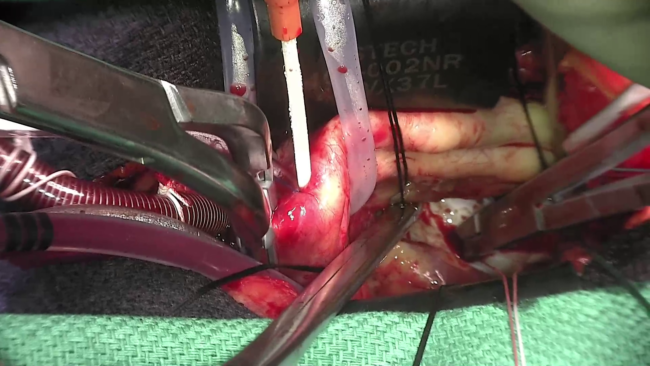
In this video, Dr. Vince Gaudiani demonstrates how to perform a simple chordal repair of a P2 prolapse. He began by cannulating the femoral vein, then performed an upper ministernotomy, and placed a right superior pulmonary vein vent along with aortic cannulation for antegrade cardioplegia. The roof of the left atrium was then opened and…
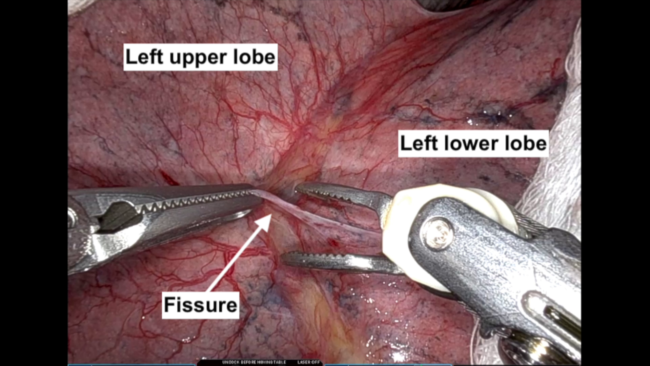
A 76-year-old male was incidentally noted to have a 2 cm left upper lobe lung nodule at the interface of the lingula and anterior segment. The nodule was PET avid, and a subsequent transbronchial biopsy suggested a carcinoid tumor. He underwent robotic-assisted lingulectomy, during which he was noted to have aberrant pulmonary arterial supply to…
In May 2024, The Diagnostic and Therapeutic Center of Athens Hygeia organized the Transcatheter Heart Valves Greece 2024. The conference featured pivotal specialty insights from both local faculty and internationally renowned professionals. Watch for more TCHVG 2024 videos in the coming weeks. At the Transcatheter Heart Valves Greece 2024 conference, leading surgeons delivered presentations…
A 37-year-old female presented with a history of Ebstein anomaly of the tricuspid valve with severe tricuspid regurgitation (TR), a severely dilated right atrium, an atrial septal defect, partial anomalous pulmonary venous return, and WPW ablation on three occasions. Cardiac MRI and echocardiogram showed apical displacement of the hinge point of the septal leaflet of…
The authors present the case of a 62-year-old female who underwent a right lower lobectomy for stage 1B adenocarcinoma. During the procedure, an injury to the membranous trachea caused by the endotracheal tube (ETT) balloon was identified. At the conclusion of the surgery, a moderate amount of blood was noted to be emanating from the…
At the 2024 AATS Annual Meeting, CTSNet senior editors set out to interview the most knowledgeable CT surgeons from around the world. Stay tuned for more interviews from the meeting. CTSNet Senior Editor Mara B. Antonoff spoke with Ammara Watkins about “Race and Ethnic Disparities in NSCLC Patients.” Dr. Watkins addressed past studies and their limitations, and…
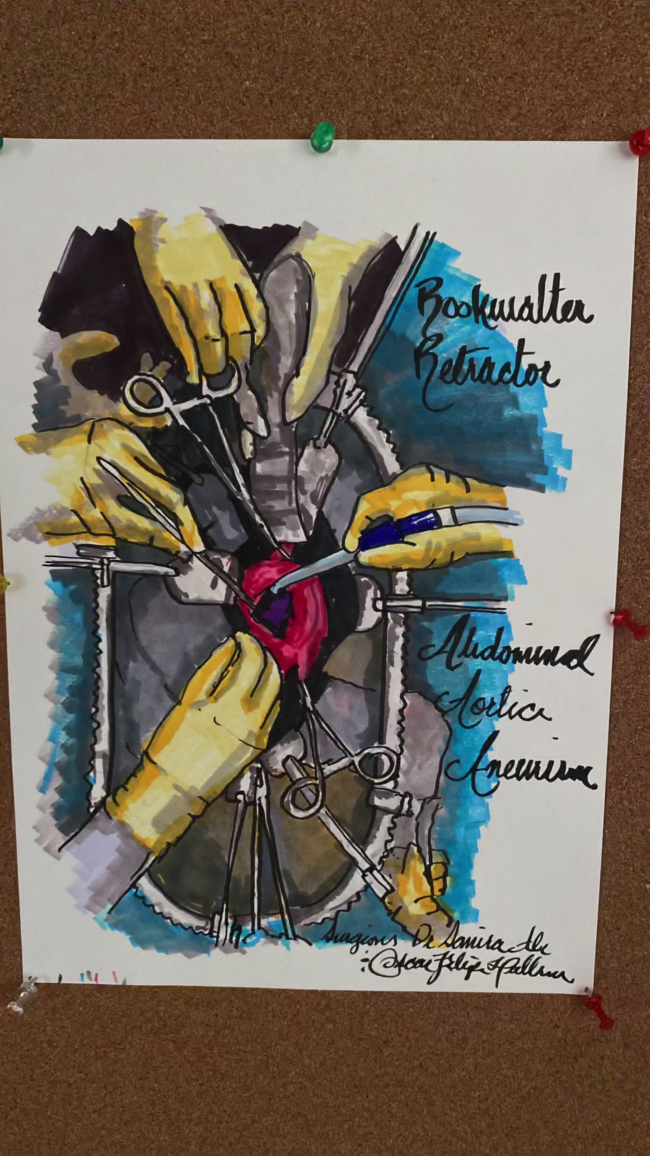
In this video, a surgeon provides a detailed drawing and explanation of a surgical procedure using the Bookwalter retractor. This specialized tool is used to hold open the surgical site, allowing the surgeon better access and visibility. The drawing highlights key aspects of the procedure, including the placement of the retractor, the anatomy involved, and…
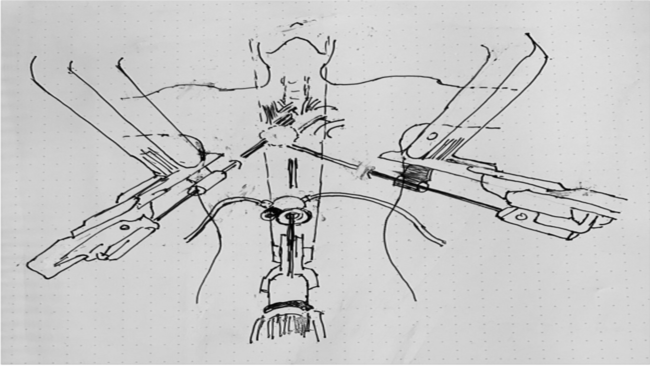
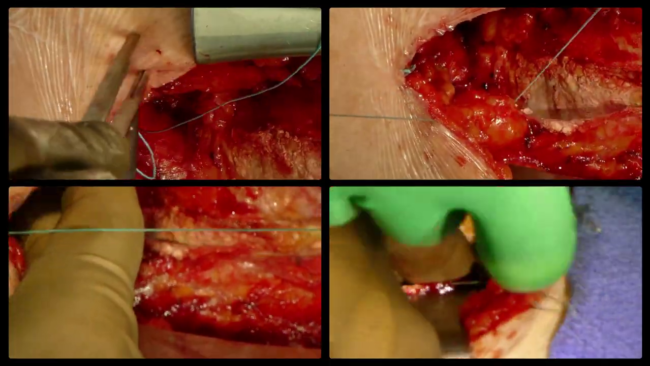
Median sternotomy has been the most commonly used approach for thymectomy to date. Recent advances in video-assisted thoracoscopic surgery (VATS) and robotic-assisted techniques with CO2 insufflation have allowed more minimally invasive approaches. Subxiphoid thymectomy is a well-known procedure, and its incision provides excellent exposure for surgeons and results in reduced postoperative pain. Thymectomy in block with…
The conventional approach involved decorticating the left ventricle (LV) before the right ventricle (RV) to avoid pulmonary edema. The median sternotomy provided adequate access to the right ventricle, right atrium, and major vessels, including the caval-right atrial junctions, allowing for effective evacuation of the diseased pericardium from phrenic nerve to phrenic nerve. Sharp and blunt…
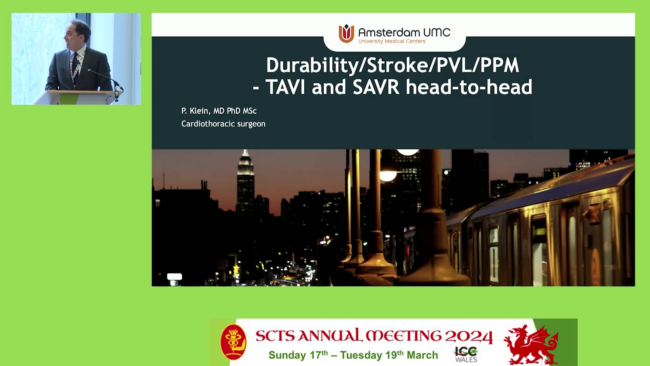
In March 2024, the Society for Cardiothoracic Surgery in Great Britain and Ireland brought together surgeons from around the world to discuss CT surgery topics and share knowledge. Watch for more SCTS 2024 videos in the coming weeks. At the Society for Cardiothoracic Surgery Annual Meeting 2024, Patrick Klein presented “Durability/Stroke/PVL/PPM—TAVI and SAVR Head-to-Head.” In his presentation,…
It is now common to encounter patients who underwent complex mitral valve repair—incorporating mitral rings, leaflet patches, ultrasonic annular decalcification, and multiple sets of artificial chords—20-30 years ago with no more valve dysfunction. Such is the advantage of autologous valve repair. Instead of a “lifetime management” approach to valve disease, the goal of the valve…
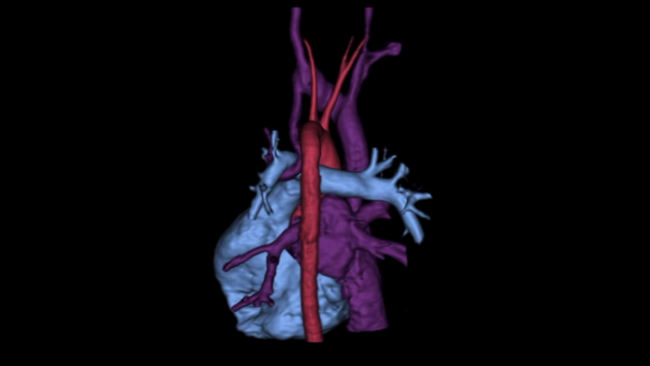
The patient was an 18-year-old male who presented with fatigue and exercise intolerance. He was born with dextrocardia and a functional single ventricle secondary to severely unbalanced complete atrioventricular septal defect with transposition of the great arteries and pulmonary atresia. He had undergone all three stages of palliation as a neonate, at two years, and…
The authors present a tricuspid valve repair utilizing autologous pericardium in a 29-year-old male with a history of drug injection (PWID). The intraoperative transesophageal echocardiogram (TEE) revealed a large mass attached to the anterior leaflet of the tricuspid valve, resulting in severe tricuspid regurgitation (TR). Following the establishment of cardiopulmonary bypass (CPB), a right atriotomy…
At the 2024 AATS Annual Meeting, CTSNet senior editors set out to interview the most knowledgeable CT surgeons from around the world. Stay tuned for more interviews from the meeting. CTSNet Senior Editor Sameh Said spoke with Stefan Elde about total beating heart transplants. Dr. Elde addressed the three techniques for heart transplants and their outcomes, and…
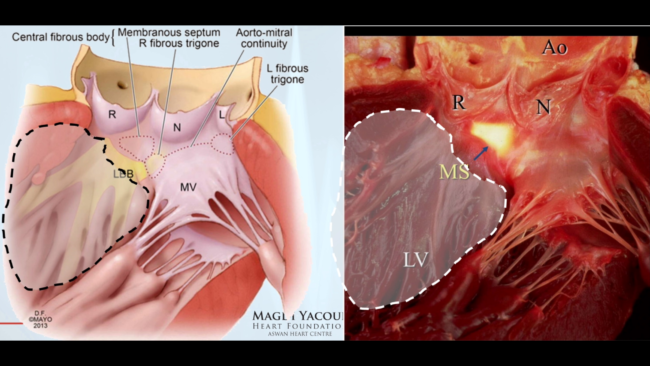
Hypertrophic obstructive cardiomyopathy (HOCM) predisposes to left ventricular outflow tract obstruction (LVOTO), which can significantly reduce quality of life and is associated with sudden cardiac death. It is important to note that the LVOTO in HOCM patients is not solely caused by the hypertrophied interventricular septum (IVS), but rather is multifactorial. Therefore, a thorough understanding…