Content from the Journal of the American Neurological Surgeons.
BackgroundIn the last 54 years, advances in organ preservation, surgical technique, and immunosuppression have resulted in improved outcomes following heart transplantation. (1,2) These advances and the increased frequency of heart transplants have led to this procedure being part of the training curriculum for trainees. (3) Teaching this procedure presents unique challenges, but also opportunities to…
The advent of low dose CT scans for lung cancer screening has resulted in increased detection of small lung nodules concerning for malignancy. Based on the location, some of these nodules may not be amenable to diagnostic transthoracic biopsy or wedge resection. In this scenario, a segmentectomy may be performed for diagnostic purposes. In-depth knowledge…
We present our technique of aortic root enlargement and ascending aortoplasty during aortic valve replacement. Benefits of this technique include the ability to implant a larger valve prosthesis, as well as simultaneously reducing the size of a dilated ascending aorta, whilst avoiding reimplantation of the coronary arteries. We present a case of a patient, male,…
INTRODUCTION:Achieving successful repair in congenital heart disease requires attention to details. Careful evaluation of anastomotic site patency, re-implanted coronary arteries, location of epicardial coronaries and myocardial perfusion may be needed to ensure safe conduct of the operation and excellent results. We have used the technique of IOFA using indocyanine green (ICG) as an integral part…
Welcome to the new CTSNet Global portal! Formerly known as CTSNet’s Surgical Volunteerism portal, the new CTSNet Global portal has been expanded to provide a wider range of information regarding global cardiothoracic surgery, including global surgical volunteerism, organizations and opportunities, cardiac surgery in low- and middle-income countries, surgical pearls and pitfalls in resource-limited settings, and…
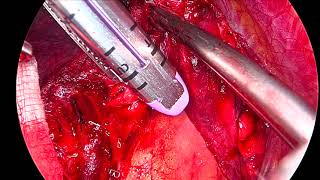
I report a case of VATS middle lobectomy with en bloc sub Segmentectomy S3b. This intervention was performed for a suspicious lesion localized in the horizontal fissure and we plan to perform an anatomical lung sparing resection: middle lobectomy plus upper lobe anterior medial subsegment S3b. We start by opening the mediastinal pleura using harmonic…
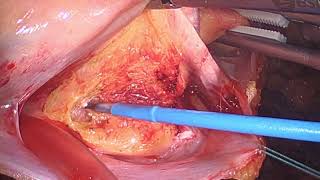
Morgagni hernia is a rare congenital diaphragmatic hernia comprising 2.6% of all diaphragmatic hernias (1). It is a defect between the costal and sternal attachments of the diaphragm muscle anteriorly and is most common on the right, but also can be found on the left or on both sides (2). Abdominal contents can herniate into…
The report emphasizes the importance of surgery for such cardiac hydatid cysts whenever discovered to prevent fatal and unexpected death. Although cardiac hydatid cyst is a rare disease, early diagnosis and treatment is of great importance because of frequent fatal complications. CT scan is excellent modality for diagnosis. Surgical excision is the best treatment modality…
This video shows a minimally invasive mitral valve repair on a patient with situs inversus. The patient is a 66 year old male presenting with progressive dyspnea on exertion, paroxysmal nocturnal dyspnea and orthopnea, who had a recent heart failure admission and was diagnosed with severe mitral valve regurgitation. The patient underwent a diagnostic workup.…
This is a 3.8 kg, 6-day old neonate whose initial presentation was a cardiogenic shock secondary to ductal closure. Upon admission, prostaglandins was initiated and the neonate was stabilized. Echocardiography and Computed tomography scan showed critical coarctation with severe arch hypoplasia and a paramembranous ventricular septal defect. One-stage repair via median sternotomy was performed where…
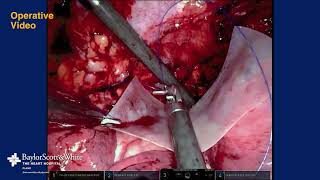
This video describes a step-by-step demonstration of a robotic assisted sleeve lobectomy for the treatment of a typical carcinoid tumour in the right upper lobe. The tumour was visible in the right upper lobe bronchus during endobronchial examination. We used a four-port approach plus utility port for this procedure. Robotic assistance was provided using the…
Atrial fibrillation (AF) is associated with increased risk of stroke, heart failure and all-cause mortality [1]. When it comes to treating persistent AF, the Cox-Maze procedure is the gold standard. However, it presents significant morbidity and mortality rates. The classical endocardial ablation approach appears to be safer but has limited efficacy to treat long lasting…
Immune checkpoint inhibitors (ICIs) targeting the T-Cell programmed death receptor-1 (PD-1), showed improved survival in patients with locally advanced and metastatic non-small cell lung cancer (NSCLC). However, the role of salvage thoracic surgery in the management of residual disease following immunotherapy or in patients with synchronous cancers has yet to be defined. There are very…
The recording from the Ancona Live Virtual Course – Minimally Invasive and Trans-Catheter Cardiac Surgery – Episode II, presented on June 7 and 8, 2021, is now available! Click Here to Watch Recording Dear Friends and Colleagues, With 5332 devices connected from 81 countries, the Ancona Live Virtual Course – Minimally Invasive and Trans-Catheter Cardiac…
This is a 52-year-old man with hypertrophic obstructive cardiomyopathy (HOCM). He has been on maximal medical therapy with combination of Beta blockers and calcium channel blockers with progression of his symptoms especially during exertion. Preoperative evaluation included transthoracic echocardiography and cardiac MRI for risk stratification. Studies showed severe septal hypertrophy especially at the basal levels.…
We present to you a stage-I palliation of hypoplastic left heart syndrome (HLHS) via a modified Norwood/Sano procedure in a 3.9 kg, 6-day-old neonate with aortic and mitral valves atresia. The neonate had unrestricted atrial septum and was placed on prostaglandin infusion after birth to maintain ductal patency. Our preference is to modify the Sano…