Content from the Journal of the American Neurological Surgeons.
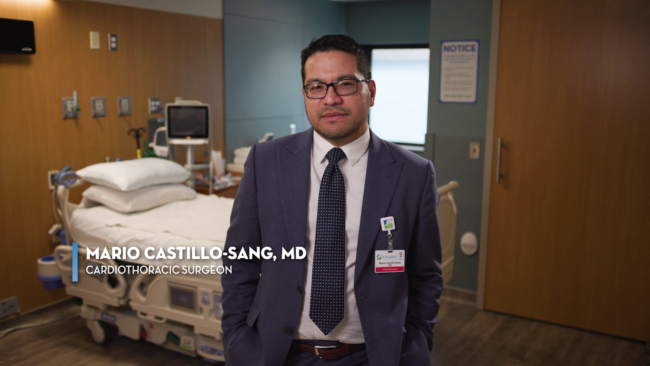
In this CTSNet series, Dr. Mario Castillo-Sang presents innovative, totally endoscopic cardiac procedures for a variety of conditions. Stay tuned for more series videos in the coming weeks. The authors present a totally endoscopic approach for transcatheter aortic valve replacement (TAVR) direct implantation in mitral annular calcification (MAC) with an inferior vena cava (IVC)…
This video is part of CTSNet’s 2024 Resident Video Competition. Watch all entries into the competition, including the winning videos. Whole body perfusion utilizing two cannulas for the upper and lower body halves enables continuous oxygen supply to the brain, kidneys, and intestinal organs while avoiding cooling to a low core temperature during aortic arch reconstruction…
The takedown of the Internal Thoracic Artery (ITA) represents the cornerstone of surgical revascularization. The ITA is employed in almost all patients to graft the left anterior descending (LAD) artery. In general, this conduit is harvested as a pedicle along with the endothoracic fascia, satellites veins, and surrounding tissues. An alternative approach is to harvest…
In this video, Dr. Vince Gaudiani demonstrates his technique for performing aortic valve replacement with ascending aortic replacement in an 85-year-old patient. The key consideration for this patient was to minimize bypass time; thus, opting for an aortic valve replacement followed by ascending aortic replacement rather than a root replacement was crucial. The procedure was performed…
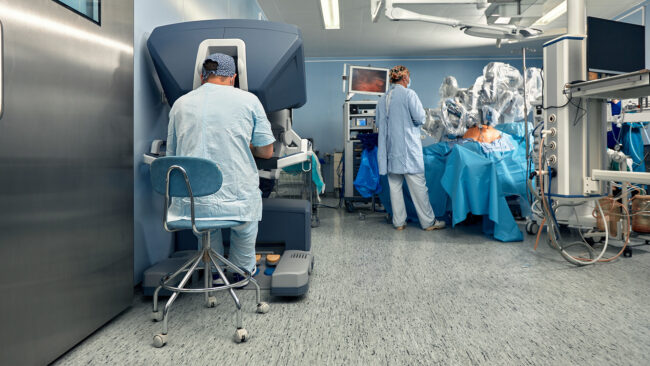
Endoscopic cardiac surgery involves performing surgical procedures exclusively using the images displayed on a screen, with the surgeon basing all actions on this medium (1, 2). Endoscopic cardiac surgery is not a recent innovation—it was pioneered by Hugo Vanerman in the 1990s—it allows for smaller working incisions, typically 2.5 to 3cm in length, and avoids…
This video demonstrates the Gaudiani technique for aortic valve replacement with ascending aortic replacement in an 82-year-old patient with aortic stenosis and an ascending aorta measuring more than 5cm in size. To begin, the femoral vein was cannulated, and direct cannulation was performed as the dilated aorta ended before the innominate artery. The ascending aorta…
In this new CTSNet President’s Series, Dr. Husam Balkhy, president of ISMICS, showcases cutting-edge, totally endoscopic cardiac procedures from the University of Chicago. Watch for more videos in this series coming soon. Patient Presentation The authors present a symptomatic 54-year-old woman with hypertrophic obstructive cardiomyopathy (HOCM) and severe mitral regurgitation (MR). A transesophageal echocardiogram (TTE)…
In this session from the 2024 London Core Review Cardiothoracic Surgery Course, Dr. Shakil Farid discusses complex aortic cases and aortic arch surgery. He examines zones of the aorta, ascending aorta dimensions for prophylactic surgical intervention, chronic aortic dissection recommendations, and provides examples of real-life cases. Dr. Farid also explores aortic arch branch variations, anesthetic…
At the 2024 EACTS Annual Meeting, CTSNet senior editors set out to interview the most knowledgeable CT surgeons from around the world. Stay tuned for more interviews from the meeting. At the 2024 EACTS Annual Meeting, CTSNet Senior Editor Dr. Emily Farkas spoke with Drs. Adriano Tivane, Neusa Jessen, and Timothy Pennel about pilot sites and developing…
A bilateral axillary cannulation was performed using 10 mm Gelweave grafts. Following a standard median sternotomy, cardiopulmonary bypass was established between the axillary cannulae and a dual-stage venous cannula in the right atrium. A double Y configuration was used for the arterial line of the bypass circuit, splitting the arterial line into three separate lines.…
The authors wish to highlight their technique for performing a Bentall procedure in cases of acute Type A aortic dissection. As mentioned in the video narrative, this technique is not suitable for all cases, and the standard deep hypothermic circulatory arrest approach remains the preferred method for cases where the head and neck vessels or…
This video is part of CTSNet’s 2024 Resident Video Competition. Watch all entries into the competition, including the winning videos. A 60-year-old female with a significant history of CREST syndrome, chronic obstructive pulmonary disease (COPD), and a brief history of smoking presented to the emergency department after a fall from a bicycle. She was noted to…
Introduction Pulmonary thromboendarterectomy (PTE) is an effective but complex procedure for treating chronic thromboembolic pulmonary disease. Learning to perform PTE is crucial for cardiothoracic surgeons in training; however, the exposure and depth of the dissection plane can make this arduous. Technical descriptions of PTE often rely on text or poor-quality media that were not intended…
This video is part of CTSNet’s 2024 Resident Video Competition. Watch all entries into the competition, including the winning videos. The patient was a 38-year-old male with a history of tension pneumothorax 10 years prior, initially managed outside the authors’ center with the insertion of an intercostal tube (ICT). A second ICT was later inserted, and…
In this video, Dr. Vince Gaudiani demonstrates his technique for aortic valve replacement with a left internal mammary artery (LIMA) to left anterior descending artery (LAD) and an ascending aortic replacement. The patient had a 48 mm ascending aorta and severe aortic stenosis with stenosis of the LAD. Initially, the LIMA was anastomosed to a…
This video demonstrates the Gaudiani technique for aortic valve replacement in a cadaveric porcine specimen. The aortotomy was made, and the valve excision and suture placement are shown with advice on using pledgeted sutures and where to place them. A bioprosthesis was placed, and a single layer of 3-0 Prolene was used to close the aorta.…